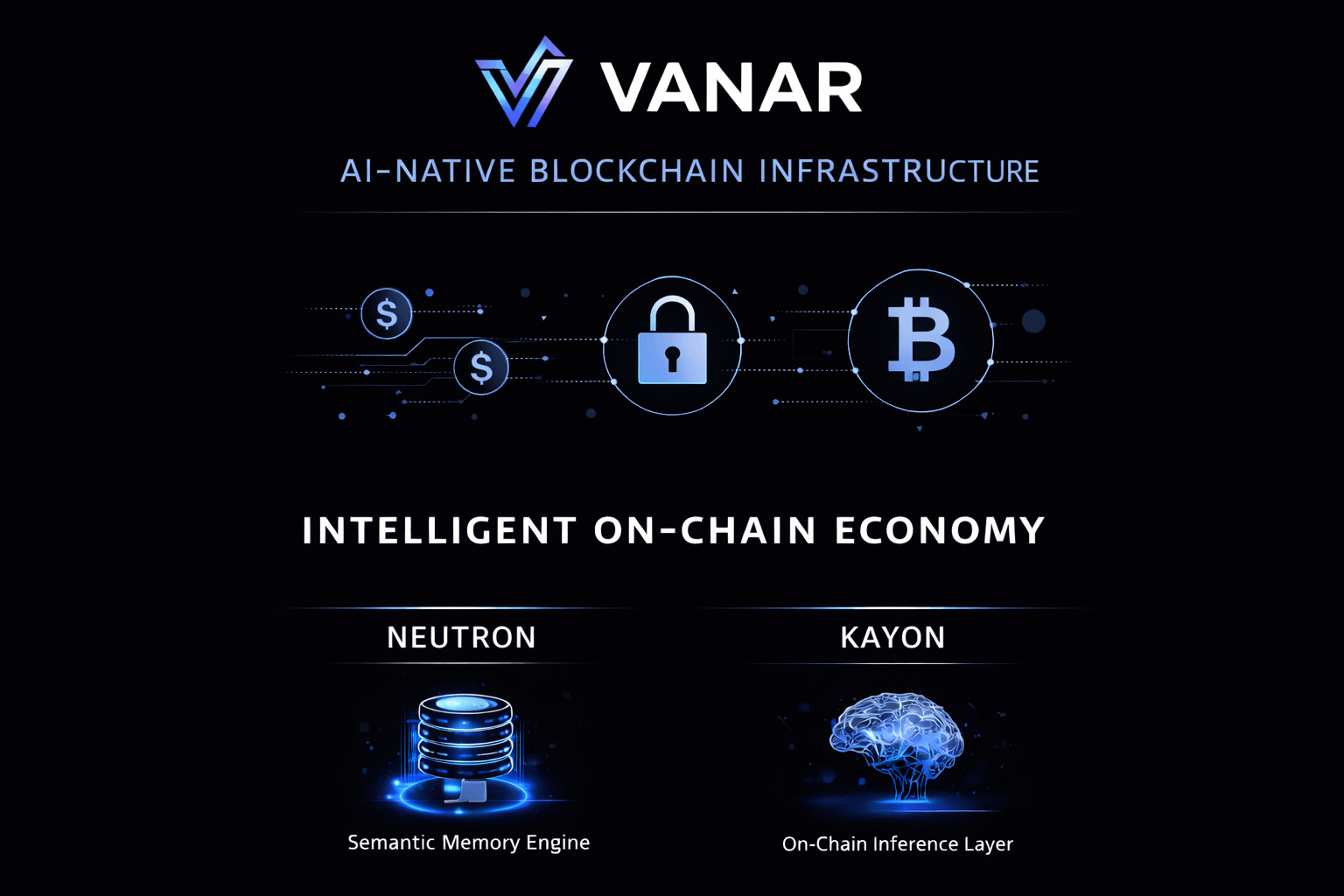
Vanar Chain is entering 2026 with a noticeably sharper identity, moving beyond its early positioning in gaming and entertainment toward something more foundational: AI-native blockchain infrastructure designed for real utility. Instead of competing solely on transaction speed or speculative liquidity, Vanar is integrating intelligence directly into the protocol layer. Its AI stack — including semantic memory through Neutron and inference capabilities via Kayon — reflects a deliberate shift toward enabling applications and agents that can store context, reason, and execute autonomously on-chain. This positions Vanar not just as a smart contract platform, but as a framework for adaptive digital systems.
Recent updates highlight a clear execution focus. Core infrastructure components are live, developer onboarding initiatives are expanding, and ecosystem programs are structured to encourage real product deployment rather than short-term incentive farming. Vanar’s Kickstart initiatives and broader ecosystem collaborations indicate that the chain is prioritizing builder engagement and long-term application growth. The narrative has evolved from token momentum to infrastructure readiness — a critical distinction in a market increasingly sensitive to fundamentals.
A significant development in 2026 is the shift toward usage-based economics. Access to key AI tools and services within the Vanar ecosystem now ties directly to $VANRY utility, aligning token demand with actual network consumption. This transition marks an important maturation phase: instead of relying primarily on emissions or speculative cycles, Vanar is embedding economic activity into its core products. If adoption scales, this model could support more sustainable value accrual driven by usage metrics such as API calls, agent deployments, and subscription flows.
Technically, Vanar continues refining its protocol architecture to support scalability and low-latency execution while maintaining compatibility for developers. The emphasis on semantic storage and inference capability distinguishes it from conventional Layer-1 competitors, where AI is typically layered on top rather than embedded within the base stack. This approach suggests Vanar is positioning itself for a future in which blockchain applications require persistent memory, intelligent automation, and dynamic decision-making rather than simple transactional logic.
Looking ahead, the most important indicators will not be short-term price fluctuations but measurable ecosystem traction: active developers building AI-driven applications, enterprise integrations, transaction throughput linked to real services, and sustained token usage through platform subscriptions. Vanar’s thesis is ambitious — that blockchains should not just record state but participate in intelligent execution. Whether that vision translates into durable network effects will define its trajectory through 2026 and beyond.