While most crypto projects fight for daily attention, @Plasma is taking a different route: embedding itself into real payment infrastructure.
The market today rewards noise. No updates for three days and people assume a project is dead. No short-term incentives and the chart gets punished. But real adoption rarely looks explosive in the beginning. It looks boring. It looks silent. It looks like backend integration.
Two developments matter.
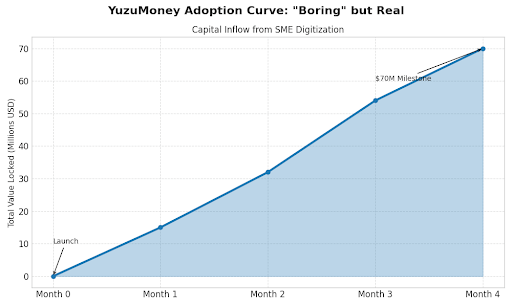
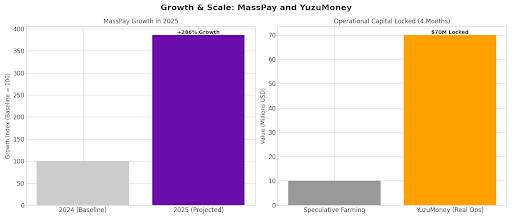
First, YuzuMoney locked in $70M within four months across Southeast Asia’s cash-heavy SME sector. This isn’t speculative yield farming capital. It’s operational money from businesses digitizing their payment flows.
Second, MassPay expanded to 230 countries with 286% growth in 2025, positioning #Plasma as a core settlement layer. When payment systems integrate at the enterprise level, switching costs become structural. Migration is no longer about installing a new app — it’s about reconfiguring accounting logic, supplier settlements, and financial risk controls. That creates path dependence.
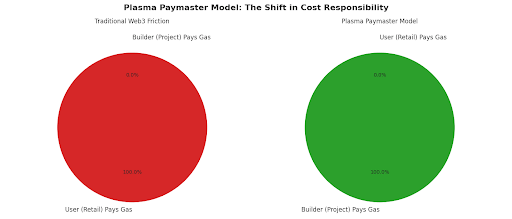
At the same time, @Plasma ’s Paymaster model addresses Web3’s most painful friction: upfront Gas. New users shouldn’t have to buy tokens before they even try a product. By allowing projects to stake $XPL and cover Gas fees for users, Plasma shifts cost from retail to builders. That aligns with proven Web2 acquisition logic — businesses subsidize onboarding to capture users.
Here, $XPL functions less as a hype asset and more as operational fuel. As applications compete for growth, token consumption becomes tied to usage, not speculation.
Adoption is rarely loud. But when financial rails are set by default, the market eventually reprices certainty over narrative.