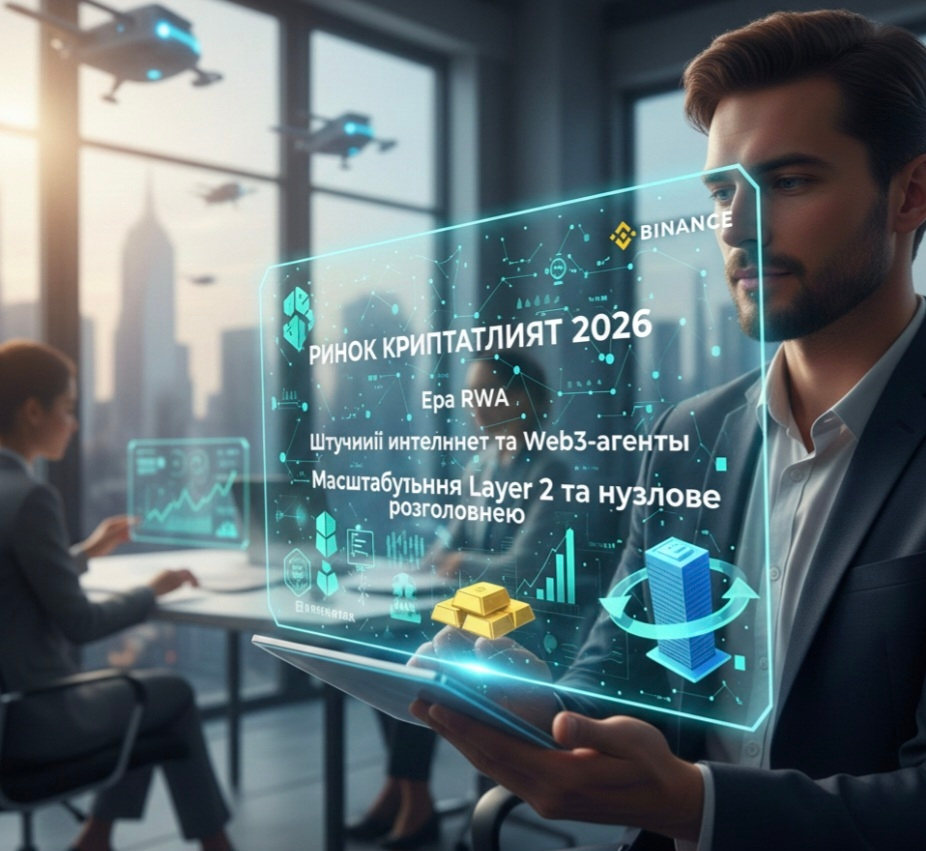
The world of crypto assets has definitively moved beyond mere speculation. If we previously spoke about "digital gold", today, in 2026, we are discussing the real integration of blockchain into government systems and everyday payments.
Here are three key trends:
1. Era RWA (Real World Assets)
Tokenization of real assets — real estate, bonds, and commodities — has become mainstream. Now you can own a share of a commercial building in Tokyo through a token on the BNB Chain, receiving dividends directly to your wallet.
2. Artificial Intelligence and Web3 Agents
We have transitioned from simple discussions about AI to the use of autonomous agents. These are bots that independently analyze on-chain data, enter smart contracts, and optimize your yield farming without your constant involvement.
3. Scaling Layer 2 and Zero-Knowledge Disclosure (Zk-proofs)
Fees on the Ethereum network$ETH have become almost negligible due to the widespread adoption of L2 solutions. Security and privacy are now paramount — the technology $ZK allows for transaction verification without revealing unnecessary personal data.
💡 What should investors do today?
Diversify across ecosystems: Do not keep everything in one blockchain. Distribute assets between major networks and new promising L2s.
Use Binance Earn: In times of high volatility, passive income from staking helps smooth out the "drawdowns" of the portfolio.
Keep an eye on regulation: 2026 is the year of clear rules. Choose licensed platforms (like Binance) to protect your funds.
The crypto market has matured. It is not the one who "guessed" the meme coin that wins, but the one who understands the technological value of the project.