
Few relationships in global markets spark as much debate as the one between Bitcoin, stocks, and gold. Bitcoin was once widely labeled “digital gold,” yet over time it has carved out a far more complex identity, sometimes moving with risk assets like equities, other times breaking away entirely.
As we move through early 2026, with inflation concerns, geopolitical tension, and tech-driven narratives still shaping markets, understanding how these assets interact isn’t just interesting, it’s practical. I’ve learned that ignoring these correlations can lead to unpleasant surprises when volatility hits.
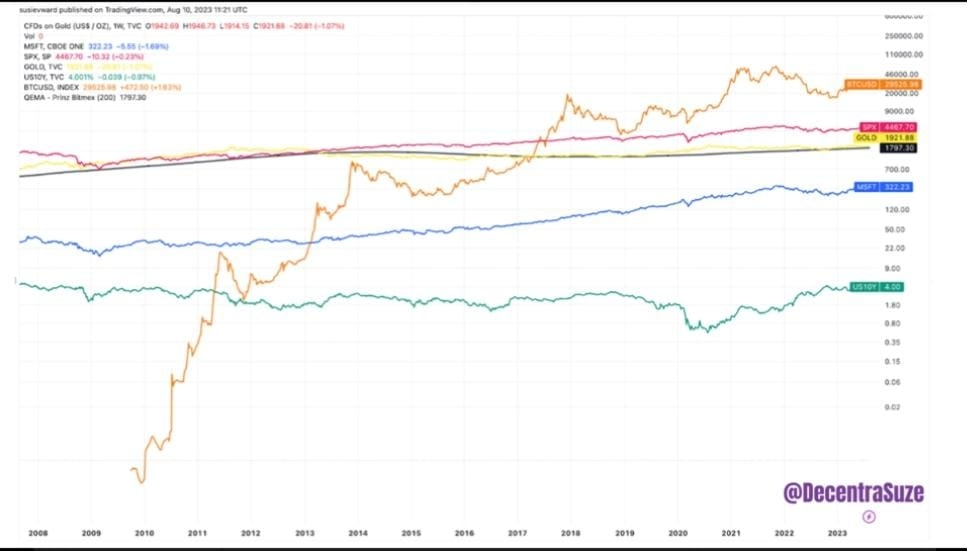
A Brief Look Back: How We Got Here
Gold has long been the classic safe haven. It doesn’t yield income, but it tends to hold value when confidence in financial systems weakens. Historically, its correlation with stocks has been low, making it a reliable diversifier during market stress.
Bitcoin entered the scene in 2009 with a similar narrative: protection against fiat debasement. In its early years, that comparison made sense. But over the past decade, Bitcoin’s behavior has evolved in ways many investors, including myself didn’t fully expect at first.
From 2021 to 2026, both Bitcoin and gold delivered strong long-term returns, but the paths they took were very different. In recent years, especially during periods of macro stress, gold surged while Bitcoin struggled. That divergence has been one of the clearest signals that Bitcoin is no longer trading like a traditional safe haven.
Bitcoin and Gold: Drifting Further Apart
In 2025 and into 2026, gold benefited heavily from inflation fears, central bank accumulation, and global uncertainty. Bitcoin, meanwhile, moved lower during several of those same periods.
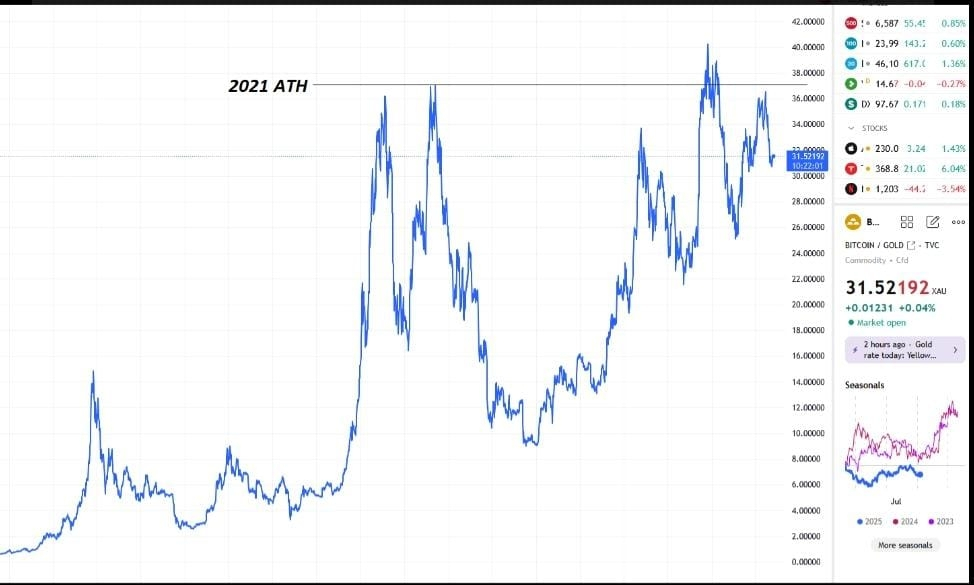
What stands out most today is the negative correlation between Bitcoin and gold. When markets turn defensive, capital tends to flow into gold first. Bitcoin, despite its capped supply, often gets sold alongside other risk assets. I’ve personally noticed that during risk-off moments, Bitcoin behaves less like protection and more like exposure.
The Bitcoin-to-gold ratio tells the same story. It has fallen sharply from previous highs, reinforcing the idea that gold currently dominates as the market’s preferred hedge in uncertain conditions.
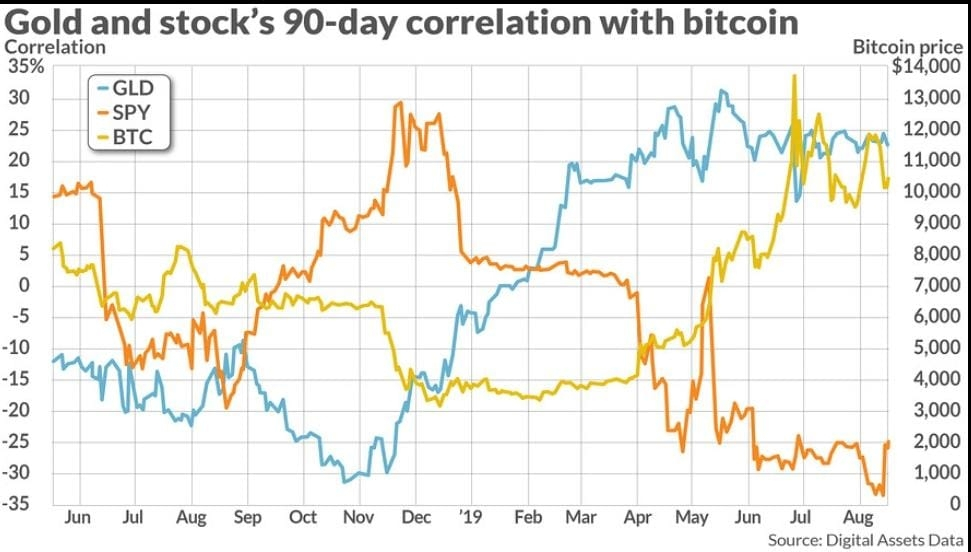
Bitcoin and Stocks: A Much Tighter Relationship
Where Bitcoin has grown closer is with equities, especially technology stocks. Over the past few years, its correlation with major stock indices has increased significantly. In 2026, Bitcoin often trades like a high-beta tech asset, it rallies harder in bull markets and falls faster during sell-offs.
This has changed how I personally view Bitcoin. I no longer expect it to protect my portfolio during equity drawdowns. Instead, I treat it as a growth asset, one that thrives when liquidity is strong and risk appetite is high.
This stock-like behavior also explains Bitcoin’s sharp volatility. When tech stocks sneeze, Bitcoin often catches a cold.
Why These Correlations Exist
A big reason for this shift is institutional adoption. Bitcoin is now widely traded by funds, ETFs, and corporate players who manage it alongside equities. In times of stress, these participants often sell Bitcoin quickly to raise liquidity, something they’re far less likely to do with gold.
Gold still benefits from decades of trust. Central banks, insurers, and long-term allocators see it as a monetary hedge. Bitcoin, while scarce, is still viewed as a newer and more volatile asset, closer to innovation than preservation.
I’ve seen this play out repeatedly: when fear spikes, Bitcoin gets sold first, gold gets bought first.
Portfolio Implications: It’s Not Either-Or
The key takeaway isn’t that one asset is “better” than the other, it’s that they serve different roles. Gold acts as a defensive anchor. Bitcoin acts as a growth accelerator.
In my own portfolio thinking, Bitcoin and gold can coexist, but only if you’re clear about why you hold each one. Bitcoin adds upside potential and exposure to long-term technological adoption. Gold adds stability when things break.
Blending small allocations of both has historically improved returns while reducing drawdowns compared to traditional portfolios. But timing and balance matter, especially in risk-off environments where gold has consistently outperformed.
Looking Ahead: A Narrative Still in Motion
Bitcoin’s story isn’t finished. If adoption continues to expand and volatility eventually compresses, it may regain some characteristics of a store of value. But in 2026, the reality is clear: Bitcoin trades more like a growth asset tied to stocks, while gold remains the market’s defensive backbone.
For investors, the lesson is simple but important. Diversification isn’t about picking sides, it’s about understanding how assets behave together. Markets move in cycles, and each asset plays a different role in that rhythm.
Bitcoin, stocks, and gold aren’t rivals. They’re dance partners and knowing who leads in each market environment can make all the difference.
