

Opening with the truth: The reason I focus on Plasma while others chase meme coins.
To be honest, in this environment of the cryptocurrency world, every day is a myth of high-frequency trading. The rise and fall of meme coins feels like a joke, everyone is acting crazy, chasing this and that, hoping to catch the next hundredfold or thousandfold coin. Who has the leisure to deeply explore a payment public chain that looks unremarkable and not at all 'sexy'?
But recently, I really changed my mind and put all my thoughts on those high throughput parallel chains into @Plasma . You must be wondering why? It's simple, I sensed the presence of 'old money' entering the market.
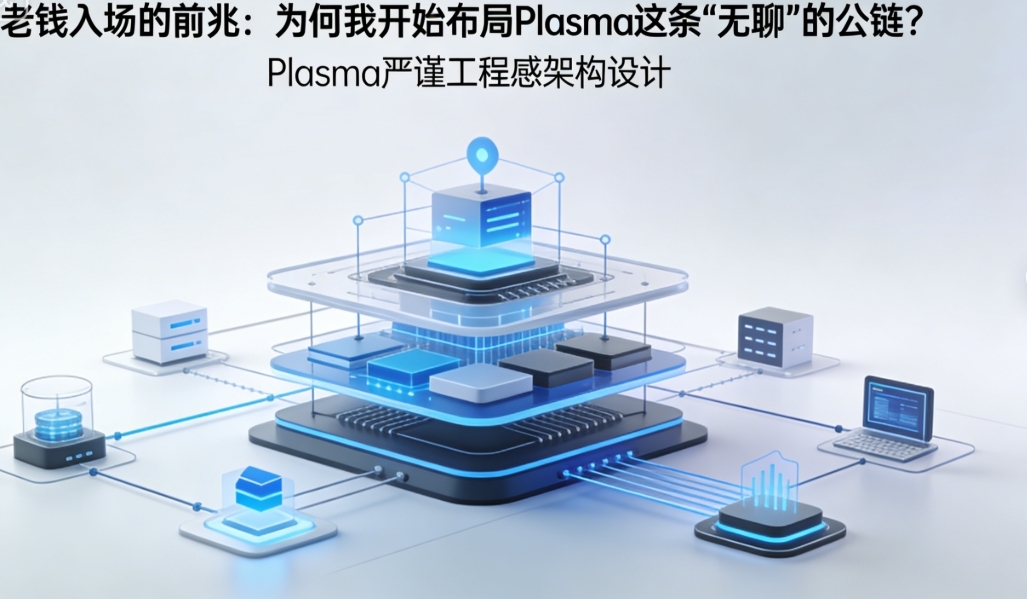
The core confidence of Plasma: no frills, just about 'engineering flavor'

Currently, those projects on the market that have been hyped up by VC are numerous; some white papers are clearly just hastily put together, with even the logic not holding up, yet they can still generate a wave of hype. But Plasma is different. I looked through its codebase and architecture design, and it exudes a strong 'engineering flavor'—the kind that is rigorous, conservative, and even a bit rigid, with no frills at all.
But don't forget, this is precisely the key that allows it to withstand huge amounts of dollar liquidity! Let's be honest, the ultimate goal of blockchain is not to create another casino for everyone to speculate daily, but to reshape the global financial settlement layer, the kind that can truly be implemented. I think Plasma is currently following this path.
Not competing on TPS, only ensuring certainty: what financial institutions need, it just happens to have.
I spent quite a bit of time studying its verification node mechanism and consensus algorithm, and found that its approach to handling concurrent transactions is quite interesting. It doesn't pursue extreme TPS like Solana, aiming to blow TPS sky-high, but instead focuses all its energy on finality.
Some may think TPS isn't important? That's because you haven't considered it from the perspective of financial institutions. For them, TPS is just a cloud; even if you can handle a hundred thousand transactions per second, if there are frequent rollbacks or outages, that's a disaster. What do they want? They want money to be transferred out, confirmed within seconds, and absolutely unchangeable or reversible; that's the core.
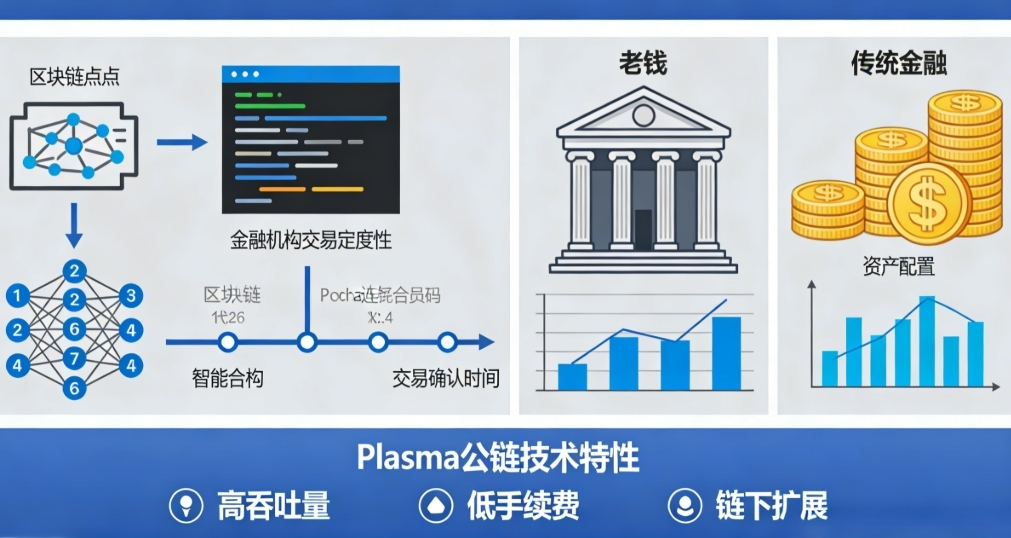
To be honest, Plasma's block time and confirmation speed are so stable that it's a bit boring, similar to the central bank's RTGS system, with no surprises, but it excels in not making mistakes. But this is its moat! While other public chains are still fighting fiercely for the title of 'Ethereum killer,' Plasma has already chosen its own path—quietly establishing itself as a compliant settlement channel, specifically serving stablecoins and RWA assets, avoiding the limelight and not seeking attention.
Complaints moment: Wallet compatibility issues are really torturing ordinary users.
However, complaints aside, the wallet compatibility issue of Plasma (\u003cc-46/\u003e) is truly frustrating. Although it is compatible with EVM, when I connect using MetaMask, the RPC response occasionally freezes, with no reaction for a long time, which is infuriating. Moreover, it doesn't support using stablecoins to pay for Gas, which should be a good thing, but many universal DApp frontends encounter bugs when calling contracts, resulting in poor compatibility.
This is simply a nightmare for us ordinary users. A few days ago, I tried to create an LP on a decentralized exchange, but the frontend couldn't recognize my USDT balance—I clearly have USDT, just not XPL—stuck on the authorization page for a long time and couldn't resolve it, which was extremely frustrating.
This sense of disconnection in interaction, if not resolved quickly, will definitely lead to chaos when a large number of users come on board in the future, resulting in a pile of complaints and gripes.
Don't make ridiculous comparisons! Plasma's competitors are not Aptos/Sui at all.
Some even compare it with Aptos and Sui; I really think it’s comparing apples to oranges. Aptos is built using the Move language, focusing on high-performance computing, competing on technical parameters; but \u003ct-57/\u003e's competitors resemble Ripple and JPM Coin, an attempt to transform from consortium chains to public chains, where the core is compliance and settlement, which is a completely different matter.

