
Every crypto trader has seen hype drive markets meme coins surge overnight, NFT trends dominate timelines, and social media fuels sudden rallies. But Bitcoin operates differently.
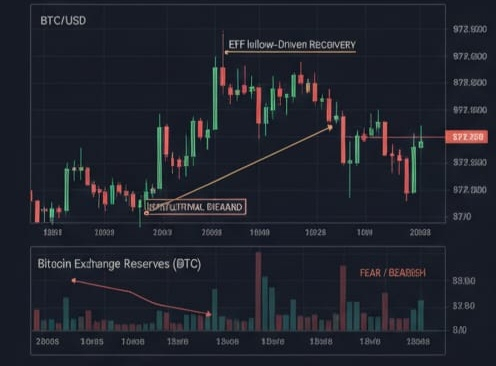
In January 2026, $BTC climbed toward $97,000 as U.S. spot Bitcoin ETFs absorbed roughly $1.7 billion in just three days. This wasn’t retail excitement it was institutional capital stepping in and restoring momentum after a pullback. Larger inflow waves have previously helped push Bitcoin past $120,000, reinforcing a key reality:
👉 Bitcoin is powered less by hype and more by liquidity. Understanding this shift helps traders move beyond noise and focus on what truly drives price.
Liquidity vs. Sentiment: What Actually Moves Price
Liquidity measures how easily an asset can be bought or sold without heavily impacting its price. Deep liquidity leads to smoother trends, tighter spreads, and reduced slippage.
Sentiment, however, is emotional fear, greed, and FOMO. It can spark sharp rallies, but without liquidity, those moves rarely last. Thin order books often turn hype-driven pumps into fast reversals.
After Bitcoin dropped nearly 50% from its late-2025 highs, sentiment turned bearish. The recovery didn’t begin with optimism it began with fresh liquidity through ETF inflows. Institutional buying strengthened the market’s ability to absorb selling pressure.
Trader takeaway:
Watch ETF flows alongside sentiment indicators. High sentiment with low liquidity often signals a volatility trap.
Scarcity with Institutional Demand equals Powerful Trends.
Bitcoin’s fixed supply capped at 21 million coins means demand shifts can move the market quickly.
Retail demand is typically fragmented and momentum-driven, while institutions deploy capital at scale through ETFs and OTC desks. When ETF issuers buy Bitcoin to back shares, available exchange supply tightens.
Key metrics to monitor:
✅ Exchange reserves falling balances suggest lower selling pressure
✅ ETF assets under management rising AUM points to sustained demand
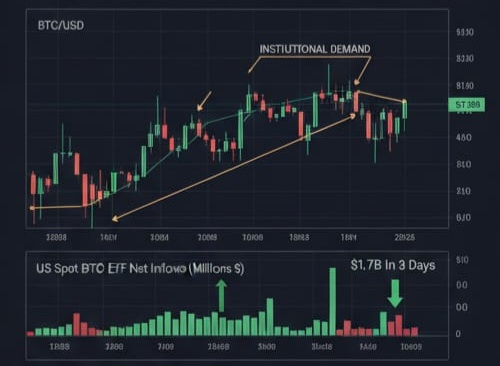
When large liquidity competes for limited supply, multi-week trends often follow.
Why Big Capital Is Stabilizing Bitcoin.
Early crypto markets were defined by extreme volatility due to thin liquidity. Institutional participation is changing that.
Large investors scale into positions, hedge risk, and think long term behaviors that help dampen chaotic price swings. Instead of violent boom-and-bust cycles, the market increasingly shows structured consolidations.
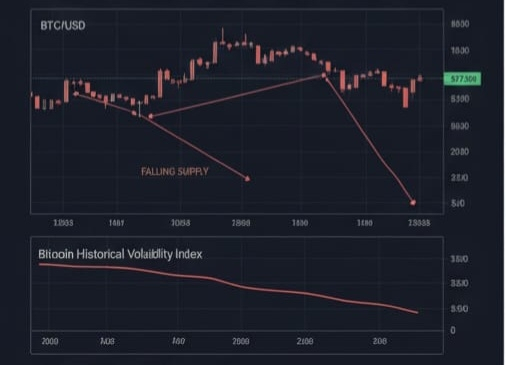
This evolving dynamic is one reason Bitcoin is gradually being viewed as a macro asset even compared to digital gold.
Trading implication:
Lower volatility often favors structured strategies, but sudden liquidity shifts especially ETF outflows can still signal major moves.
In conclusion: Hype can move Bitcoin for a moment, but liquidity moves it for months. As institutional participation deepens and the market matures, success will favor traders who analyze flows, supply dynamics, and real demand instead of reacting to emotional cycles. Learn to follow the capital, and you’ll stop chasing the market and start anticipating it.
