

When I started looking into Vanar Chain, one thing stood out: its clear focus. Unlike many blockchain projects that only talk about adoption, Vanar is aiming for entertainment, gaming, and brands. These are industries that reach tons of people, but haven't really jumped into blockchain yet.
Instead of trying to force blockchain onto old systems, Vanar started from scratch. It's a Layer-1 that's built for regular folks and businesses. The team used their background in gaming, entertainment, and brands to create an ecosystem that does more than just transactions. It's about creating cool experiences, interactive economies, and AI tools that people will actually use.
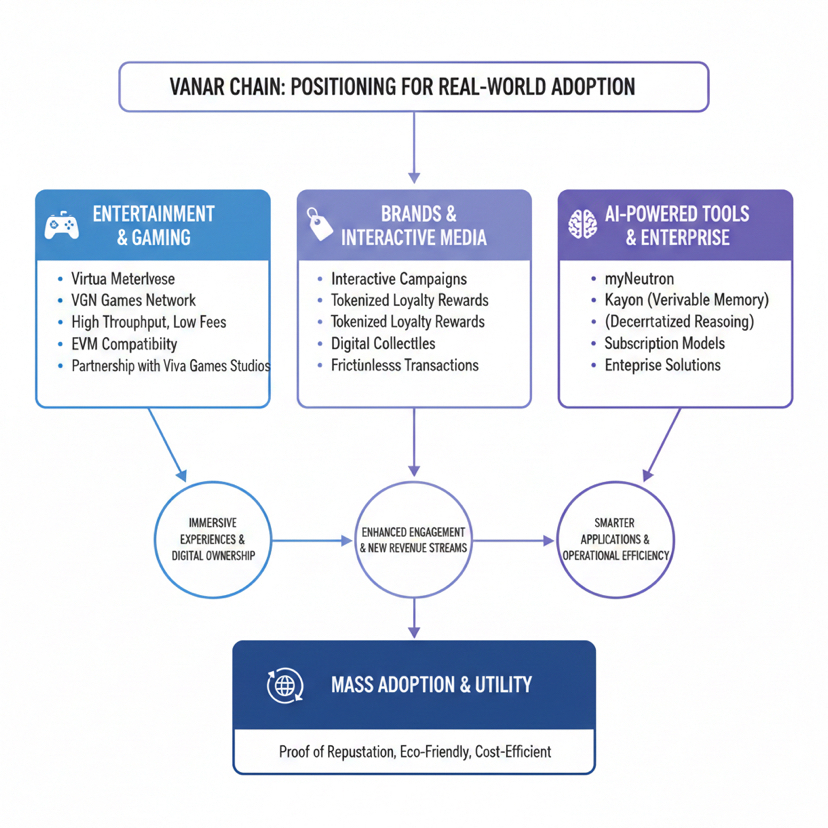
Gaming and entertainment are great ways to get people into blockchain. These industries have been big in online culture for years, and people spend lots of time and money on them. Old-school blockchains weren't built for this. They were made for things like sending tokens and trading. They couldn't handle things like in-game economies or metaverse worlds, where users expect fast, cheap interactions. Vanar tackles this by making its system fast and cheap, so entertainment feels natural.
One of the first things Vanar did was create the Virtua Metaverse and the VGN games network. These aren't just side projects. They're places where users can try out Web3 without needing to be tech experts. In Virtua, people can explore digital worlds, play games, and own digital items. The VGN network has games that use Vanar's cheap and fast transactions. This shows that blockchain can handle entertainment on a big scale.
What I find interesting is how Vanar makes tools that make it easier for both developers and users to jump in. The blockchain works with EVM, so developers who know Ethereum can move their apps to Vanar easily. This is key because it lets developers focus on making awesome experiences. They can use predictable fees, fast performance, and a familiar setup to create new kinds of entertainment on the chain.
A big step for Vanar was partnering with Viva Games Studios. This combines Viva's Web2 gaming knowledge with Vanar's Web3 system. Viva Games Studios has games with millions of downloads and has worked on big entertainment franchises. By joining forces with a partner that already has millions of users, Vanar can reach people who might not know about blockchain. The plan is to give users a blockchain experience that feels familiar and rewarding. This makes it easy for Web2 users to check out Web3 through games they already enjoy.
This partnership isn't just about getting users. It's about creating ways to keep them engaged for the long run. When gamers come to Vanar through games they know, they can instantly join decentralized economies, earn digital items, and use AI systems without any hassle. This means Vanar's plan is made for real usage and behavior.
Besides gaming, Vanar also understands how people interact with content in the entertainment and branding space. Brands want to connect with consumers in new ways. Blockchain provides unique experiences, loyalty programs, and digital ownership that regular platforms can't match. Vanar has tools that let brands start interactive campaigns, tokenized rewards, and digital collectibles without having to build everything from scratch. This makes it simpler for brands to try things out in a decentralized space.
For example, brands can release limited digital collectibles that work across different experiences or connect NFTs to real-world perks like event access. This creates new ways to make money and get users invested by blending the real and digital worlds. Because the network is fast and cheap, these interactions feel smooth. This is very needed for adoption, as users won't put up with slow or expensive systems for everyday things.
I'm also impressed by Vanar's use of AI products like myNeutron and Kayon to help businesses. These tools show how AI can make applications better. myNeutron remembers past interactions, while Kayon automates decisions. These aren't just cool features. They're solutions to problems. Businesses can use these tools to make experiences smarter and engaging without relying on outside AI. This helps Vanar when compared to other networks that just slap AI onto old systems, which can be expensive and inconsistent.
A big milestone for adoption was when Vanar started charging subscription fees for products like myNeutron. This is a move away from speculation and towards products that generate revenue. When people are paying to use something daily, it means the system is solving problems. These income streams back the token's use and the ecosystem's growth in a way that speculation can't. This is a sign that a blockchain is ready for real use.
Community use also matters. Users are actually using applications like Neutron under real network conditions. This means Vanar is leaving the early phase and is being used daily. People are using these tools and creating more than just token transfers and simple contracts. They're storing data, making decisions, and running applications.
When thinking about Vanar's position for real adoption, its Proof of Reputation system is important. This system values validator credibility over computing power, which builds trust. This can be appealing to brands who want consistent infrastructure.
Another thing is Vanar's eco-friendly and cheap design. Being mindful of the environment is becoming more important. Networks that are energy efficient are more likely to attract companies that want to show they are being responsible. This helps Vanar go beyond the stereotype of blockchain as energy-intensive and makes it a viable choice for big applications.
Vanar's adoption plan lines up tech with specific markets. By focusing on entertainment, gaming, and brands, the network is targeting industries with lots of users. These industries are ready for change, and blockchain can improve things, as long as it's done right. Vanar is in a spot where it can support markets with billions of users, instead of just a few blockchain fans.
In short, Vanar is ready for the real world because of its design and focus. From its start in entertainment and gaming to its AI tools and partnerships with big gaming companies, Vanar is clearly trying to make blockchain easy for everyone. By creating experiences that users want and tools that developers can use, Vanar is building an ecosystem that feels accessible. This is what a blockchain designed for everyday use looks like.
