
Plasma aims to make stablecoin settlement as seamless as sending a message, with gasless USDT transfers and stablecoin-first gas. This is more than a UX upgrade – it redefines network access, as users no longer pay gas directly with XPL but rely on the paymaster layer.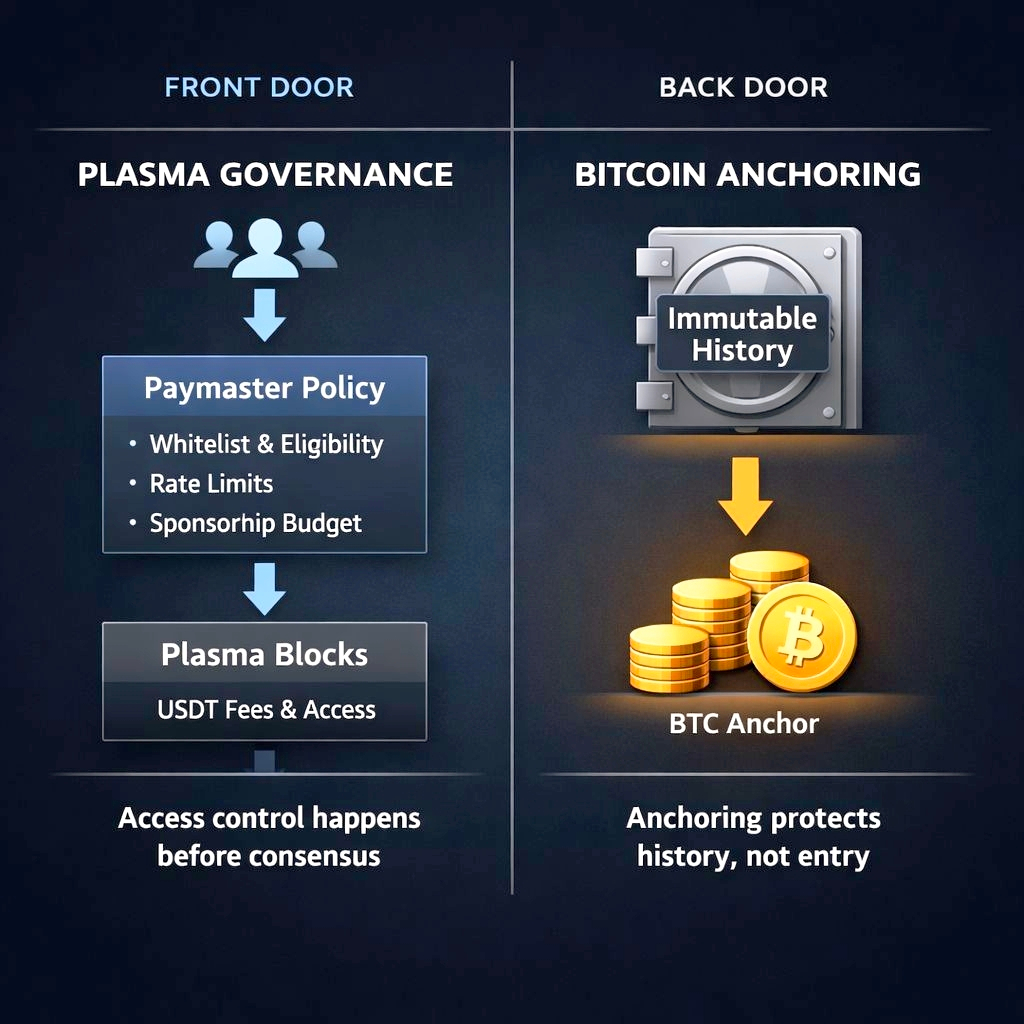
📌 Key Points:
Gasless USDT Lane: Only plain transfers are sponsored, not arbitrary contracts → prevents abuse, creates a rule-based access lane.
Paymaster Power: Can decide who gets frictionless access; governance is subtly embedded in the sponsorship and whitelist rules.
Stablecoin-First Gas: Users pay fees in approved tokens (e.g., USDT) while validators receive XPL → fee system becomes a quiet network constitution.
Governance Implications: Stablecoin issuers indirectly control the easiest access path. Policy decisions can reshape user experience without changing consensus.
Reliability & Defaults: Single default paymaster policies concentrate responsibility. Wallets and apps follow frictionless paths, reinforcing default governance.
Neutrality Redefined: True neutrality is not only consensus finality but who gets the easiest access. Transparency in sponsorship, rate limits, and eligibility is crucial.
💡 Takeaway: Plasma’s credibility depends on constrained, legible paymaster power. Done right, it’s a stablecoin settlement breakthrough. Done poorly, it risks feeling like a managed payments product rather than neutral infrastructure.
@Plasma #Plasma $XPL #DeFi #Stablecoins #CryptoInfrastructure

