
Pool and Why the Little Guy Still Got Wet
Once upon a time, in the summer of 2025, a young blockchain called Plasma decided it wanted to have a billion dollars. Not in a "maybe someday" way. In a "we're doing this before lunch" way.
The team opened a pre-TGE deposit window. They said, "Please send us your stablecoins. We will maybe give you tokens later. Trust us, we have Paul Fex and a guy who knows Peter Thiel's cousin." The crypto community, which usually treats "trust me bro" with the skepticism of a cat eyeing a cucumber, did something unprecedented.
They sent $1 billion in 30 minutes .
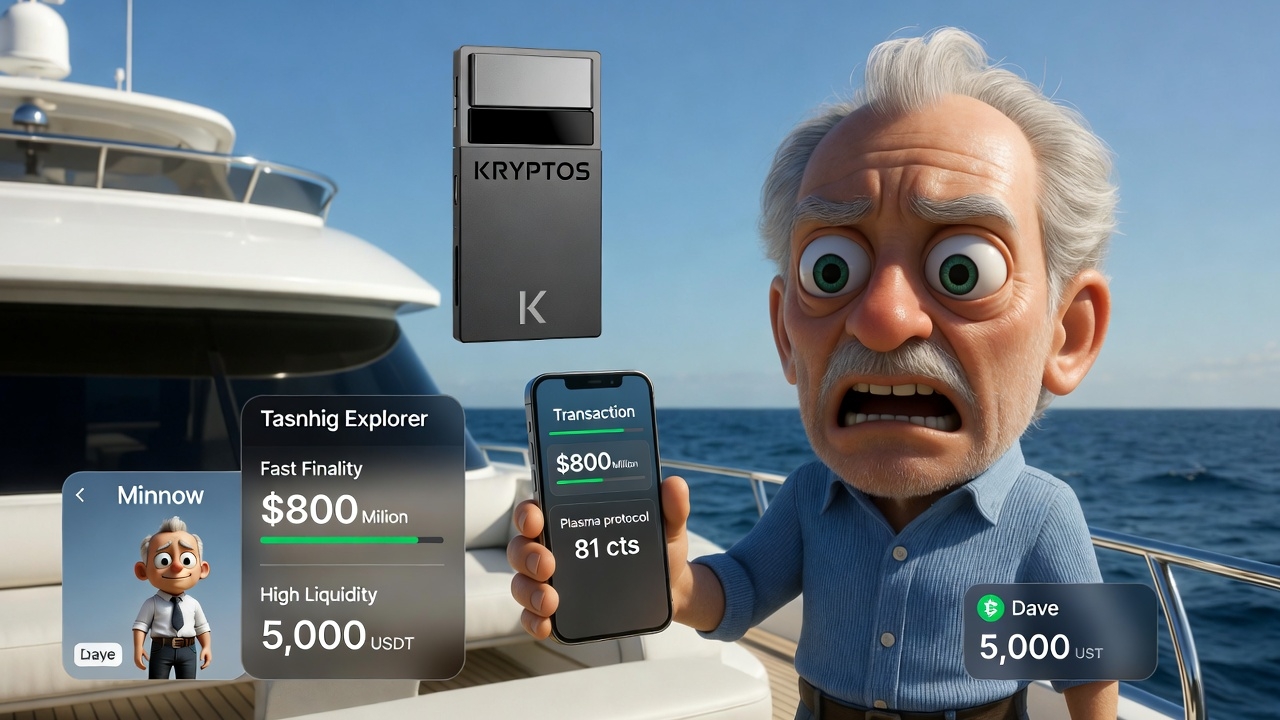
But here's where the story gets interesting. If you were a normal person—let's call you Dave, because you probably are—you heard about this opportunity roughly 29 minutes after it started. You scrambled. You connected your wallet. You tried to deposit your hard-earned 5,000 USDT. The transaction confirmed. You felt like a genius. You were part of the revolution!
Then the numbers came out.
70% of the $1 billion came from the top 100 wallets .
Dave's 5,000 USDT? It wasn't even a rounding error. Dave was the human equivalent of bringing a water pistol to a naval battle. The whales brought aircraft carriers. They brought entire coast guards. One wallet reportedly deposited more than the combined lifetime earnings of Dave's entire extended family. Probably in one click. Probably while eating a grape.
The community reaction was predictable. "WHALES STOLE OUR ALLOCATION!" "THIS IS VENTURE CAPITALIST CAPTURE!" "I DIDN'T GET MY 0.000003 XPL AND I WANT TO SPEAK TO THE MANAGER!"
And then, something interesting happened. The Plasma team looked at the situation and essentially said: "...yeah, we kind of expected this. Whales gonna whale. But here's the thing—we're building payment rails, not a charity."
The logic was brutal but honest. If you want to build a global stablecoin network that processes trillions of dollars, you need liquidity. You need the big players. You need the guys who can move $800M for 81 cents without flinching . Dave with his 5,000 USDT is lovely and we appreciate him, but Dave alone cannot bootstrap a financial ecosystem that competes with Tron and Ethereum.
This is the uncomfortable truth Plasma didn't hide from: infrastructure is not a democracy. It's an engineering problem. You need capital to build the pipes, and capital lives in big buckets. The whales weren't stealing from Dave; they were pre-paying for the subway system Dave will eventually ride for pennies per trip.
And ride it he will. Because here's the plot twist: after the whales deposited their aircraft carriers, Plasma launched. The fees stayed low. The finality stayed fast. Dave can now send his 5,000 USDT anywhere in the world for zero dollars, using the very rails the whales overfunded in 30 minutes of chaotic enthusiasm .
Did Dave get rich from XPL speculation? Probably not. Did Dave get a usable, reliable, boring-as-heck payment network that doesn't make him want to throw his laptop into the sea every time he clicks "Send"?
Actually, yes. That's exactly what he got.
So maybe the whales aren't villains. Maybe they're just very large, very early adopters who accidentally helped build something useful. And maybe Dave, with his 5,000 USDT and his righteous indignation, is exactly the kind of user Plasma was designed for all along.
The moral of the story? In infrastructure, even the minnows win when the whales build the ocean. Especially when the ocean costs 81 cents to cross, no matter how big your boat is.

