
Most traders think their edge lives in the entry.
Cleaner setup, Better confirmation, One more indicator and finally… precision.
But here’s what experienced traders quietly understand:
Two traders can take the exact same setup and walk away with completely different outcomes.
The difference is rarely the entry.
It is the exit.
▪️Exits are the silent killer of trading accounts.
You don’t blow up because you can’t find trades.You bleed out because you don’t know when to leave.
Entries feel logical.
Exits feel personal.
And markets punish emotional decisions fast.
Why entries feel easier
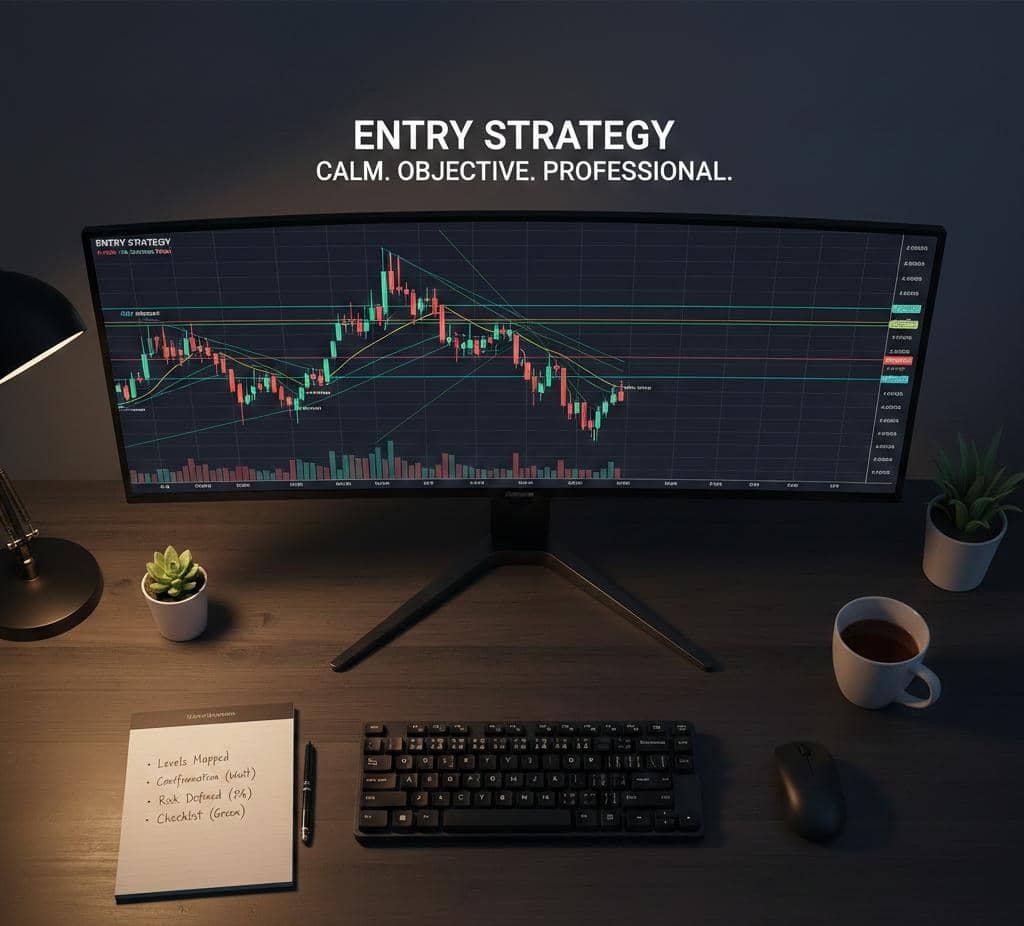
Before entering, everything is structured:
• Levels mapped
• Confirmation waited for
• Risk defined
• Checklist complete
Calm. Objective. Professional.
Then the trade goes live… and psychology takes over.
Fear whispers: “What if I’m wrong?”
Hope replies: “What if this runs?”
Now you’re not managing a trade.
You’re managing yourself.
Most costly mistakes are born right here:
• Cutting winners too early
• Holding losers too long
• Moving targets mid-trade
• Breaking rules after a losing streak
Not strategy problems.
Behavior problems.
▪️Why exits are objectively harder
Entries happen before uncertainty becomes personal.
Exits happen when every tick affects your money.
There is no perfect exit, only hindsight.
And nothing tests discipline like unrealized profit.
A small pullback suddenly feels like something was taken from you, even though the market promised nothing.
So traders protect feelings instead of protecting capital.

▪️The trap many profitable traders miss
Accounts are rarely destroyed by losses alone.
They are drained by poor winner management.
You lock profits quickly.
Price keeps running.
Frustration kicks in.
You re-enter emotionally.
Over time, impatience taxes every winning trade until your edge disappears.
Professionals know something most retail traders resist:
👉 Big PnL often comes from sitting with discomfort.
Not from constantly doing something.
▪️Losing trades reveal the ego
Listen to the internal dialogue:
“The level is still valid.”
“It just needs more room.”
“It will bounce.”
Small rule-bends feel harmless… until one oversized loss erases weeks of progress.
Great traders don’t avoid losses.
They avoid catastrophic ones.
▪️Signs exits are your real problem
• High win rate but weak profitability
• Losses bigger than planned risk
• Constant regret after closing trades
• Different management every session
• More stress during trades than during analysis
If this sounds familiar, your strategy may not be broken.
Your exit behavior is.
And behavior is trainable.
▪️How high-level traders simplify exits
Not with more indicators. With clarity.
Decide your stop and targets before entering.
Make rules non-negotiable.
Accept imperfect exits. Consistency beats precision.
Focus on structure, not floating PnL.
Journal exits, not just outcomes.
Simple rules create emotional stability.
Emotional stability creates consistency.
▪️Why prop firm traders often level up faster
Strict drawdown rules leave zero space for emotional exits.
One bad decision can end the account.
Pressure forces discipline.
Discipline builds professionals.

▪️The bottom line
Entries get attention.
Exits build equity curves.
You don’t need perfect prediction to become consistent.
You need emotional neutrality when outcomes are uncertain.
Cut losses quickly.
Take profits calmly.
Accept breakeven days without frustration.
So before searching for a new strategy, ask yourself:
👉 Are my exits protecting my edge…
or quietly destroying it?
What has been harder for you:
Cutting winners, holding losers, or trusting your plan once you’re in?