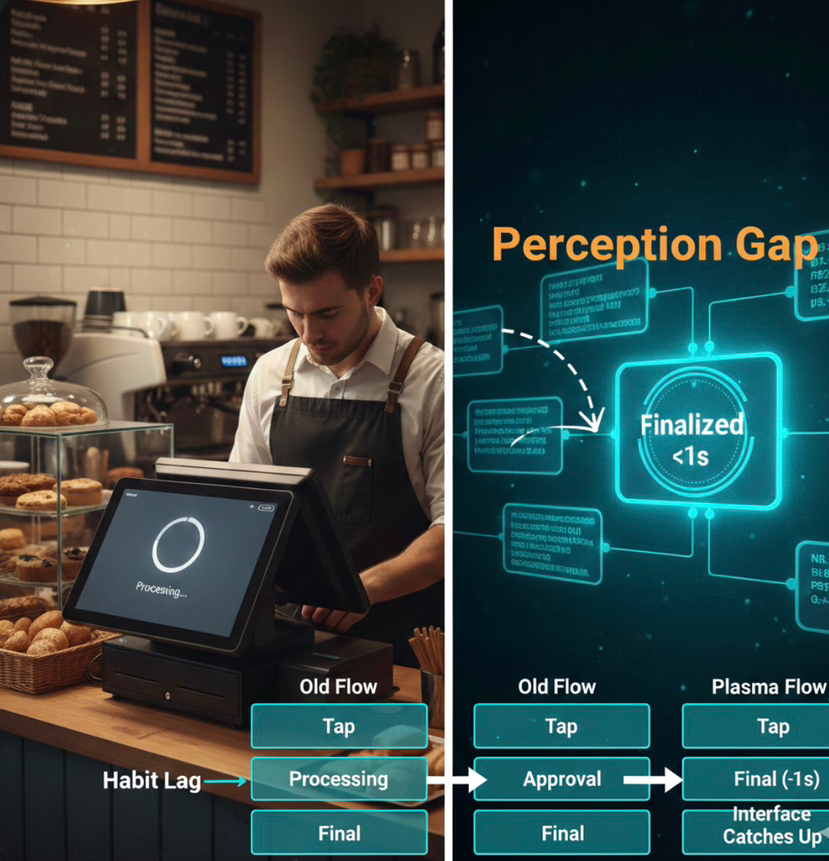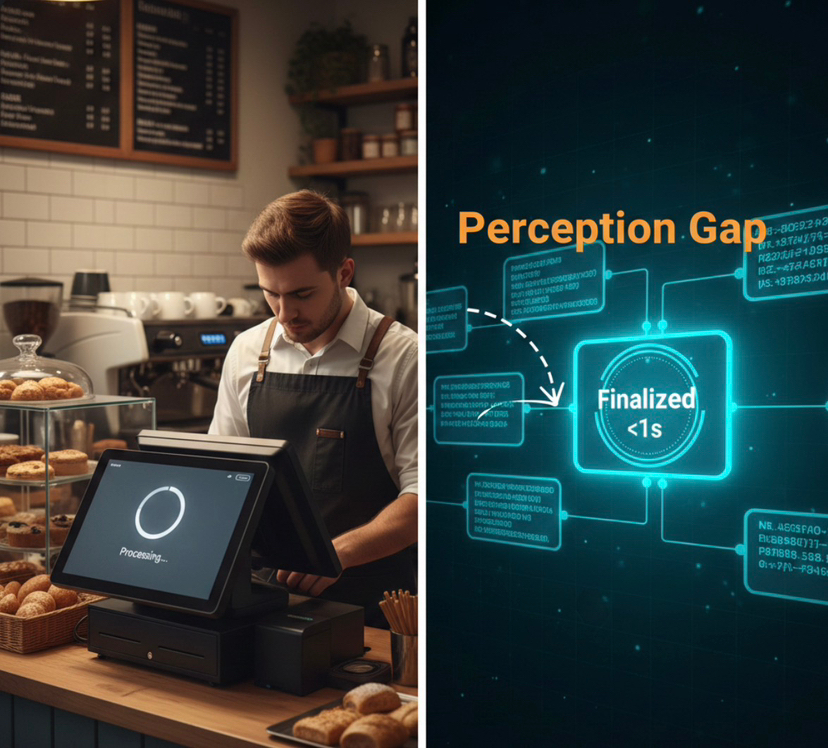
The receipt printed before anyone felt ready for it.
Not rushed. Not dramatic. Just… early.
A customer paid with USDT. The cashier turned the tablet around, expecting the usual pause — that small breath where systems think and people wait. Instead, the printer chirped and pushed out a slip that said PAID with a timestamp almost too close to the tap.
“Did it go through?” the customer asked.
The cashier looked at the screen. Still spinning.
Two truths, side by side. One already final. One still loading.
That’s the strange part about payments on Plasma. The chain doesn’t wait for the human rhythm. PlasmaBFT closes the transaction in under a second. Gasless USDT moves. No extra token step. No approval dance. The ledger updates like it’s finishing a sentence everyone else just started reading.
But stores don’t run on ledgers. They run on signals.
And the signal — the screen — was late.
So both people hovered in that awkward space where money is already history, but nobody feels safe acting on it. The customer didn’t grab the coffee. The cashier didn’t clear the order. Six seconds passed like a small standoff between reality and interface.
Nothing was wrong. That’s the twist.
The payment had settled cleanly. Bitcoin-anchored security underneath. Immutable record. Boring in the way finance loves. But the workflow at the counter was built for a world where finality takes longer than human doubt.
Plasma flips that order.
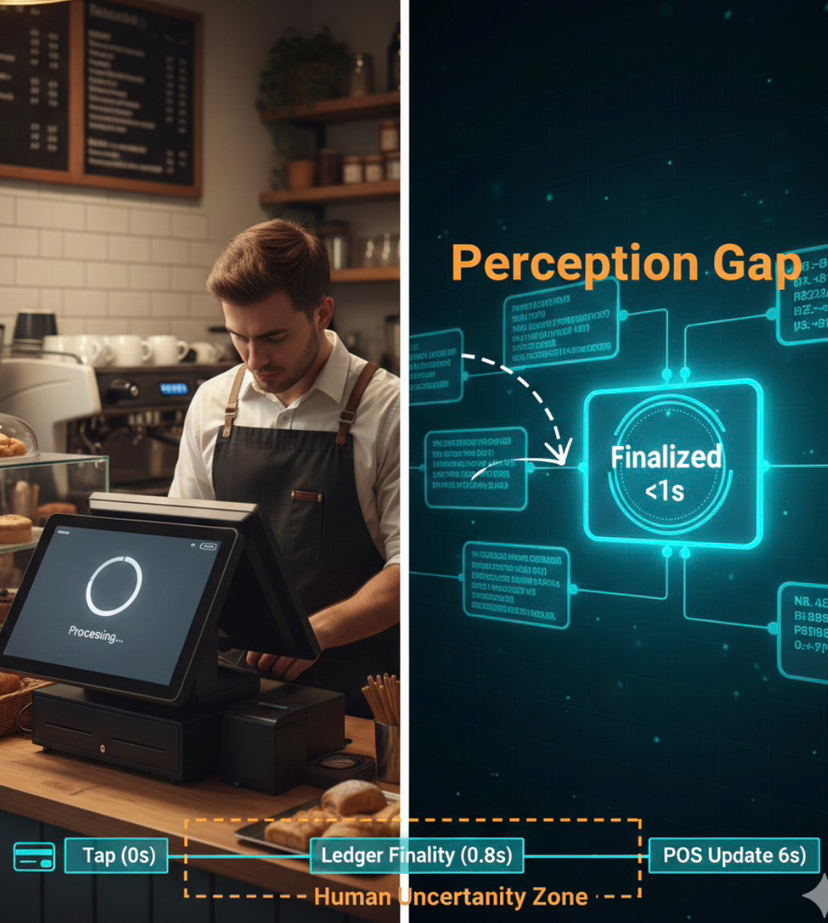
Later that day, it happened again. Different customer. Same pause. The staff started watching timestamps instead of spinners. They learned to trust the receipt time more than the animation on the screen.
That’s not a tech upgrade. That’s behavior retraining.
Because for years, “processing” meant something. It was the soft space where mistakes could still be stopped. Where managers could cancel. Where systems could fail quietly without money actually moving.
On Plasma, there’s no soft middle. Settlement lands first. Questions come after.
Finance teams like this. End-of-day reports line up clean. Stablecoin-first gas means fees are already inside the USDT flow. No topping up a separate token. No stuck transactions because someone forgot to refill operational gas. The ledger reads like a tidy notebook.
Operations feels the difference more.
Refunds don’t rewind history anymore. They create new history. A wrong charge becomes a second transaction back, not an erased one. Staff have to explain that to customers who are used to reversals that vanish like they never happened.
Nothing broke. But the old mental shortcut did.
Developers barely noticed the shift at first. Plasma runs full EVM through Reth, so the integration looked familiar. Smart contracts behaved. The payment module slotted in. From a code view, it felt like another chain.
From a counter view, it felt like time changed speed.
One supervisor described it best during closing: “The chain moves at decision speed. We move at confirmation speed.”
That gap shows up in small ways. Double taps when Wi-Fi lags. Customers thinking nothing happened because there was no delay. Staff waiting for a visual cue that now arrives after the financial fact.
The tension isn’t technical. It’s psychological.
Bitcoin anchoring never appears on a receipt, but it shapes trust in the background. Institutions care about that layer — neutrality, censorship resistance, records that are hard to rewrite. Retail workers care about something else: whether the moment at the counter feels safe.
Plasma solves the first cleanly. The second takes time.
A month in, the café stopped talking about speed. They started updating procedures. “Check timestamp first.” “If printed, don’t retry.” “Refund equals new payment.” These notes lived beside the register, not in the codebase.
That’s how infrastructure changes the real world — quietly, through checklists.
The network keeps doing the same thing every time: settling stablecoin payments almost instantly, without asking users to think about gas, tokens, or network states. The humans around it slowly rebuild habits formed in a slower era.
In the past, a payment felt complete when the screen said so. On Plasma, it’s complete when the ledger says so — which happens earlier than comfort expects.
So the new pressure point isn’t speed.
It’s trust arriving before people are ready to feel it.