


Most crypto debates around stablecoins always go to the same place. How fast is it. How cheap is it. How many TPS. Can I send USDT for zero fees.
Plasma already sits inside that story. No-fee transfers. Stablecoin-first design. Real-world payment rails. That part is clear.
But there is another layer that almost nobody talks about. Payments are not only about value. They are about information.
In real finance, there is no such thing as just a payment. It is always something. An invoice settlement. A payroll entry. A subscription renewal. A supplier payout. A refund. A dispute. A reconciliation record.
Banks did not win because they were fast. They won because they hold structured data that finance teams can actually use.
That is where Plasma has a real opportunity if it chooses to go deep.
Blind transfers do not scale for business
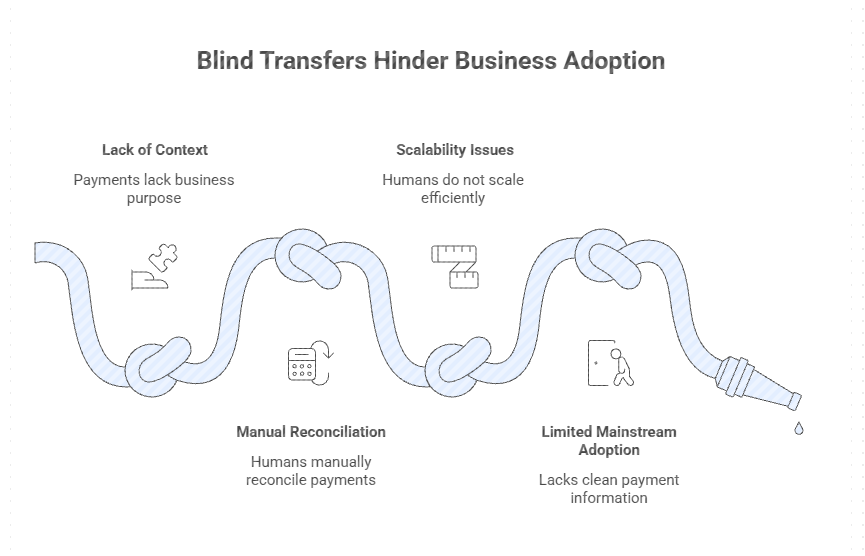
In crypto, a transfer is usually blind. Wallet A sends to wallet B. Done. The chain records it.
But businesses do not ask did money move. They ask what was this money for.
If a marketplace has 10,000 sellers, it does not need 10,000 blind transfers. It needs 10,000 payments mapped to orders, fees, refunds, commissions, tax adjustments.
If a company pays contractors globally, each payment must link to a job, a contract, a tax record.
If an e-commerce store issues refunds, those refunds must connect to original purchases.
Without structured context, stablecoin payments stay in crypto-native world where humans manually reconcile things. And humans do not scale.
Stablecoins will not go mainstream just because they are cheap. They will go mainstream when they carry clean payment information.
The boring part of finance is the important part
Traditional payment systems are boring on purpose. Messaging standards exist so payments can carry structured data end to end.
This allows accounting systems to auto-match invoices. It allows customer support to track failures. It reduces exceptions.
Exceptions are what finance teams fear the most. Not fees. Exceptions turn into spreadsheets, tickets, delays, and human labor.
When stablecoin rails reduce exceptions, that is when they become serious.
Plasma and the idea of invoice-level settlement
Plasma is already positioning itself as institutional-grade stablecoin infrastructure. That means higher standards.
Institutions ask different questions.
Can I reconcile it.
Can I audit it.
Can I trace it.
Can I explain it to compliance.
This is where Plasma could compete hard.
Imagine stablecoin transfers that are invoice-level clean. Not messy memo fields typed by humans, but structured metadata readable by systems.
A business could auto-match incoming USDT to invoices.
A supplier could instantly see which order got paid.
A support team could track a payment to a checkout ID.
An auditor could verify flows without manual digging.
That is not hype. That is adulthood for stablecoins.

Money always carries meaning
Here is a simple truth. People do not send money. They send meaning.
When a customer pays a merchant, the merchant needs context.
When a platform pays users, it needs purpose attached.
When a company pays a vendor, it needs reference and records.
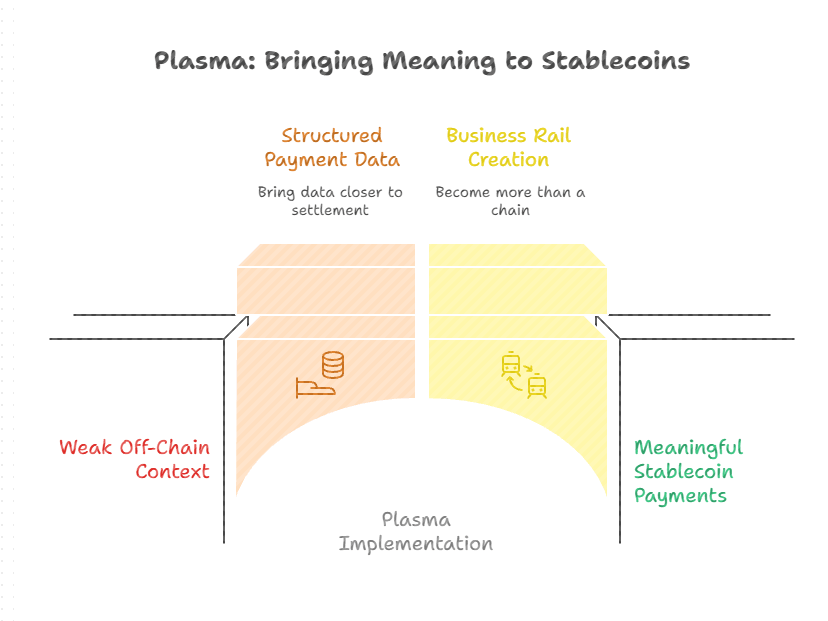
Most stablecoin systems today rely on weak off-chain context. The blockchain records value. Businesses build parallel databases for meaning.
If Plasma can bring structured payment data closer to the settlement layer, it becomes more than a chain. It becomes a business rail.
Refunds and disputes need structure
Refunds are a good example. A refund is not just sending money back. It is linking a new transfer to a previous one.
Retail systems require a trace. Purchase ID. Item. Date. Policy.
If stablecoin rails treat refunds as first-class payment events, systems can auto-relate them to original transactions.
That reduces chaos. It reduces fear. It makes commerce feel normal.
Operable payments are the next frontier
Serious payment rails are observable. Operations teams must monitor flows, detect anomalies, debug issues.
Stablecoin infrastructure must produce trace IDs, event logs, and clean references tied to real business processes.
If Plasma connects stablecoin settlement with operability and structured data, it can build a strong identity. Not just cheap transfers. Professional payment infrastructure.
Why normal users benefit too
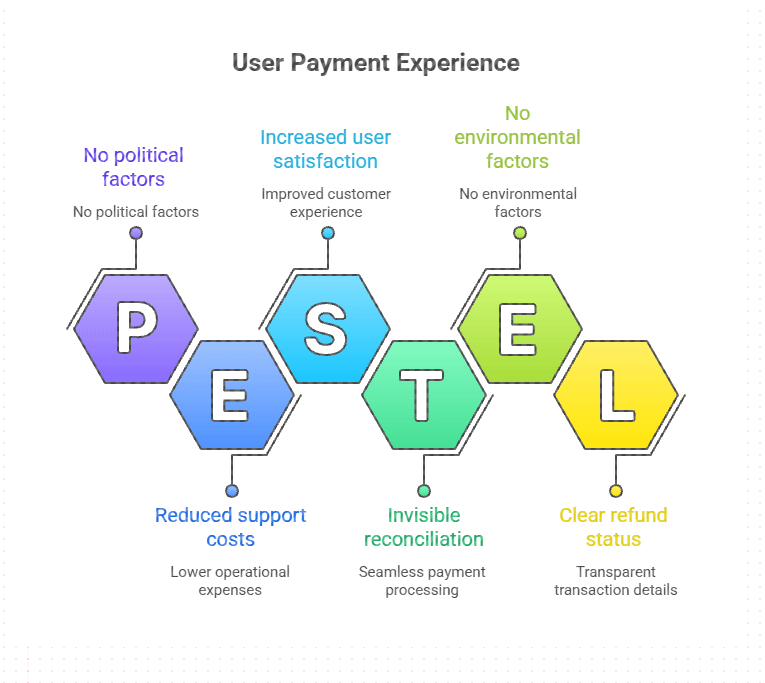
This is not just a business story. Better payment data improves user experience.
Clear receipts.
Clear refund status.
Less where is my money moments.
Less support tickets.
Less anxiety.
Good fintech UX is built on invisible reconciliation systems. Users feel smoothness without seeing the complexity underneath.
The bigger picture
Stablecoins are only half the story. The other half is the message they carry.
Plasma has already focused on speed and low fees. That is the foundation. But if it moves into structured, data-rich payments, it can turn blind transfers into real business payments.
Stablecoins become actual money when they can be run on by systems, not just sent between wallets.
If Plasma succeeds here, it will not look viral. It will look boring. Companies quietly using stablecoins for real operations. Marketplaces running payouts cleanly. Finance teams not afraid.
That kind of success does not trend. It lasts.

