

When I first started exploring blockchain infrastructure more deeply, one problem kept repeating itself bridges. Every time liquidity needed to move from one chain to another users were forced to trust additional layers sign multiple transactions and accept new forms of risk. It always felt like patchwork. Powerful technology on one side, powerful technology on the other and in between… a fragile connector.
That’s why the idea of Plasma XPL positioned as a “bridge killer” through chain abstraction immediately caught my attention.
For me, chain abstraction represents a shift in thinking. Instead of forcing users to understand which chain they are on, how assets move or which bridge they need the complexity disappears behind the interface. The user interacts with the application. The infrastructure handles the routing. The experience becomes seamless.
Plasma XPL approaches this challenge from a payments first perspective. Rather than focusing only on raw throughput numbers it focuses on execution efficiency and predictable settlement. In a world where fragmented liquidity slows down adoption abstraction becomes more than a feature it becomes a necessity.
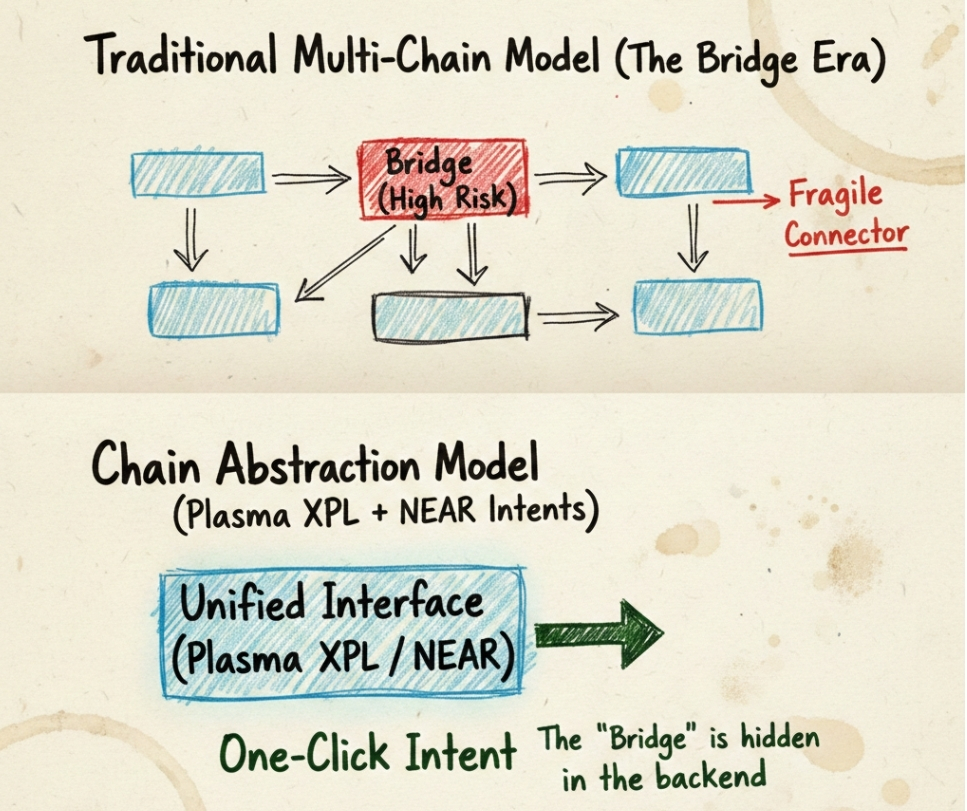
In the traditional model every bridge becomes an additional attack surface. Liquidity fragments. Transactions multiply. Fees stack up. For users, it introduces friction. For developers it introduces complexity. And for the ecosystem it introduces systemic risk.
What I appreciate about Plasma XPL is that it reframes the problem. Instead of optimizing bridges it reduces the need for them.
Chain abstraction means the user no longer cares which chain hosts the final settlement. The protocol handles that logic in the background. Assets and value move without the user navigating cross-chain mechanics manually. The system abstracts the chain away.
That changes everything.
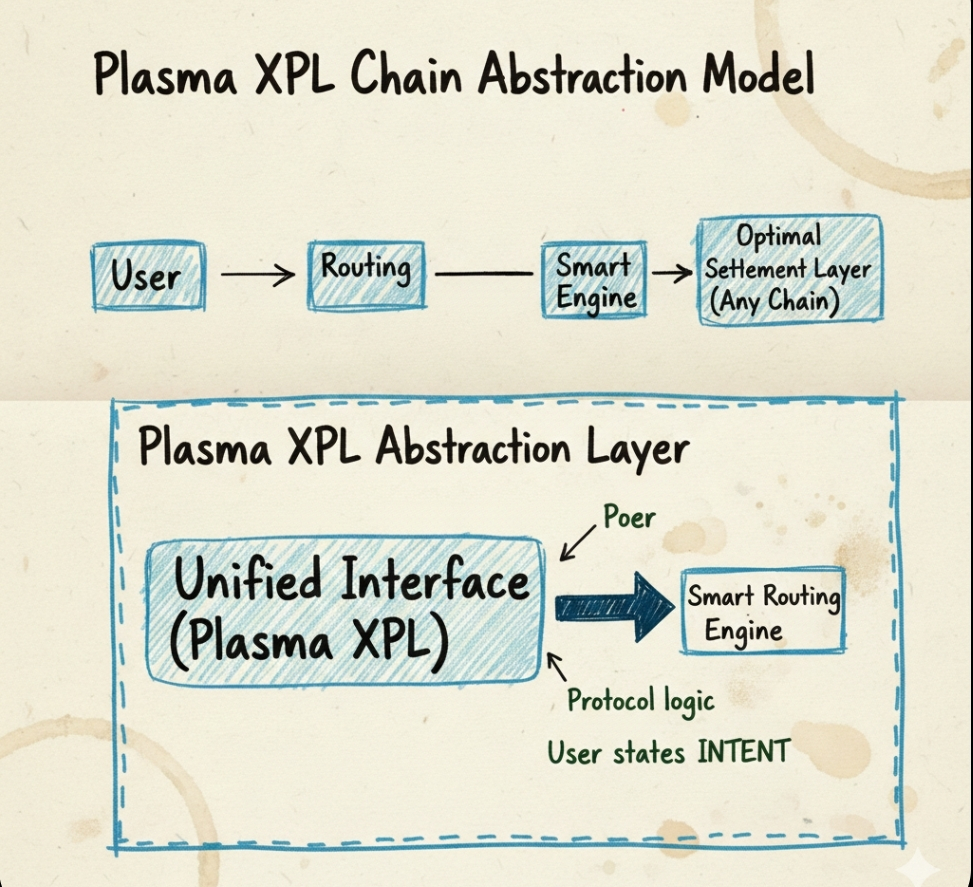
Here the complexity is internalized. The user sees one environment. The routing engine determines where execution is most efficient. Settlement occurs where it makes the most sense. From a usability standpoint that is powerful.
From a security standpoint, it’s transformative.
Bridges have historically been among the most exploited components in crypto. By minimizing reliance on external bridge structures, Plasma XPL reduces a major risk vector. Instead of external connectors, the abstraction layer coordinates internally optimized flows.
That’s what makes the phrase “bridge killer” compelling to me. It isn’t about destroying interoperability — it’s about redesigning it.
Another dimension I find important is liquidity efficiency. Fragmentation across chains often creates shallow liquidity pockets. Users must move funds to where activity exists. With abstraction, the protocol can route execution to liquidity rather than forcing liquidity to chase execution.
That subtle shift improves capital efficiency.
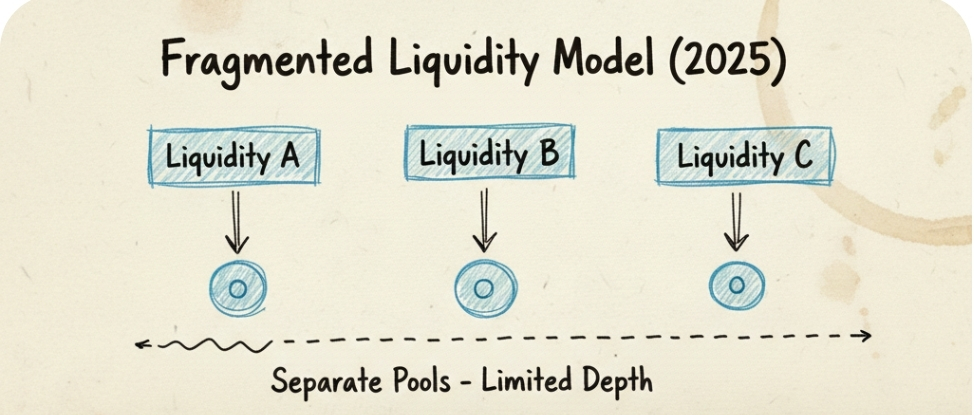
Abstracted Model (Plasma XPL)
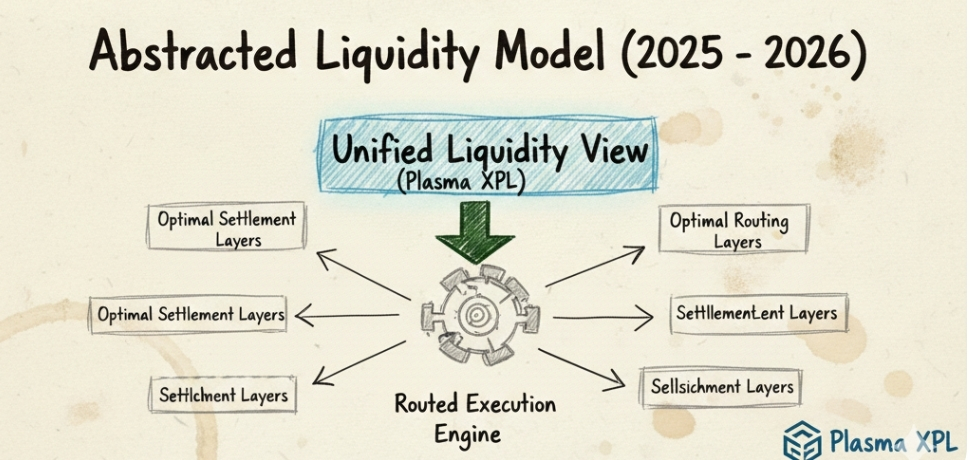
In this model liquidity is no longer isolated across chains. Instead of users manually shifting capital, the protocol routes execution intelligently. Fees become more predictable slippage decreases and transactions settle more efficiently. The result is a smoother user experience and stronger capital efficiency across the ecosystem.
From my perspective this is where adoption accelerates.
Most users do not care about chains. They care about outcomes. They want fast confirmation reasonable fees, and reliability. Developers want infrastructure that scales without introducing additional points of failure. Institutions want reduced systemic risk.
Chain abstraction aligns with all three.
Plasma XPL’s payments first design makes this especially interesting. Payments demand consistency. Micro-transactions demand low overhead. Enterprises demand stability. When abstraction is paired with execution efficiency it creates a foundation suitable for real world use rather than speculative experimentation.
I also see abstraction as a long-term structural advantage. As the blockchain landscape grows more modular and specialized the number of chains will likely increase not decrease. Without abstraction complexity compounds. With abstraction complexity gets absorbed at the protocol level.
That is sustainable design.
The “bridge killer” narrative isn’t about eliminating cross-chain functionality it’s about making it invisible. When interoperability becomes native and seamless users stop thinking about chains entirely. They simply interact.
To me Plasma XPL represents a shift from reactive interoperability to proactive abstraction. Instead of patching fragmentation with more bridges it builds a layer that neutralizes fragmentation at its root.
If this model continues to mature the impact could extend beyond payments. DeFi gaming enterprise settlement and digital identity systems could all benefit from reduced cross chain friction.
Ultimately, what excites me most is not the marketing phrase but the architectural direction. Abstraction reduces friction. Reduced friction increases adoption. Increased adoption strengthens ecosystems.
And when users no longer notice the chains beneath them that’s when blockchain truly begins to scale.
Plasma XPL, through chain abstraction is aiming directly at that future. #plasma

