


As blockchain technology evolves from experimental finance into mission-critical digital infrastructure, the criteria for success are becoming far stricter. Security and decentralization are no longer differentiators they are assumed. What increasingly determines whether a network can support mainstream adoption is execution quality: how quickly transactions settle, how consistently applications perform under sustained demand, and how predictable operating costs remain as usage scales. Plasma was designed specifically to address these challenges by centering its entire architecture on fast, deterministic, and scalable transaction execution.
Plasma does not position itself as a general-purpose blockchain that attempts to manage every layer of Web3 simultaneously. Instead, it is built as an execution-first network whose primary responsibility is to process smart contracts and transactions with minimal latency and high throughput. This specialization allows Plasma to optimize deeply for responsiveness, making it particularly suitable for decentralized finance platforms, on-chain gaming economies, AI-driven automation systems, digital marketplaces, and algorithmic trading engines—use cases where milliseconds matter and congestion can quickly undermine trust.
A defining feature of Plasma’s technical design is parallel transaction processing. Many traditional blockchains execute transactions sequentially, which naturally creates bottlenecks when network activity surges. Plasma analyzes transaction dependencies and executes multiple operations simultaneously whenever possible. This horizontal scaling model allows throughput to increase with demand while preserving fast confirmations and stable fees. For users, this results in smoother interactions and fewer stalled transactions. For developers, it creates a predictable execution environment in which applications can expand without being constrained by systemic congestion.
Smart-contract efficiency forms another cornerstone of Plasma’s philosophy. The network minimizes redundant computation and reduces conflicts between transactions that modify overlapping pieces of on-chain state. By optimizing how execution is scheduled and resolved, Plasma enables decentralized applications to operate continuously without dragging overall network performance down. High-frequency systems—such as automated trading strategies, liquidity-rebalancing engines, and multiplayer game worlds—benefit especially from this structure because they rely on rapid and consistent state updates.
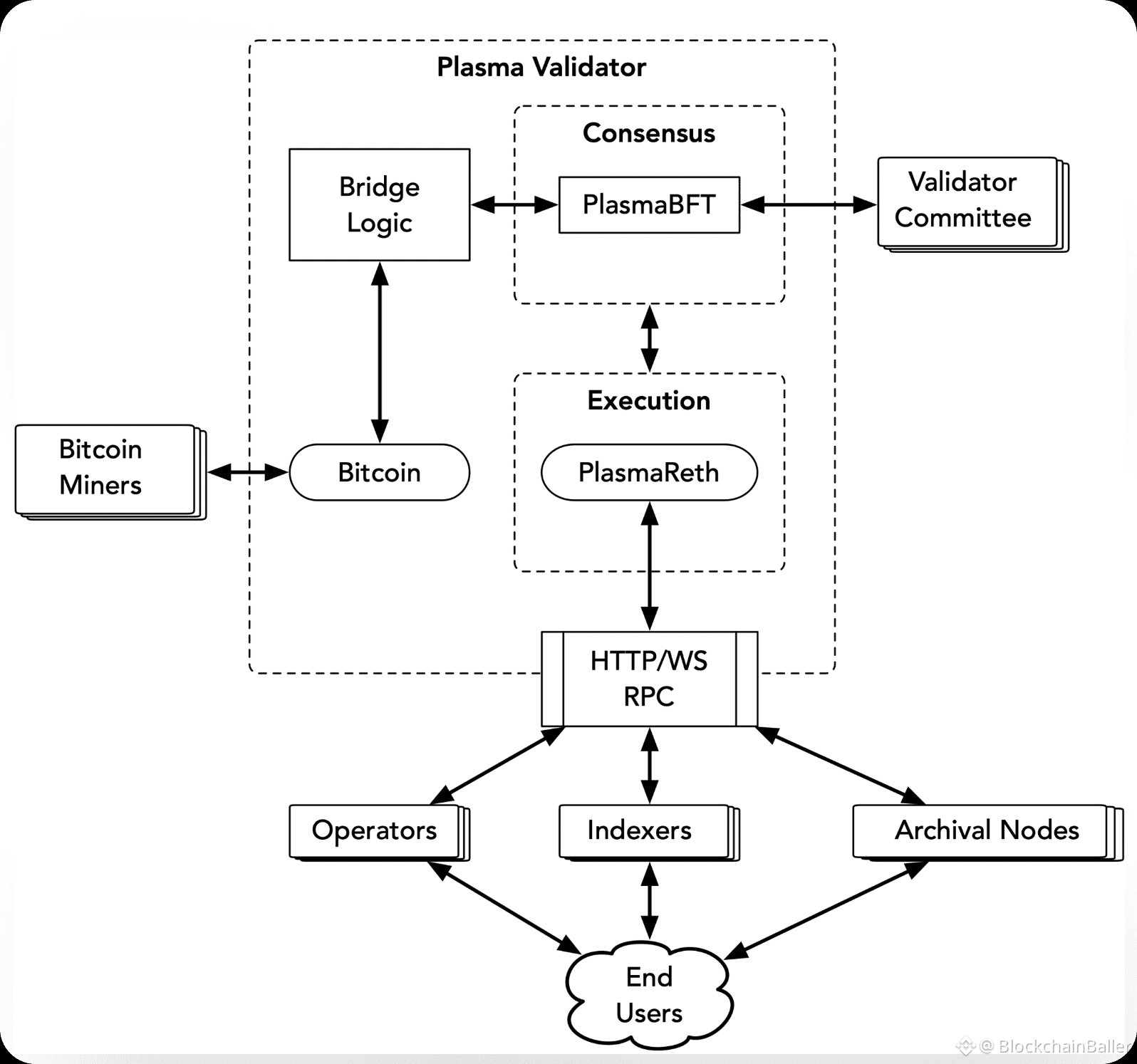
Plasma is also architected to function inside a modular blockchain ecosystem rather than as a closed platform. In this increasingly common design paradigm, different networks specialize in different responsibilities. Plasma serves as the execution layer, while other chains may focus on settlement finality, governance processes, or data availability. Assets and messages can move between these layers, with Plasma handling computation-heavy and time-sensitive workloads that require rapid finality. This composable structure allows the broader Web3 stack to scale more efficiently by letting each layer evolve independently while remaining interoperable.
Security remains non-negotiable in Plasma’s design. Performance improvements come from architectural optimization rather than weakened validation rules or relaxed consensus assumptions. Transactions are executed deterministically and verified rigorously across the network, preserving correctness even at high throughput. This balance between speed and reliability is essential for financial protocols and enterprise platforms that depend on predictable system behavior and cannot tolerate execution errors.
From a builder’s perspective, Plasma emphasizes accessibility and stability. Support for familiar development frameworks and established smart-contract standards lowers the barrier for new teams entering the ecosystem. Transparent fee models and consistent execution behavior make it easier to forecast operating costs, design sustainable products, and deploy applications meant for mass audiences rather than experimental pilots. This developer-centric orientation is critical for fostering an ecosystem capable of delivering consumer-grade Web3 services.
Plasma’s performance profile makes it especially valuable for applications that struggle on slower networks. In decentralized finance, faster execution improves liquidity efficiency, reduces slippage, and enables advanced risk-management strategies. In gaming and virtual environments, low latency supports immersive real-time interaction and persistent digital economies. For AI agents and automated systems, Plasma provides an environment where strategies can run continuously, reacting instantly to changing conditions without network-induced delays.
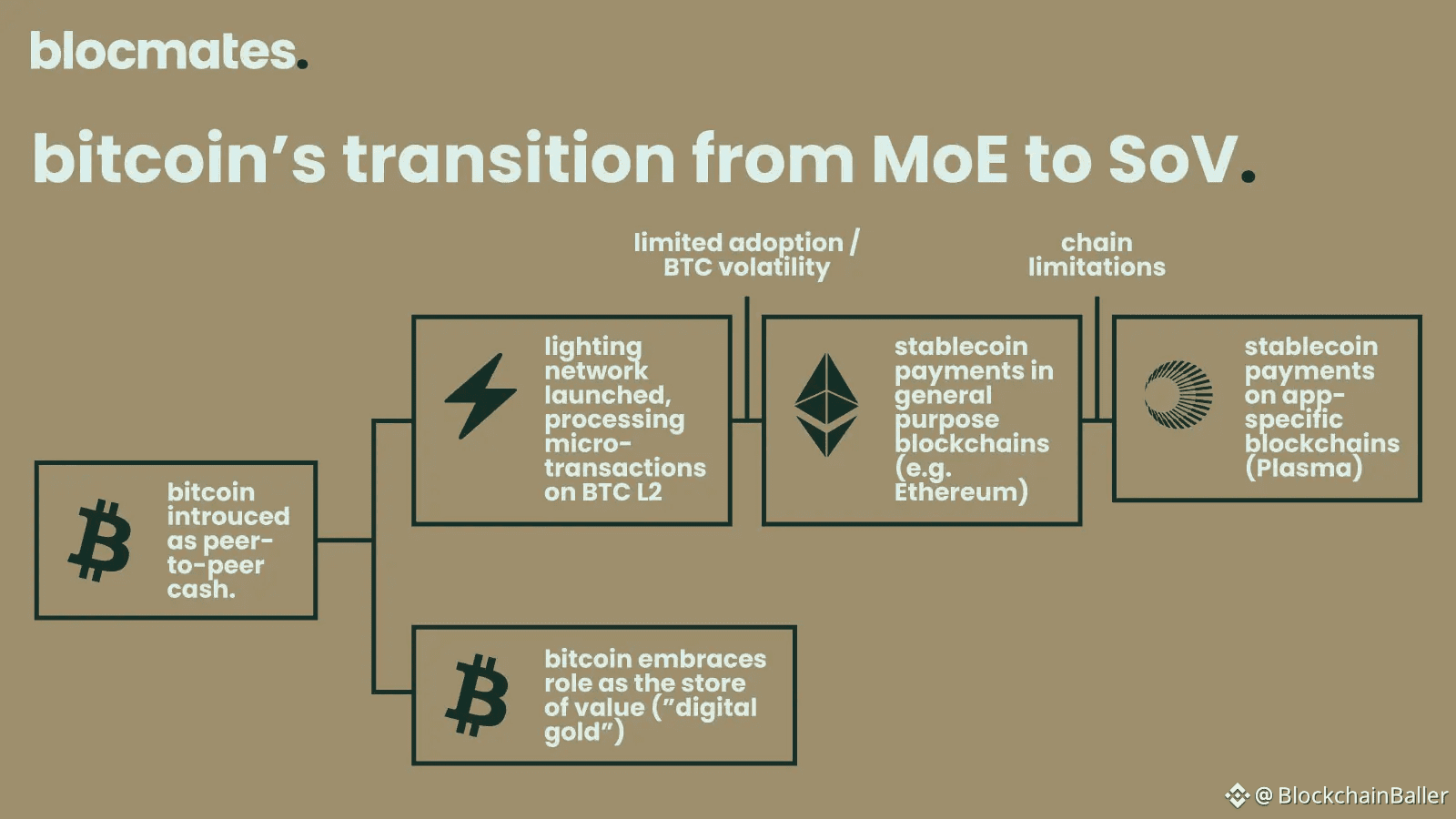
The network is designed with future usage patterns firmly in mind. As Web3 evolves toward machine-driven activity and always-on services, blockchains must handle constant transaction streams rather than sporadic bursts. Plasma is engineered for this reality, enabling decentralized applications to behave more like live digital platforms than static programs triggered occasionally. This machine-native orientation positions Plasma as infrastructure for an increasingly automated on-chain economy.
Economically, Plasma aims to foster sustainable growth rather than speculative congestion. By reducing bottlenecks and smoothing fee volatility, the network creates a healthier environment for both users and developers. Stable operating conditions encourage long-term participation and make it easier for applications to deliver consistent experiences—an essential requirement for onboarding mainstream audiences and surviving across multiple market cycles.
Plasma also aligns closely with the broader shift toward modular blockchain architecture. Instead of forcing a single network to manage execution, settlement, data availability, and governance, Plasma concentrates on excelling at execution alone. This disciplined specialization strengthens the overall Web3 ecosystem by allowing each layer to improve independently while remaining interoperable with the others.
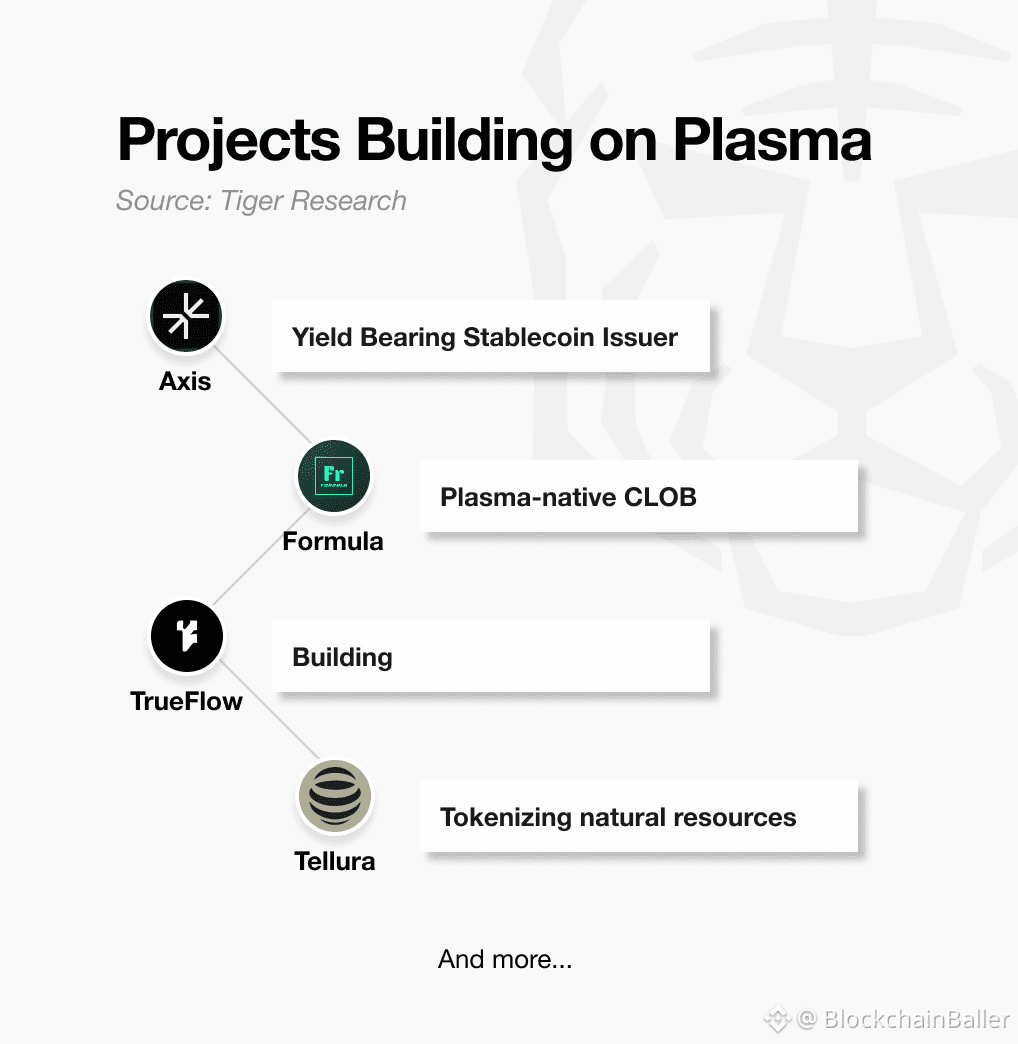
What ultimately defines Plasma is clarity of purpose. It does not attempt to solve every challenge in decentralized technology. Instead, it commits to delivering fast, reliable execution at scale. This focus enables deep technical optimization and positions Plasma as a foundational component for next-generation decentralized applications that require performance comparable to traditional digital infrastructure.
As blockchain adoption accelerates, the quality of underlying systems will matter more than narratives or short-term speculation. Platforms serving millions of users or powering continuous automation demand execution environments that are resilient, predictable, and efficient. Plasma positions itself as one of the engines capable of supporting this next phase of decentralized growth—helping Web3 move closer to real-time, global-scale operation.

