Everything started not from a blank slate. The story of the Plasma project is a story of rebirth. Initially, it was the C2X platform, which operated on the basis of the old Terra blockchain. When Terra collapsed (do you remember that loud story with LUNA?), the developers did not give up. Behind them stood a huge South Korean gaming corporation Com2uS (these are the giants who created hits like Summoners War). They had the resources and experience, so they decided to create their own independent home. Thus, XPL was born (from the words "Explore" and "Play").
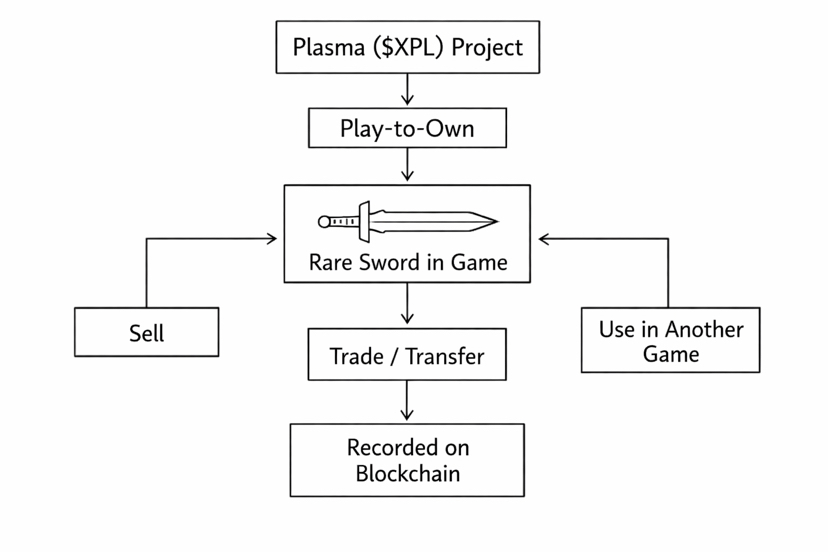
The main idea of the project was simple but revolutionary for its time. They wanted to change the approach from "Play-to-Earn" (play to earn), which turned games into boring work, to "Play-to-Own" (play to own). This means that when you get a rare sword in the game, it is truly yours. You can sell it, gift it, or transfer it to another game, and no one will take it from you because it is recorded on the blockchain.
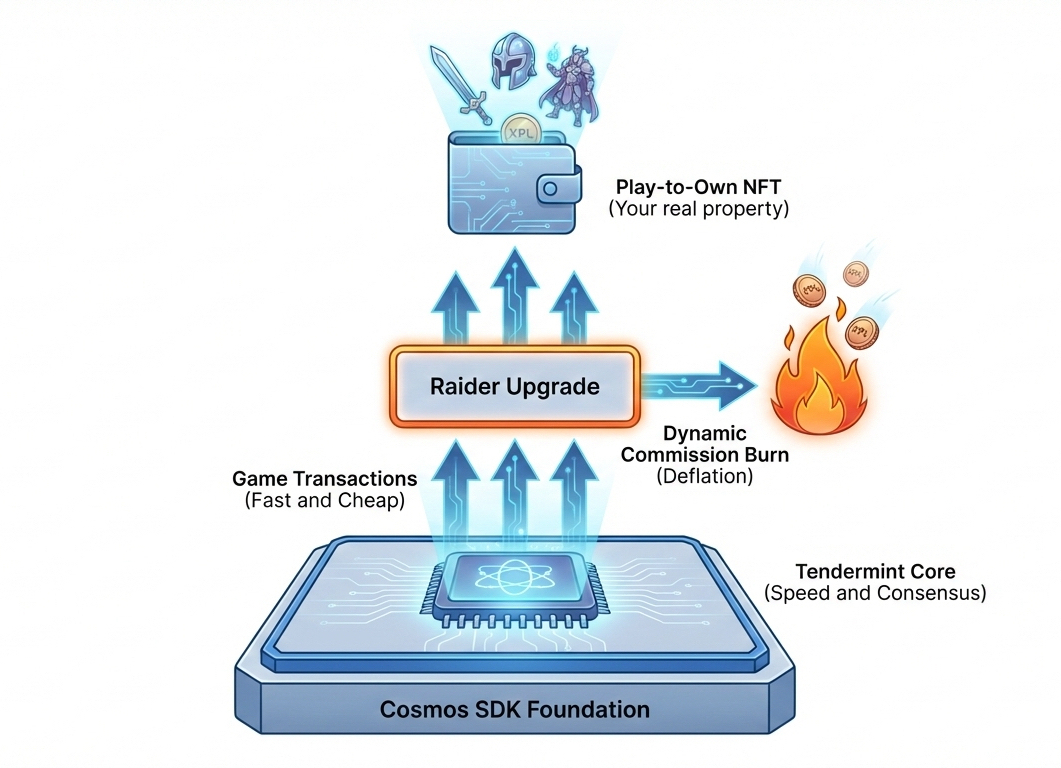
Technically, they have chosen a very smart path. XPLA is built on the Cosmos SDK. To put it simply, it is the "internet of blockchains." This allows $XPL to easily communicate with other networks, be fast, and, most importantly for gamers, have cheap transactions. No one wants to pay $10 in fees to sell an item for $5.
The XPL token in this system is fuel. It is needed for everything: to pay the transfer fee, to vote for changes in the network (after all, this is a decentralized system), or to buy something in the internal store. But over time, developers realized that just being "fuel" was not enough. The ecosystem began to fill with games. They moved "Walking Dead: All-Stars," "Summoners War: Chronicles," and other projects here. This gave the token real use, rather than speculative interest. People bought the token to use it in games.
 Reaching the present, we see how the project has matured. The recent updates, which we call "Raider Updates," have changed the economy. Previously, the number of tokens increased, which pressured the price. Now mechanisms have been introduced that burn a portion of the coins with activity. It's like a fire: the brighter it burns (the more people play), the less firewood (tokens) remains, making them rarer and more valuable. Now XPL is no longer an experiment. It is a bridge between ordinary gamers, who may not even know the word "crypto," and the world of Web3. They have made complex technologies invisible "under the hood." You just play, while actually managing crypto assets. As you can see, the project has evolved from dependence on someone else's network and crisis to creating its own independent ecosystem with real games and a deflationary economy. But now$XPL it's no longer about promises, but about a working business, where the price of the token depends on how interesting it is for people to play games on this platform, so draw your conclusions!
I would also like to add some data regarding technological development @Plasma
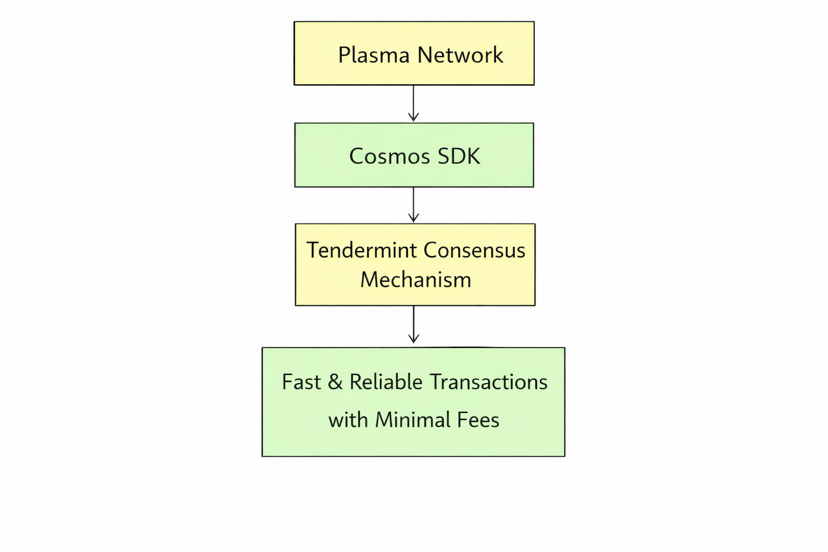
Now I will explain in simple language how the Plasma network is technically arranged. At the core of it all lies the Cosmos SDK technology, which can be imagined as the foundation or building block for creating modern blockchains that can easily communicate with each other, and the speed and reliability of confirming all operations is ensured by the Tendermint consensus mechanism. This combination allows us to process a huge number of gaming actions in just a few seconds with minimal fees, so players don't worry about unnecessary expenses while playing.
 Recently #plasma an important technical update called the Raider upgrade was implemented, which significantly changed the internal economic model of the network. The main feature of this upgrade lies in the mechanism of dynamic fee burning, which means a simple thing: the more actively people play connected games and conduct transactions, the more XPL tokens are automatically and permanently removed from circulation, as if they are burning in a fire, creating a deflationary effect and helping to maintain the value of the asset in the long term. All this complex infrastructure works invisibly for the ordinary user to ensure the implementation of the main principle of Play-to-Own, where all the gaming items you earn are real NFTs and your actual property, which can be freely and safely moved between different games and even other networks without technical barriers.
A very interesting project, especially for the gaming community, has great development potential, a cool idea, and currently there is demand and interest in the PLASMA project and their XPL token.