


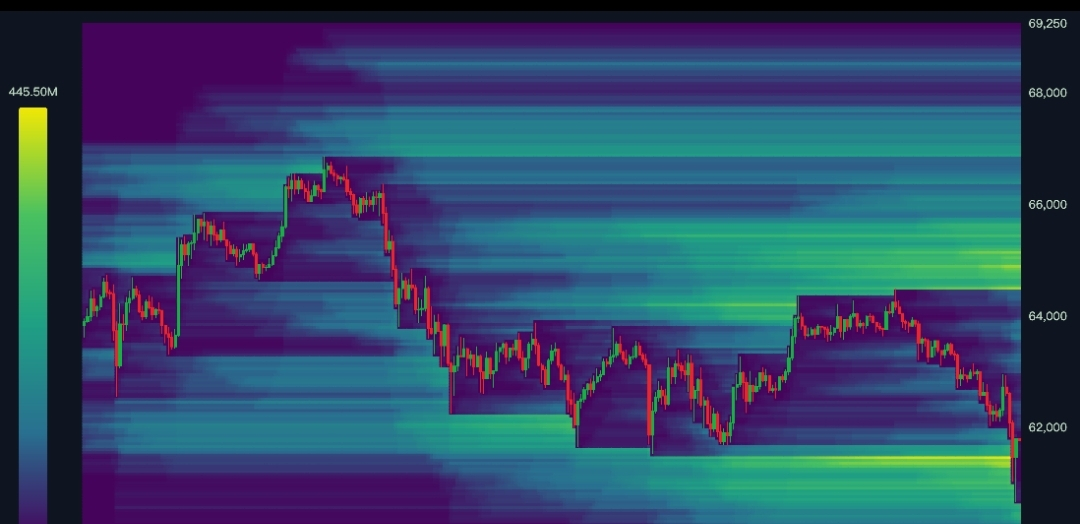
Every time the market drops suddenly, the same sentence appears:
“Whales are manipulating.”
But very few people understand how large players really operate.
Because whales don’t move markets with random market buys and sells.
They move markets with liquidity engineering.
First: What Is a Whale?
In crypto, a whale is:
• A large holder
• A fund
• An institution
• An exchange
• Early adopters with size
But size alone doesn’t give control.
Liquidity does.
The Real Weapon: Liquidity
Price doesn’t move because someone sells.
Price moves because there isn’t enough opposing liquidity.
If the order book is thin:
Small size → big move.
If the order book is deep:
Huge size → minimal move.
Whales understand this better than anyone.
They don’t chase price.
They hunt liquidity pockets.
How Liquidation Cascades Work
This is where retail gets trapped.
In leveraged markets (especially futures), traders place:
• Stop losses
• Liquidation levels
These are visible zones of forced selling or buying.
Whales identify:
• Clusters of long liquidations
• Clusters of short liquidations
Then they push price just far enough to trigger them.
Once liquidations start, the market does the rest.
It becomes self-fueling.
That’s why crashes feel violent —
they’re often chain reactions, not single sell orders.
The Fake Breakout Strategy
Another common tactic:
Push price above resistance
Trigger breakout traders
Trigger short liquidations
Sell into that liquidity
Retail thinks:
“New trend started.”
Whales think:
“Liquidity delivered.”
This happens on both sides — upside and downside.
Why Whales Prefer Boring Markets
Contrary to belief, whales don’t love volatility.
They love:
• Low attention
• Low volume
• Range-bound markets
Because that’s where they can accumulate without moving price.
The loud moves?
Those are usually exit or distribution phases.
On-Chain Data Reveals Patterns
With blockchain transparency, we can observe:
• Exchange inflows from large wallets
• Dormant coins waking up
• Accumulation during fear
Historically:
Whales accumulate during panic.
Retail accumulates during euphoria.
That inversion is consistent across cycles.
The Psychology Layer
Whales don’t need to control the entire market.
They just need to understand how retail reacts.
Retail behavior is predictable:
• Buy green candles
• Sell red candles
• Overuse leverage
• Chase narratives
Large players exploit predictability — not people.
The Hard Truth
Markets aren’t manipulated because they’re unfair.
They’re moved because:
• Liquidity is uneven
• Leverage is high
• Emotions are predictable
If you remove leverage and shorten your time horizon,
whales lose power over you.
Long-term holders don’t get liquidated.
Overleveraged traders do.
The Real Advantage
You can’t outspend whales.
But you can:
• Avoid leverage traps
• Understand liquidity zones
• Recognize fake breakouts
• Think in cycles, not candles
Whales win because they wait.
Most retail loses because they react.
Price isn’t random.
It’s a battlefield of liquidity, leverage, and psychology.
And once you understand that —
you stop feeling hunted…
and start feeling prepared.