
After spending enough time watching this market, I’ve realized something simple. Most trading mistakes don’t come from lack of knowledge. They come from moments when we lose control.
Before placing your next trade, pause for a moment. Not to check the chart again or scroll the timeline for confirmation. Just pause long enough to ask yourself one honest question: are you trading with a plan, or reacting to a feeling?
I’ve seen this pattern repeat across different market conditions and cycles. During volatile sessions, liquidation data always tells the same story. Billions disappear from the market within hours. These aren’t careful exits. They’re forced ones. Positions built on impulse, excessive leverage, or unplanned risk eventually reach a level where the decision is no longer in the trader’s hands.
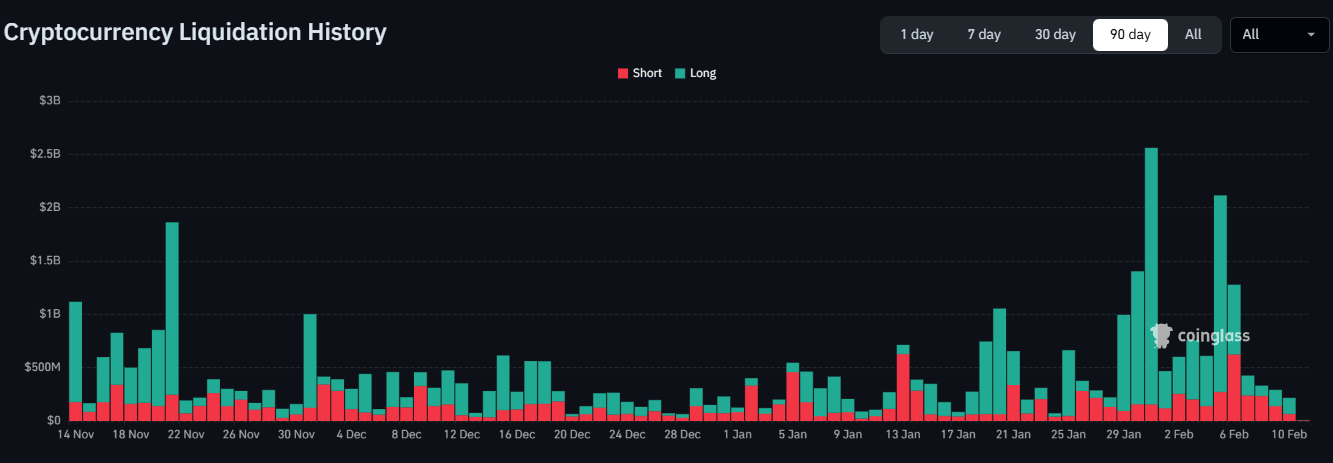
Behind every liquidation spike is a position that was opened with confidence but without protection.
Traders with structure define risk before entering. Traders driven by emotion only discover risk after volatility hits. By then, the trade is no longer a strategy. It becomes a reaction.
What I’ve noticed over time is that the real damage rarely happens during the crash itself. Crashes are loud and obvious. When price drops fast, everyone suddenly becomes careful. Risk feels real again. People reduce size and pay attention.
The more dangerous phase usually comes after.
Once volatility slows, the market often moves into a quiet sideways range. No clear trend. No strong direction. Just movement that feels tradable but lacks conviction. This is where many traders slowly lose control, not through panic, but through overconfidence.
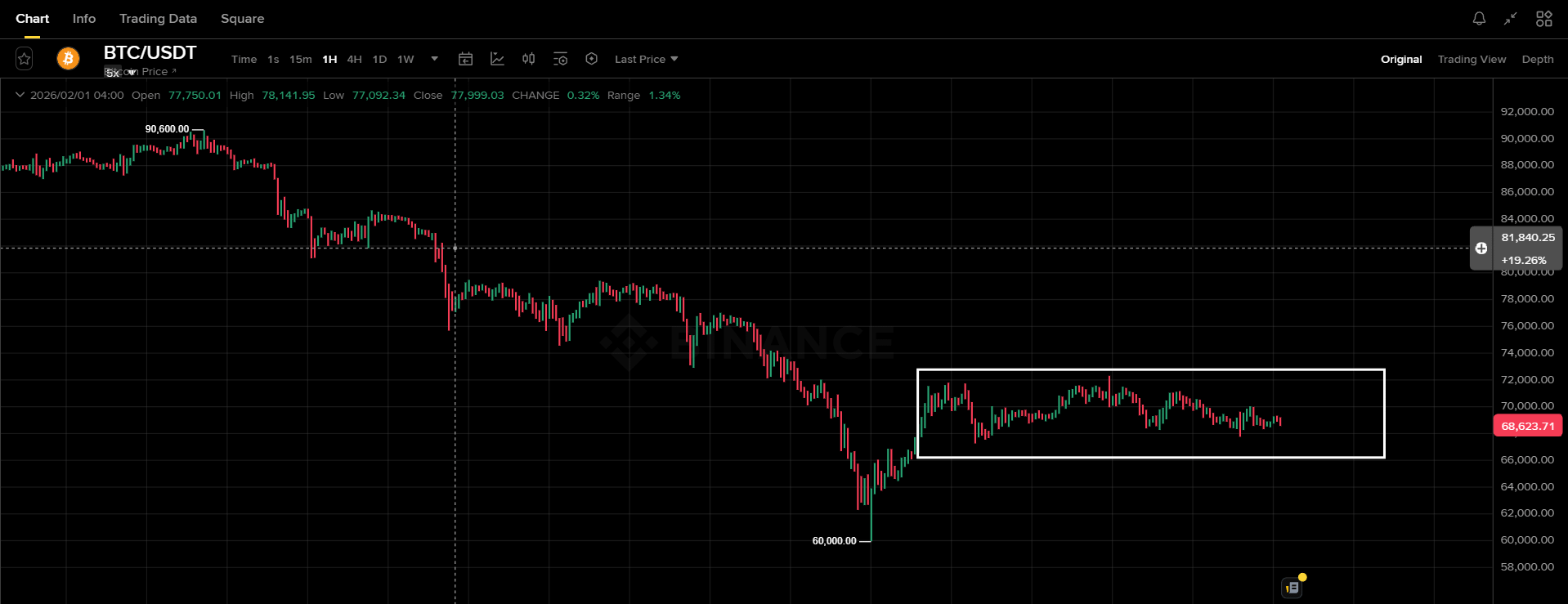
In uncertain conditions like this, clarity becomes rare. Price creates false signals. Small moves look meaningful. Every bounce feels like an opportunity. Without a defined system, it becomes easy to rely on instinct. Trades become more frequent. Exposure slowly increases. Risk builds quietly.
Traders with discipline behave differently. They reduce activity and wait for structure. They understand that unclear markets are not invitations to trade, but tests of patience. When there is no clear edge, protecting capital becomes the strategy.
Every market cycle follows a familiar psychological rhythm. Confidence grows during trends and disappears during corrections. But most damage happens during the emotional transitions between those phases.
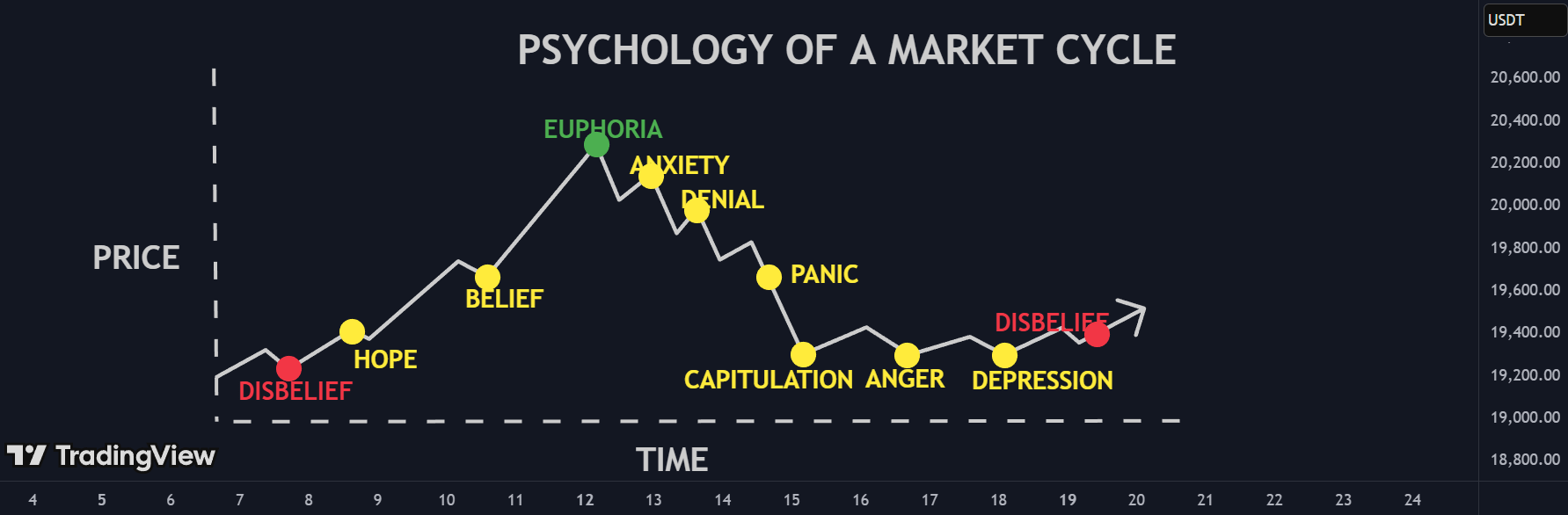
Most traders don’t lose at the bottom. They lose reacting to emotions between phases.
Over time, I’ve noticed there are always two types of participants in the market.
The first group trades with clarity. They know why they enter, where they are wrong, and how much they are willing to lose. If the setup isn’t obvious, they stay patient. If risk isn’t defined, they stay small. Their priority is survival first, growth second.
The second group trades to escape a feeling. Sometimes boredom. Sometimes frustration from earlier losses. Sometimes the quiet fear of missing out while others seem to be moving ahead. The trade becomes emotional before it becomes logical. And once emotion leads, discipline slowly fades.
The market rarely removes traders in a single dramatic moment.
Most exits happen slowly, through a series of small decisions made when no trade was required.
Not every movement deserves a reaction.
Not every opportunity needs to be taken.
And not every day is meant for trading.
One thing this market keeps teaching, again and again, is that sometimes the most professional decision is doing nothing when nothing is clear.
So before placing your next trade, ask yourself honestly:
Are you following a system or feeding an emotion?
The market will always offer another opportunity.
But it rarely returns the discipline you lose.
Just a reminder to myself as much as to anyone reading this.
$BTC $ETH $BNB #Marketpsychology


