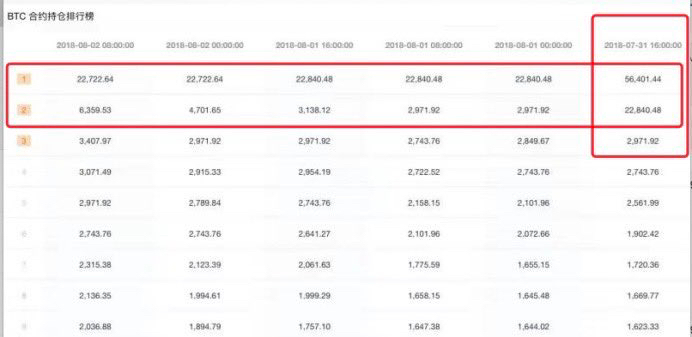
Recently, the cryptocurrency community has exploded: a user named Yang Xiuchun has publicly exposed himself, claiming that in 2018, OKX (then called OKEx) froze his account on the grounds of 'suspected manipulation of the BTC market', resulting in not only liquidation of contracts but also the freezing of the remaining 517.86 BTC in his spot wallet, which has not been returned for 8 years.
This is not a rumor; Yang Xiuchun has publicly disclosed part of his ID information, email correspondence, customer service response screenshots, and even directly mentioned OKX executives @star_okx and @Haiteng_okx. OKX Haiteng also published a lengthy response early this morning, acknowledging that they froze accounts back then but emphasized it was to 'protect the platform and other users', stating that the platform itself contributed 2500 BTC to the risk reserve.
Let’s briefly review the timeline of the incident:
1. July 2018: BTC price fluctuated around $7,000, and Yang Xiuqun opened a long contract of about 50,000 BTC (allegedly with 20x leverage) in a personal account, resulting in a massive position size.
2. Platform intervention: OKX notified users by phone and directly froze accounts on the grounds of 'abnormal large positions significantly affecting market stability.' Users claimed they had agreed to reduce their positions but were not given the opportunity to operate.
3. Forced liquidation + liquidation: After the account was locked, the platform quickly forced liquidation, causing severe price fluctuations and ultimately leading to liquidation. OKX's later announcement claimed, 'The rapid price drop caused the liquidation.'
4. Balance freeze: After liquidation, Yang Xiuqun's spot wallet still had 517.86 BTC that did not participate in the contract, yet it was also frozen. After multiple appeals over 8 years, the platform's responses were mostly 'under investigation' or referred to old announcements, never clearly explaining why this portion of the assets was not returned.
5. February 2026: The incident reignited, Yang Xiuqun publicly shared an email chain, and Haiteng responded that if they had not frozen the accounts back then, it would have led to more users facing liquidation. Users then asked: Liquidation of contracts can be understood, but why should the spot balance be deducted?
The core divergence in statements lies here:
- OKX's perspective: The user's position was abnormally large (equivalent to a large portion of the platform's liquidity at that time), high leverage + refusal to cooperate in reducing positions = market manipulation risk. To maintain overall platform stability, decisive risk control was necessary. The platform also used its own funds to cover losses and avoid systemic liquidation.
- User perspective: I am willing to reduce my position, but you don't give me the opportunity and force liquidation. Then you blame me when the forced liquidation causes a plunge? More importantly—why were the coins in the spot wallet frozen for 8 years when they did not participate in the contract at all? Which clause in the user agreement allows for the deduction of user-owned assets? Customer service has also said, 'Liquidation will not use customer wallets to offset.'
This incident reminds me of several questions worth deep consideration for all CEX users:
1. Where is the boundary of risk control?
CEX, as a centralized platform, has the right to intervene in extreme situations (such as the environment with extremely poor liquidity in 2018). However, after intervention, should it be public and transparent? Can the reasons for freezing, operation records, and liquidation prices be shown to users? If users cooperate in reducing their positions, is the platform willing to provide a window period?
2. Can spot assets and contract assets be mixed together?
Contract liquidation is a high-risk play, and users signed the agreement. However, the coins in the spot wallet are fundamentally the user's private property. What is the legal and contractual basis for the platform to freeze them altogether under the pretext of 'related accounts' or 'overall risk'? If this is possible, does it mean that any user's large spot holdings now carry the risk of being 'jointly liable'?
3. How can trust be rebuilt?
The crypto space has come to a point where the trust foundation of CEX is already very fragile. After the FTX collapse, people are more inclined to think 'not your keys, not your coins.' However, many users (including myself) still keep a portion of their assets in CEX for convenience. If similar incidents keep happening, who would dare to keep large assets in long-term custody?
To be honest: I am not siding with anyone. Yang Xiuqun's position is indeed exaggerated. In that market environment back then, the platform may really have faced systemic risks. But not repaying 517 BTC (now worth tens of millions of dollars) for 8 years is hard to justify both logically and legally. If OKX really believes there is no issue, they can publicly share the complete timeline, liquidation records, and risk control logs for the community's judgment.#黄金白银反弹 #易理华割肉清仓 #美国伊朗对峙 #全球科技股抛售冲击风险资产