

Hello everyone, I am Moon. Currently, there are many AI software available on the market, such as: Qianwen, Doubao, DeepSeek, and so on. There are so many that I can't count them all. They have larger models, faster reasoning, and more complex frameworks.
But if we look at it over a longer period of time, we will find an anomalous fact:
The more complex the system, the shorter its lifespan.
The reason lies not in computing power, nor in algorithms, but in structure.
The vast majority of AI agents still essentially exist only once -
Start, execute, end, the world resets.
They do not accumulate, nor do they change themselves.
Vanar's AI stack chose a completely different path:
No longer treating the agent as a 'tool to be called', but rather designing it as a system unit that can exist long-term.
The end of the toolchain is 'unable to live'.
Traditional toolchains excel at solving local problems:
One task, one call, one result.
But once entering long-term operational scenarios, problems will erupt in focus:
• System restart, experience disappears
• Agent replacement, historical rupture
• Collaboration interruption can only start from scratch
This is not an engineering bug, but rather a problem with design prerequisites.
The default assumption of the toolchain: the system does not need to remember itself.
And the premise of a 'life system' is precisely the opposite.
Memory is not a function, but rather a prerequisite for the existence of the system.
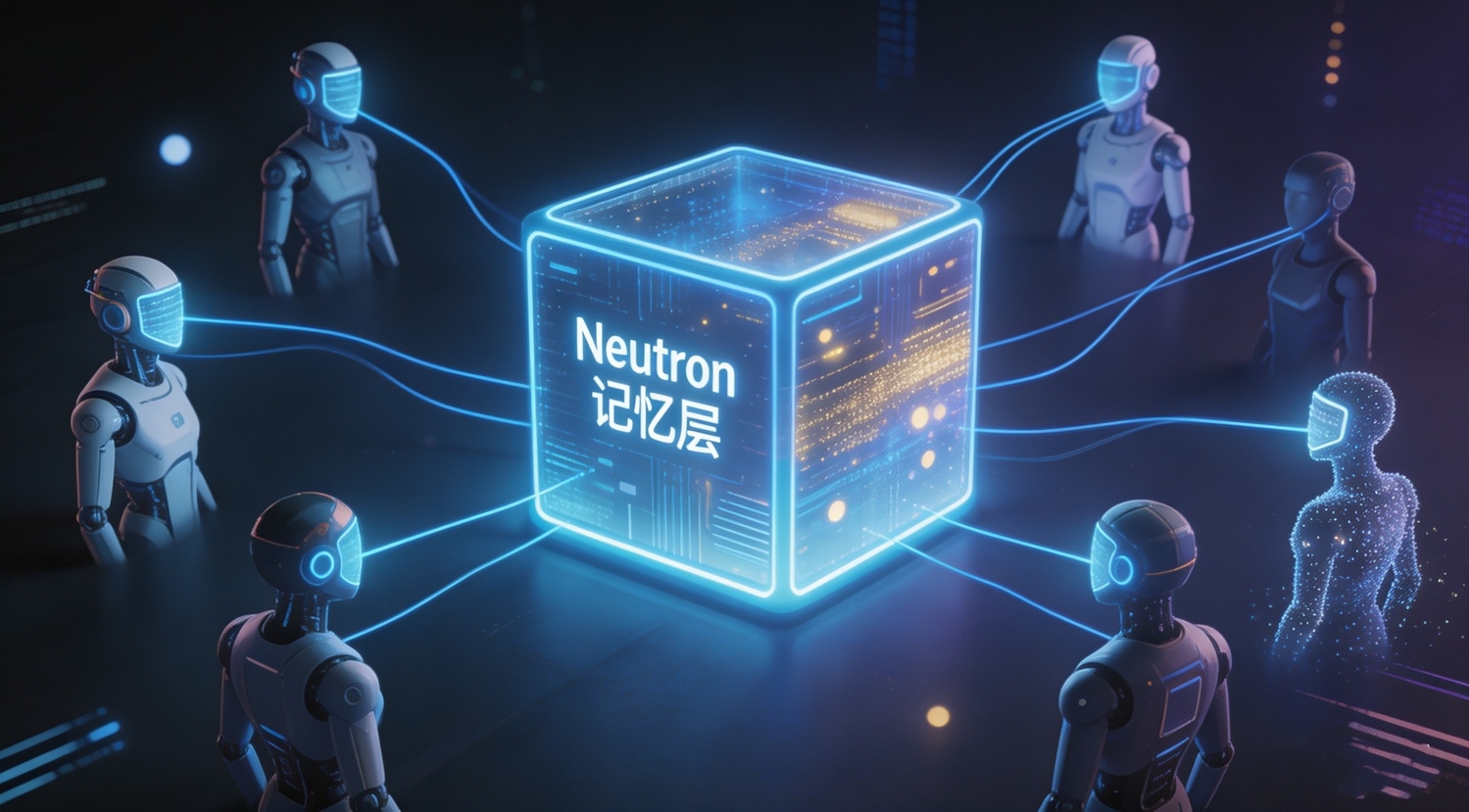
Vanar's first step is to strip memory away from agents.
Neutron does not add an additional storage layer to the agent, but rather redefines 'memory ownership':
• Memory exists outside the agent
• The lifecycle ends, but memory remains
• Behavior history can be continuously validated and inherited
This means the agent is no longer a disposable entity, but a carrier of a segment of history.
Only when memory begins to exist independently can the system first have the possibility of 'continuation'.
Reasoning begins to 'accumulate', rather than repeat.
Reasoning without memory is merely reaction.
The significance of Kayon lies in making reasoning no longer an isolated event, but a link in a time series.
When decisions are based on inheritable history:
• Past mistakes will affect current judgments
• Successful paths will be reinforced, not forgotten
• Reasoning logic will shift over time.
This is not about the model becoming smarter, but about the system beginning to learn how to exist.
Reasoning has a sense of direction for the first time.
Actions are no longer temporary, but form structures.
A single agent can never constitute a system.
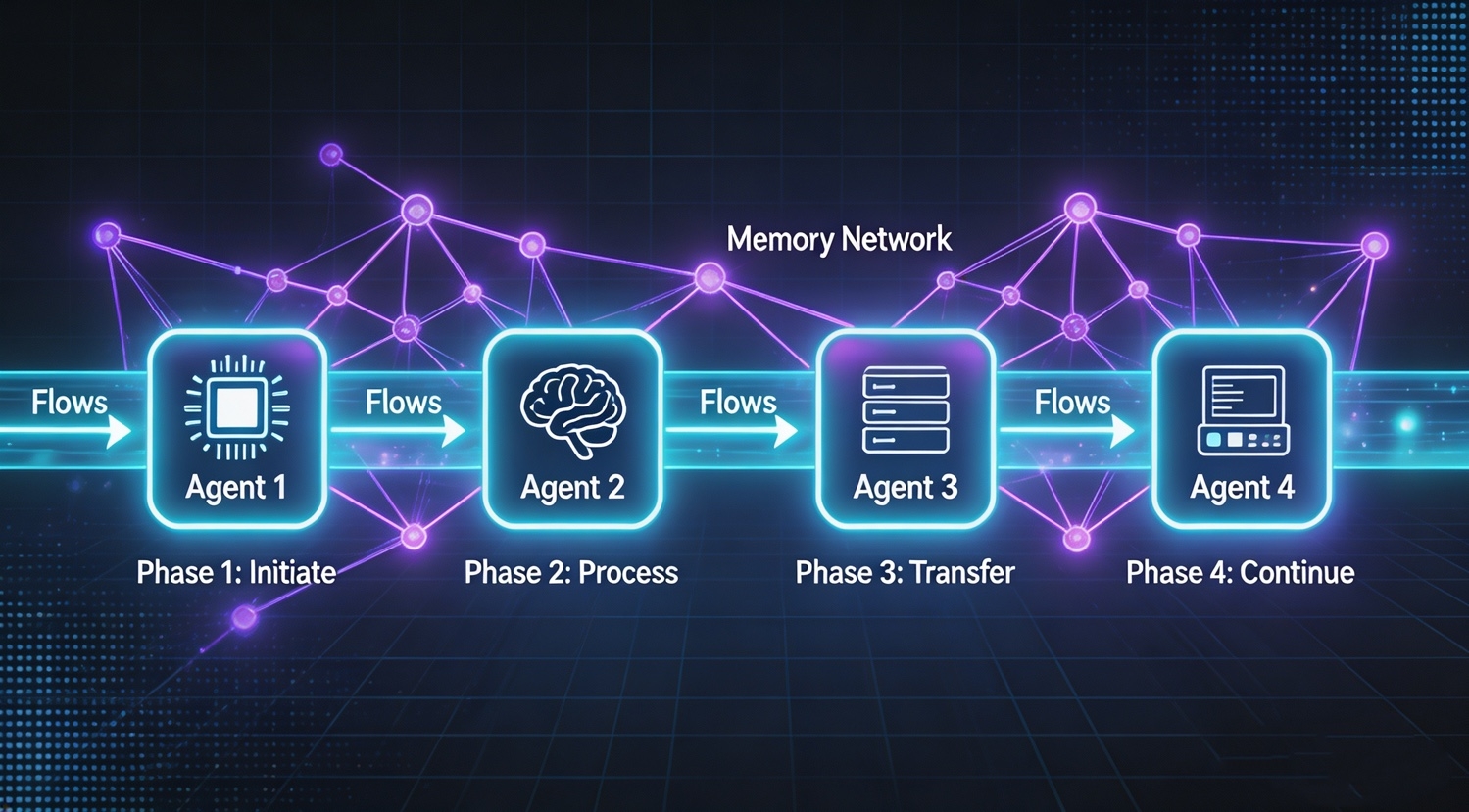
Flows address another overlooked issue:
How actions extend across agents and time.
Under this structure:
• The task process itself can be remembered
• Different agents can relay to achieve long-term goals
• Collaboration methods will adjust with history
This makes actions no longer immediate responses, but stable behavior patterns.
Only when the process has memory can the system possibly 'grow an organization'.
When the three merge, the tools begin to 'grow'
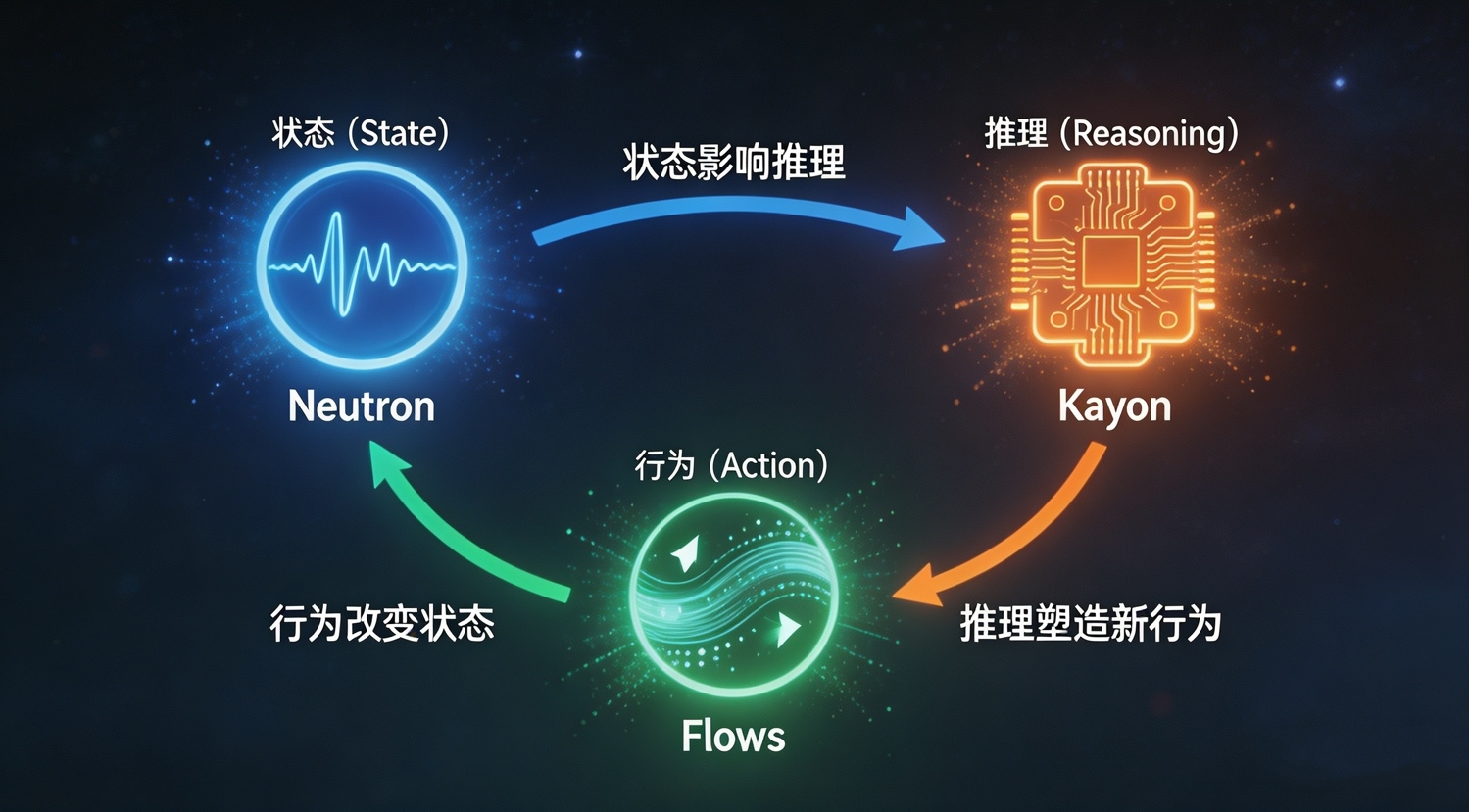
Neutron provides continuity,
Kayon provides judgment,
Flows provide actions.
The result of the three overlapping is not a more complex tool, but a closed-loop system:
Behavior alters states,
States influence reasoning,
Reasoning shapes new behaviors.
This is precisely the condition under which growth and evolution occur.
Ending
The value of tools lies in efficiency, while the value of life systems lies in time.
Vanar's AI stack is not answering 'how to run the task better', but rather trying to answer a more fundamental question:
If AI is to exist long-term, how should it live?
When agents begin to possess memory, continuous reasoning, and inheritable action structures, they are no longer just a node in the toolchain.
but is rather a digital life system that is taking shape.
