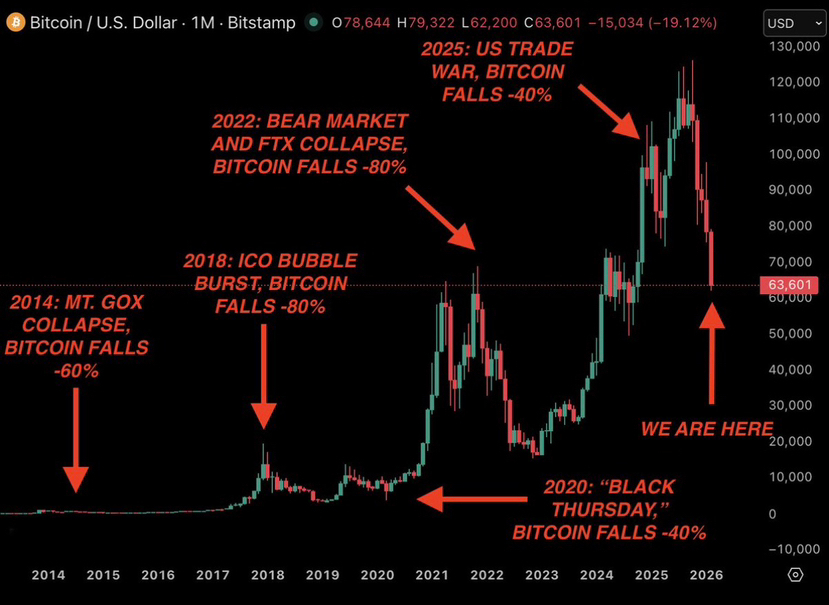
The crypto market is well-known for its explosive growth cycles interspersed with prolonged downturns. When the market enters a downtrend, prices fall sharply, liquidity dries up, bad news is rampant, and investor sentiment is overshadowed by fear. This is the most difficult phase, but it is also when the distinction between emotional investing and strategic investing becomes clear.
Signs of a declining market
Coin prices decline for an extended period, recover weakly, and are quickly sold off.
Low trading volume, new cash flow has almost disappeared.
Continuous negative news: regulatory tightening, bankrupt exchanges, projects halting operations.
The general sentiment is pessimistic, many people are leaving the market or 'panic selling'.
What should investors do during this phase?
1. Prioritize capital preservation
In a downtrend, the most important goal is not to make a lot of money but to avoid losing money. Limit leverage, do not go 'all-in', and always keep some cash on hand to be proactive in any situation.
2. Reduce trading based on emotions
Fear and hope are the two most dangerous emotions. Buying because it seems cheap or selling because of fear of going to 0 often leads to mistakes. Only enter trades with a clear plan and specific stop-loss points.
3. Focus on assets with a strong foundation
Downtrend is when many weak projects are eliminated. Prioritize coins that have:
Cash flow, community, and real products
A transparent team that survives through many cycles
Top position in the market
4. Consider this a time to learn and prepare
A quiet market is the best time to:
Learn technical analysis and capital management
Research projects, monitor large cash flows
Prepare a list of potential assets for the next cycle
5. Patience and discipline
No market declines forever, and no market rises forever. Those who survive a downtrend with their capital and experience intact are often the ones who benefit the most when the uptrend returns.