I used to think congestion, gas spikes, and network instability were just part of blockchain life.
You wait. You refresh. You try again later.
Until I tried to imagine how a real automated system would behave in that environment.
Not a user.
Not a trader.
A system.
Something that must run every minute of the day without asking permission from the network.
That’s when I realized most chains are built for people, not for operations.
The question that broke the illusion for me
I asked myself:
Can this network behave the same way on Monday at 9 AM and on Saturday at 3 AM?
On most chains, the honest answer is no.
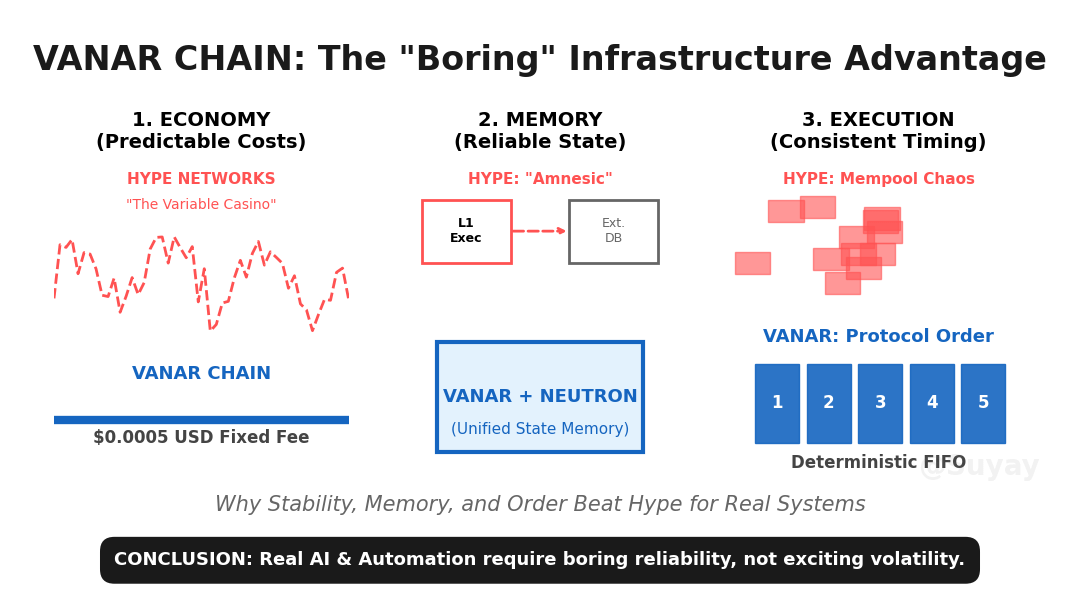
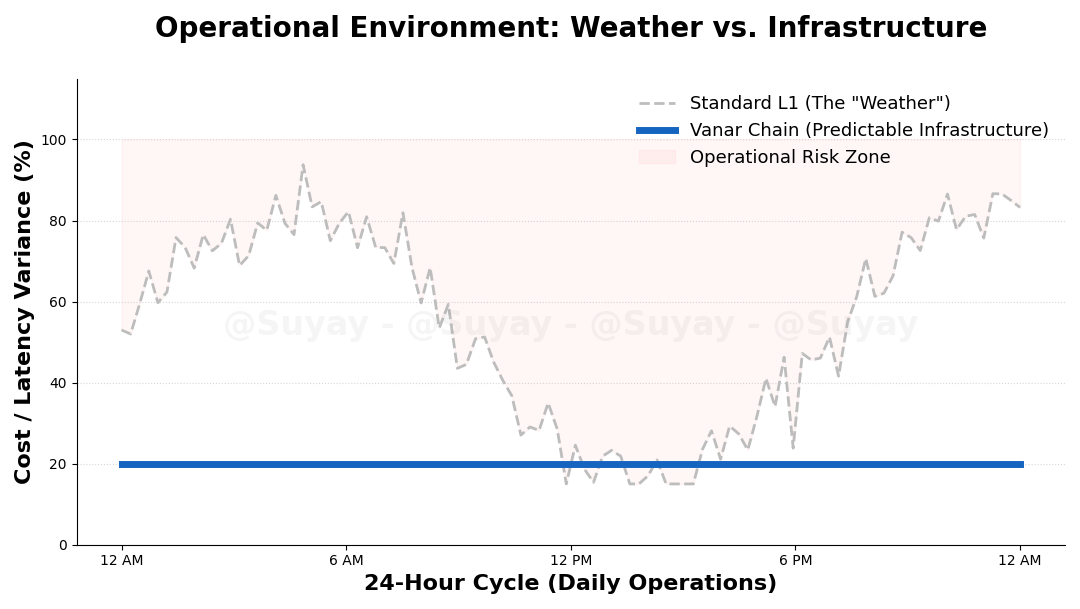
Because fees depend on activity.
Speed depends on congestion.
Order depends on mempool chaos.
Which means the environment itself is unstable.
And any system built on top inherits that instability.
That’s not infrastructure. That’s weather.
Why this made me look at Vanar with different eyes
What caught my attention was something that, at first, sounded almost too simple:
Fixed fees managed through a native USD-denominated gas model (USDVanry).
I had seen networks brag about TPS, AI, modularity, rollups…
But very few were addressing the most basic operational requirement:
Can the chain behave predictably regardless of what others are doing?
Vanar’s approach to fixed fees and gas tiers is not a marketing detail. It’s an environmental guarantee.
And that changes how you design systems on top of it.
The second realization: order and time matter more than speed
Then I went deeper into how Vanar treats transaction ordering and block behavior.
Most networks treat ordering as a side effect of congestion and priority bidding.
Vanar treats it as part of the protocol design.
That’s a subtle difference, but for automation, accounting, AI agents, or any repetitive logic, it’s massive.
Because now the chain is not just fast.
It’s consistent.
Why memory suddenly became part of the equation
While reading about Neutron, I understood something I had never considered before:
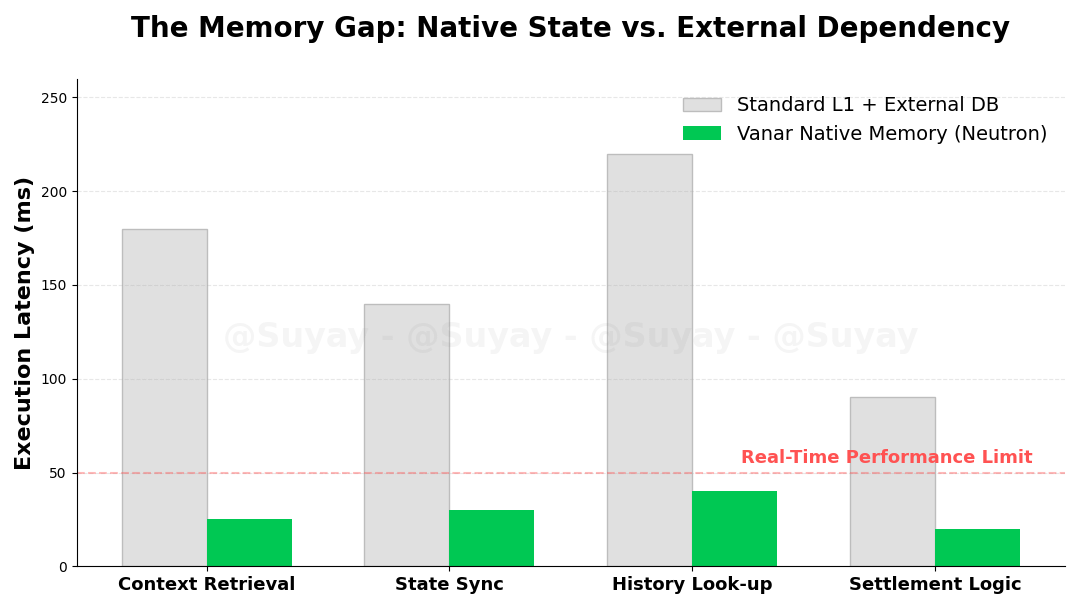
Most systems on other L1s constantly depend on off-chain databases to remember what just happened.
They execute on-chain, but they think off-chain.
Vanar, through Neutron’s data and business intelligence approach, reduces that gap.
The chain is not just a settlement layer. It becomes part of the system’s memory.
That’s when it clicked for me: this is not about performance. It’s about environment design.
I stopped looking for the most powerful chain
I started looking for the one that behaves the same way every day.
Because real systems don’t need hype.
They need:
Stable costs.
Predictable ordering.
Consistent timing.
Reliable state
And those are precisely the things Vanar seems obsessed with at the protocol level.
Conclusion
I didn’t get interested in Vanar because of what it promises.
I got interested because of what it removes:
Uncertainty.
And when you remove uncertainty from the base layer, suddenly automation, AI agents, accounting systems, and business logic stop fighting the chain and start trusting it.
That’s a very different way to think about infrastructure.