
Most blockchains feel like they were built by engineers talking to other engineers. Plasma feels like it was built by people who actually watched how stablecoins are used in the real world — messy, informal, cross-border, and deeply practical.
Stablecoins didn’t start as a grand monetary experiment. They were a workaround. Traders needed somewhere to park value without touching banks, so digital dollars were born. But something unexpected happened. In countries with fragile currencies, capital controls, or slow banking systems, those digital dollars escaped the exchanges. They became savings accounts, remittance rails, payroll tools, and merchant money. USDT didn’t win because it was elegant; it won because it worked.
The infrastructure underneath, however, never really caught up. Stablecoins ended up riding blockchains designed for speculation, complex smart contracts, and experimental finance. Fees spiked randomly. Finality was vague. Users had to buy volatile tokens just to move what was supposed to be stable money. In practice, the money worked despite the chains, not because of them.
Plasma begins from that frustration. Instead of asking stablecoins to adapt to a general-purpose blockchain, it asks a simpler question: what would a blockchain look like if moving stablecoins was the main job, not a side effect?
That single shift changes almost everything. Plasma keeps full EVM compatibility, not because it’s trendy, but because it’s practical. Developers already know how to build there. Wallets already support it. Infrastructure already exists. Plasma doesn’t try to invent a new language or force a new mental model. It chooses familiarity so builders can focus on payments, settlement, and real use cases rather than plumbing.
Where Plasma becomes opinionated is speed and certainty. For someone sending rent, paying a supplier, or settling invoices, “eventual finality” is not comforting. Plasma’s consensus design is built to make transactions feel done, not pending. Sub-second or near-instant finality isn’t about bragging rights; it’s about trust. When money moves, people want to know it has arrived.
The user experience reflects the same realism. One of crypto’s strangest habits is forcing users to buy a separate token just to pay fees. Plasma treats this as a design mistake. People hold stablecoins because they want simplicity and predictability. Making them juggle another asset undermines both. Gasless USDT transfers and stablecoin-first gas are Plasma’s way of admitting an obvious truth: if someone is using digital dollars, they should be able to pay with digital dollars.
Under the hood, that requires relayers, fee abstraction, and careful economics, but the goal is human, not technical. Sending money should feel closer to sending money, not like managing a portfolio.
Security, too, is approached with a sense of political reality. By anchoring Plasma’s state to Bitcoin, the chain borrows credibility from the most neutral and battle-tested ledger in crypto. This doesn’t magically solve every security problem, but it creates a public, immutable reference point that’s hard to dispute or quietly rewrite. It’s a signal as much as a safeguard: Plasma isn’t trying to overthrow existing foundations, it’s leaning on them.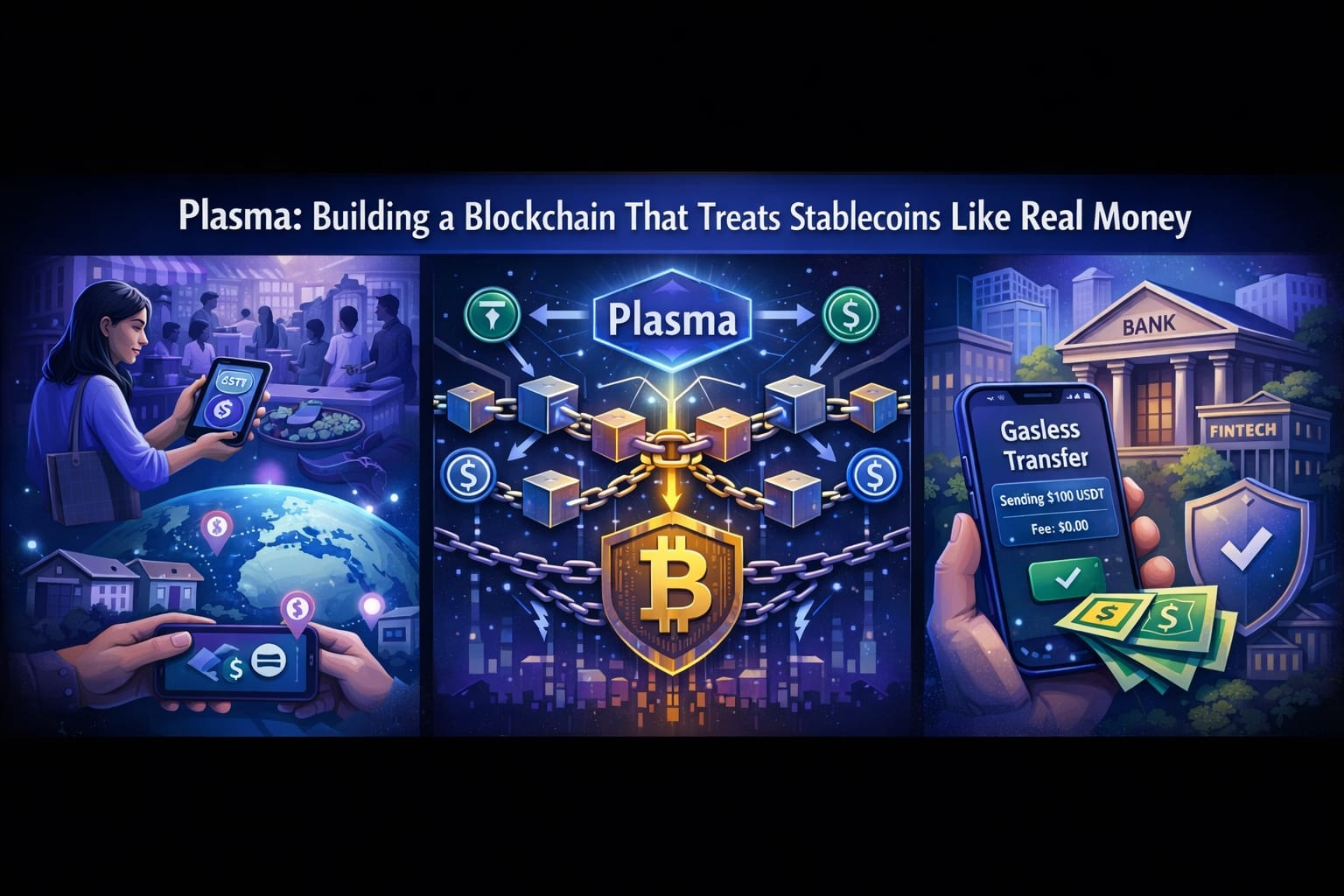
The people Plasma is built for are telling. It’s not chasing only DeFi power users. It’s thinking about retail users in high-adoption markets where stablecoins already function as everyday money, and about institutions that care more about settlement guarantees than yield. Payment companies, remittance services, custodians, and fintechs don’t want novelty. They want reliability, predictable fees, and clear audit trails.
Of course, none of this is risk-free. Gasless systems can centralize power if relayers become chokepoints. Heavy reliance on USDT means inheriting the reputational and regulatory risks of its issuer. Fast BFT systems demand strong governance to avoid validator capture. Plasma isn’t immune to these pressures. It’s betting that acknowledging them early and designing around real usage patterns is better than pretending they don’t exist.
What Plasma quietly represents is a shift in how crypto infrastructure is maturing. Not every chain needs to do everything. Some chains experiment. Some chains compute. Some chains settle. Plasma is clearly choosing settlement. It treats stablecoins not as just another token, but as money that deserves infrastructure designed around human expectations: speed, clarity, and trust.
If Plasma succeeds, it won’t feel revolutionary to most users. It will feel boring in the best possible way. Payments will clear quickly. Fees will make sense. The technology will fade into the background. And in a space obsessed with novelty, that kind of boring might be the most radical outcome of all.

