
There’s a specific kind of anxiety that comes with moving stablecoins that most crypto-native people stop noticing. You open your wallet, pick a chain, double-check the network, glance at the fee estimate, and hesitate for half a second before hitting send. Not because you don’t trust the recipient — but because you’re never fully sure the system won’t surprise you.
That hesitation is the problem Plasma seems to be designed around.
Stablecoins are supposed to feel like cash. They’re already priced in familiar units, used for salaries, remittances, treasury balances, and everyday transfers. Yet the experience of moving them still feels fragile. One wrong network. One missing gas token. One unexpected fee spike. The money itself is stable, but the rails underneath it are not.
Plasma feels like it starts from the assumption that this anxiety is unacceptable.
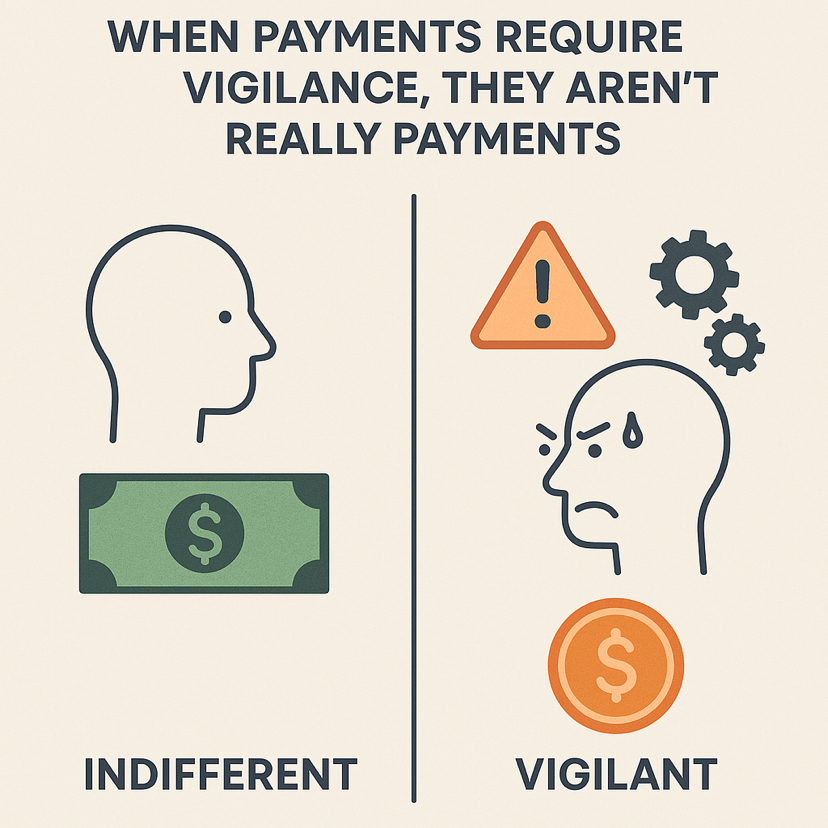
When Payments Require Vigilance, They Aren’t Really Payments
In traditional finance, the most important quality of a payment system is not speed or innovation. It’s reliability. People don’t want to be alert when they send money. They want to be indifferent. Indifference is a signal that trust has already been earned.
Most blockchains demand constant attention. They ask users to manage fee markets, understand congestion, and hold secondary assets just to keep transactions from failing. That may be tolerable for traders, but it breaks down quickly for anyone treating stablecoins as working capital rather than speculative chips.
Plasma appears to be built for people who don’t want to think while moving money.
Stablecoins as the Default, Not the Afterthought
One of the quieter but more meaningful design choices around Plasma is that stablecoins are treated as the primary use case, not a supported feature. That shift changes priorities. When stablecoins are central, the system has to behave consistently under boring conditions: payroll days, merchant settlements, internal transfers, recurring payments.
This is where Plasma’s approach to fees stands out. Allowing fees to be paid in stablecoins — and in some cases removing them entirely for simple transfers — is not about generosity. It’s about eliminating a source of uncertainty. Users no longer need to prepare for a transaction by managing volatile balances or timing the network. They can just send.
That simplicity isn’t flashy, but it’s deeply practical.
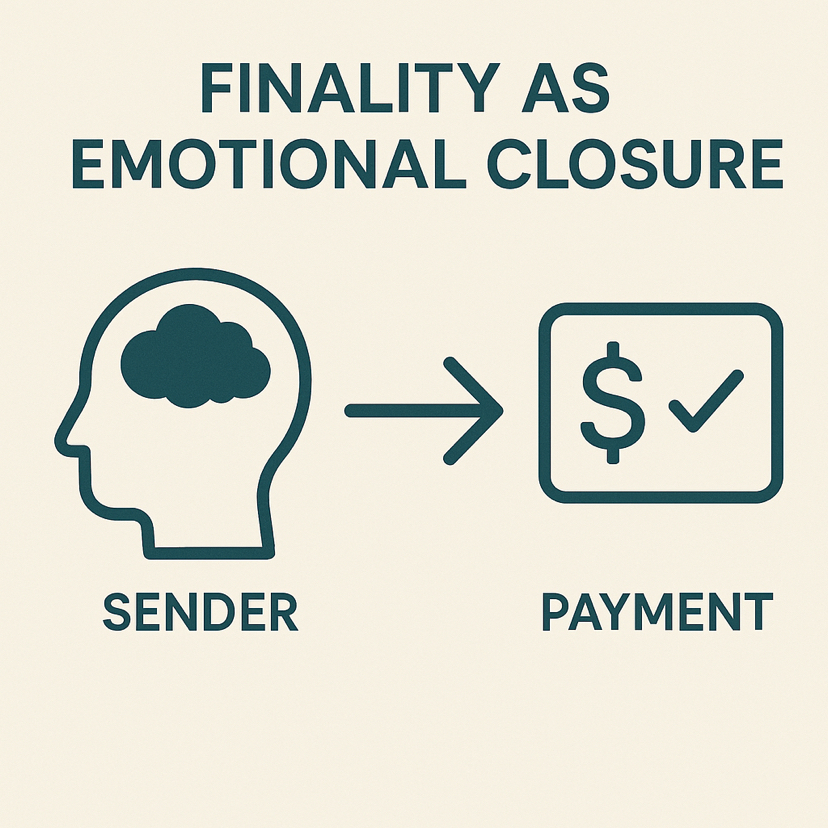
Finality as Emotional Closure
Finality is often discussed as a technical milestone, but in payments it’s psychological. A transaction isn’t finished when it’s broadcast. It’s finished when the sender stops thinking about it. Plasma’s emphasis on fast, deterministic finality targets that exact moment.
When a payment settles quickly and definitively, workflows simplify. There’s no need to monitor confirmations or explain probabilistic outcomes to non-technical stakeholders. Money either moved or it didn’t. That clarity matters far more to finance teams than peak throughput metrics ever will.
Plasma seems to understand that trust is built by removing follow-up questions.
The Role of $XPL in a Stablecoin-First World
In a system where users primarily operate in stablecoins, the native token naturally recedes into the background. $XPL is positioned to secure the network, coordinate validators, and sustain operations — not to be inserted into every user interaction.
This separation is subtle but important. It allows the network to function without forcing users to mentally context-switch between currencies. The infrastructure handles complexity. Users stay focused on outcomes. That’s how mature payment systems tend to evolve.
It’s a restrained model, and restraint shows up repeatedly in Plasma’s design philosophy.
Adoption That Accumulates Instead of Explodes
Plasma doesn’t appear optimized for viral growth or speculative activity. Its adoption path looks more like infrastructure than a platform. Integrations compound quietly. Usage repeats. Systems get embedded and then forgotten — which is often the highest compliment you can pay a payment rail.
This kind of growth doesn’t create loud narratives. It creates dependency. Once workflows rely on predictable settlement, switching away becomes costly, not because of lock-in, but because of comfort.
Comfort is difficult to quantify, but it’s easy to notice once it’s gone.
Open Questions That Actually Matter
None of this means Plasma is finished or beyond scrutiny. Gas sponsorship introduces policy decisions. Validator incentives need to remain aligned under stress. Claims of neutrality and censorship resistance only matter when tested under pressure. These are not edge cases — they are the real tests of any serious settlement layer.
Plasma doesn’t avoid these questions. It simply doesn’t dramatize them. That tone suggests a project more concerned with longevity than attention.
Why This Direction Feels Different
Plasma isn’t trying to make stablecoins exciting. It’s trying to make them uneventful. If it succeeds, users won’t talk about Plasma at all. They’ll just notice that sending money stopped feeling like a small act of risk management.
In crypto, where novelty usually wins attention, choosing to optimize for calm is quietly radical.

