
When I think about Vanar, I’m really thinking about the first moment someone touches Web3 and quietly decides whether they want to stay. Most people don’t say it out loud, but there’s always a small emotional test happening. They’re curious, maybe excited, but also cautious. They want to play a game, enter a digital space, or interact with a brand experience, and suddenly they’re asked to understand wallets, confirmations, and systems that feel foreign. That tiny hesitation matters more than the technology itself. Vanar feels like it was imagined around that exact hesitation. It reads like a chain built by people who noticed how quickly curiosity can turn into fatigue if the experience feels like homework.
What makes the ecosystem feel different to me is the background it draws from. Games, entertainment, and brands survive on instinctive usability. Nobody in those industries gets rewarded for complexity. If something is confusing, people leave without giving feedback. They don’t argue with the system, they just disappear. That kind of environment forces a discipline that pure technical spaces don’t always feel. It trains teams to respect attention and emotion as limited resources. When a blockchain grows out of that culture, it naturally starts caring about the invisible parts of experience, the moments where friction would normally live. Good consumer design is often about removing feelings users never want to have in the first place.
Gaming is where this philosophy becomes the most honest. A player doesn’t want to feel like they’re performing a financial operation when they earn an item. They want to feel rewarded. If ownership becomes mechanical instead of emotional, the illusion breaks. A gaming-centered ecosystem pressures the infrastructure to behave like part of the story instead of an external tool. When earning, trading, or carrying progress feels like a natural extension of play, the chain stops announcing itself. That silence is a sign of maturity. The best systems are the ones people stop noticing because they trust them enough to focus on what they came for.
The metaverse layer adds something softer but just as important, which is the feeling of presence. Spaces like Virtua aren’t only about features or assets. They’re about continuity. People return to digital places when those places remember them. Identity that persists, collectibles that carry history, and environments that feel socially alive create attachment over time. Attachment is what turns a visit into a habit. When someone feels recognized inside a system, they don’t experience it as software anymore. They experience it as a place where their time accumulates meaning.
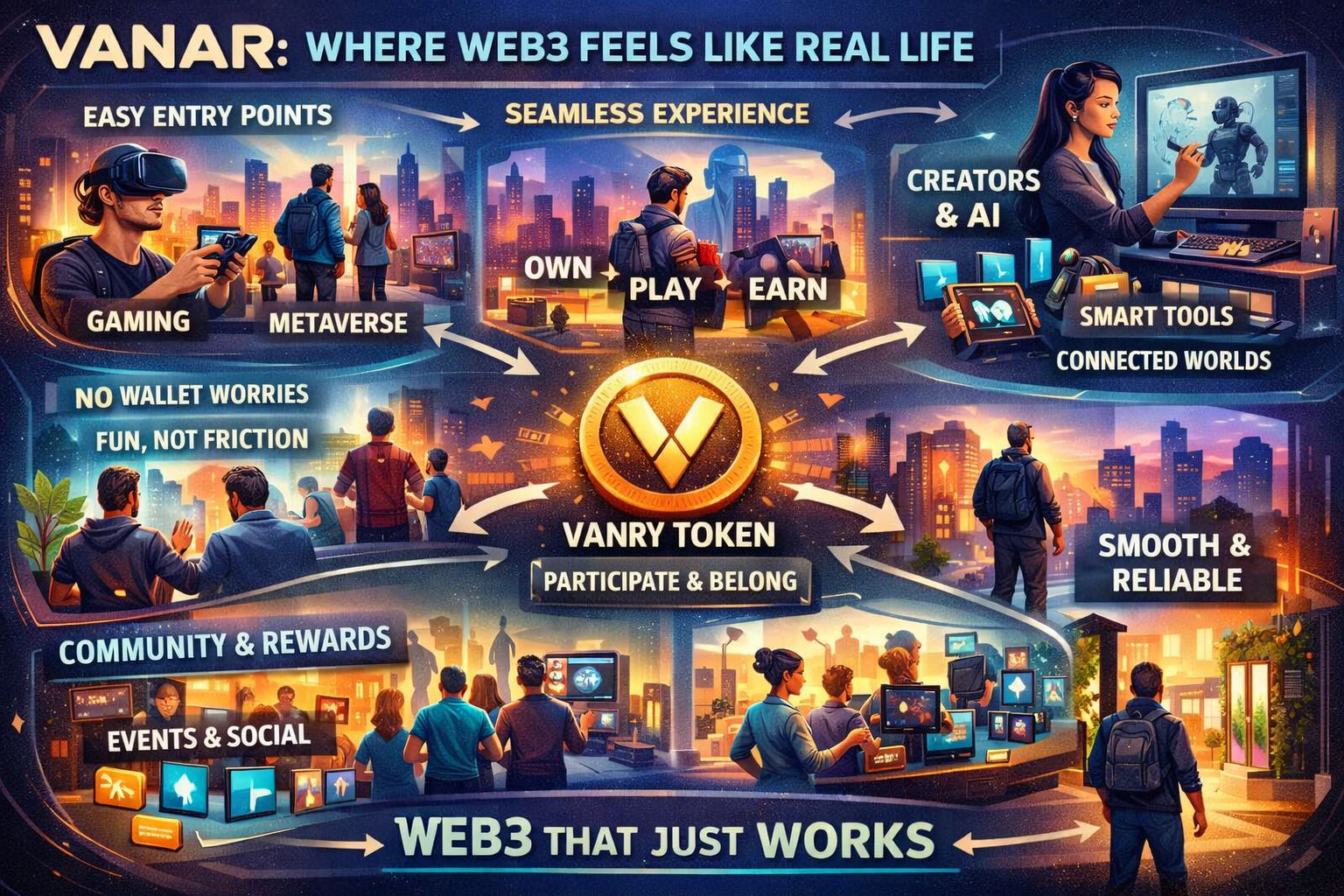
I keep thinking about how consumer ecosystems don’t grow in a straight line. People enter through different doors depending on what already matters to them. Some arrive through games. Some through creator culture. Some through brand events or AI-driven tools. If all those paths lead into the same identity and asset layer, the ecosystem starts to feel unified instead of scattered. Movement between experiences becomes fluid. A user doesn’t feel like they’re starting over each time. They feel like they’re continuing a story they already began somewhere else.
AI inside this environment only becomes real to me when it touches everyday interaction. People don’t adopt categories. They adopt conveniences. If AI helps creators express ideas faster, helps communities feel more responsive, or makes digital worlds react in ways that feel alive, it stops being a headline and becomes part of the texture of the experience. The most powerful technology is often the kind that never asks to be admired. It just quietly improves what people can do.
The role of the VANRY token feels meaningful when I think about it less as a market object and more as a signal of belonging. Tokens become human when they connect to participation. If holding or using a token reflects involvement, voice, or access, it starts to resemble membership instead of speculation. Consumer ecosystems are fragile when incentives overpower emotion. They’re strong when incentives reward genuine contribution. People stay longer in systems where they feel like participants instead of passengers.
The biggest risk for any consumer chain isn’t a dramatic collapse. It’s slow emotional drift. If onboarding becomes inconsistent, if apps feel disconnected, or if users sense they’re being treated as numbers, trust erodes silently. Consumers don’t stage exits. They simply don’t come back. Building for mainstream audiences means accepting that expectations are shaped by the smoothest digital experiences they already know. Reliability and clarity aren’t bonuses. They’re the entry requirement for attention.
I also believe adoption depends less on announcements and more on rhythm. Consumers don’t return because they admire architecture. They return because something is happening. Events, creator programs, evolving worlds, and reward loops give people a reason to check in again. Rhythm turns curiosity into habit. Habit turns use into attachment. Without rhythm, even the best infrastructure feels like a museum. With rhythm, it feels alive.
If Vanar succeeds, I don’t think it will look loud from the outside. It becomes successful in a quiet way. People enter experiences without thinking about the chain. They carry identity across spaces without ceremony. They earn, play, build, and return because it feels ordinary. That ordinariness is the real milestone. The moment Web3 stops asking to be understood and simply works in the background is the moment it becomes part of everyday life. The technology doesn’t disappear. It finally learns how to stay out of the way.
