
Vanar didn’t start as a bold attempt to reinvent crypto theory. It started as something much more human: frustration. The people behind it had already spent years trying to build games, virtual worlds, and digital products that real people actually wanted to use. They weren’t chasing buzzwords; they were chasing retention, fun, and simplicity. And every time they tried to ship something meaningful on existing blockchains, they ran into the same wall—tools made for insiders, unpredictable costs, and user experiences that collapsed the moment a non-crypto person touched them.
So Vanar wasn’t born from ambition alone. It was born from fatigue.
Before Vanar, there was Virtua—a metaverse project that didn’t just talk about ownership but actually put it in players’ hands. Virtua worked. It attracted users, brands, and creators. But behind the scenes, the team was constantly wrestling with infrastructure that felt like it was working against them. Transactions were fragile. Fees were erratic. And every new user had to be taught a small course in blockchain survival just to get started. That gap between what blockchain promised and what it delivered became impossible to ignore.
Vanar is what happens when a team decides to stop patching that gap and rebuild the floor instead.
From the beginning, Vanar was designed with a quiet assumption: most people will never care about blockchains, and they shouldn’t have to. Games should feel like games. Digital items should feel owned without feeling technical. Payments should feel boring and predictable. This mindset explains many of Vanar’s most unconventional choices. Instead of making users guess what a transaction might cost, Vanar anchors fees to stable, dollar-based values. Instead of forcing developers to bolt AI onto the side of their apps, Vanar pushes intelligence closer to the chain itself.
That AI focus isn’t about hype. It’s about memory and meaning. In most blockchains, assets are static. A token exists, but it doesn’t remember how it was used. On Vanar, the goal is different. Assets are meant to evolve. A sword in a game isn’t just an ID—it’s a record of battles fought, time invested, and choices made. AI-aware infrastructure makes it possible to search, adapt, and personalize experiences based on meaning rather than numbers. That’s a subtle shift, but it changes how digital worlds feel. They stop being collections of objects and start behaving more like places.
Of course, this approach comes with trade-offs. AI is expensive. It’s messy. It doesn’t fit neatly into the clean math of traditional blockchains. Vanar responds by embracing hybrid systems, where the chain coordinates truth while specialized layers handle heavy computation. It’s not purist. It’s practical. The team is openly choosing usability over ideology, betting that people would rather have systems that work than systems that are theoretically perfect.
The VANRY token reflects the same long-term thinking. Its supply isn’t designed for short-term spectacle. A large portion of issuance is reserved for validators over decades, signaling that security and continuity matter more than fast cycles. There’s no loud promise of instant wealth here. Instead, the structure suggests patience—build the network slowly, reward those who keep it running, and let value emerge from use rather than speculation.
What truly separates Vanar from many Layer-1 projects is that it refuses to wait for adoption to magically appear. It brings its own gravity. The Virtua Metaverse and the Vanar Games Network aren’t side experiments; they’re the front doors. Players enter through games. Brands enter through experiences. Developers enter through tools that feel familiar instead of foreign. Once inside, the blockchain fades into the background, doing what infrastructure is supposed to do: stay invisible while everything else works.
This creates effects that aren’t obvious at first glance. When multiple games and worlds share the same intelligent ledger, experiences start to connect. Progress in one place can matter somewhere else. Identity becomes persistent. Loyalty becomes portable. For brands, this opens doors beyond marketing gimmicks. Digital ownership becomes something that grows with the user instead of expiring after a campaign ends.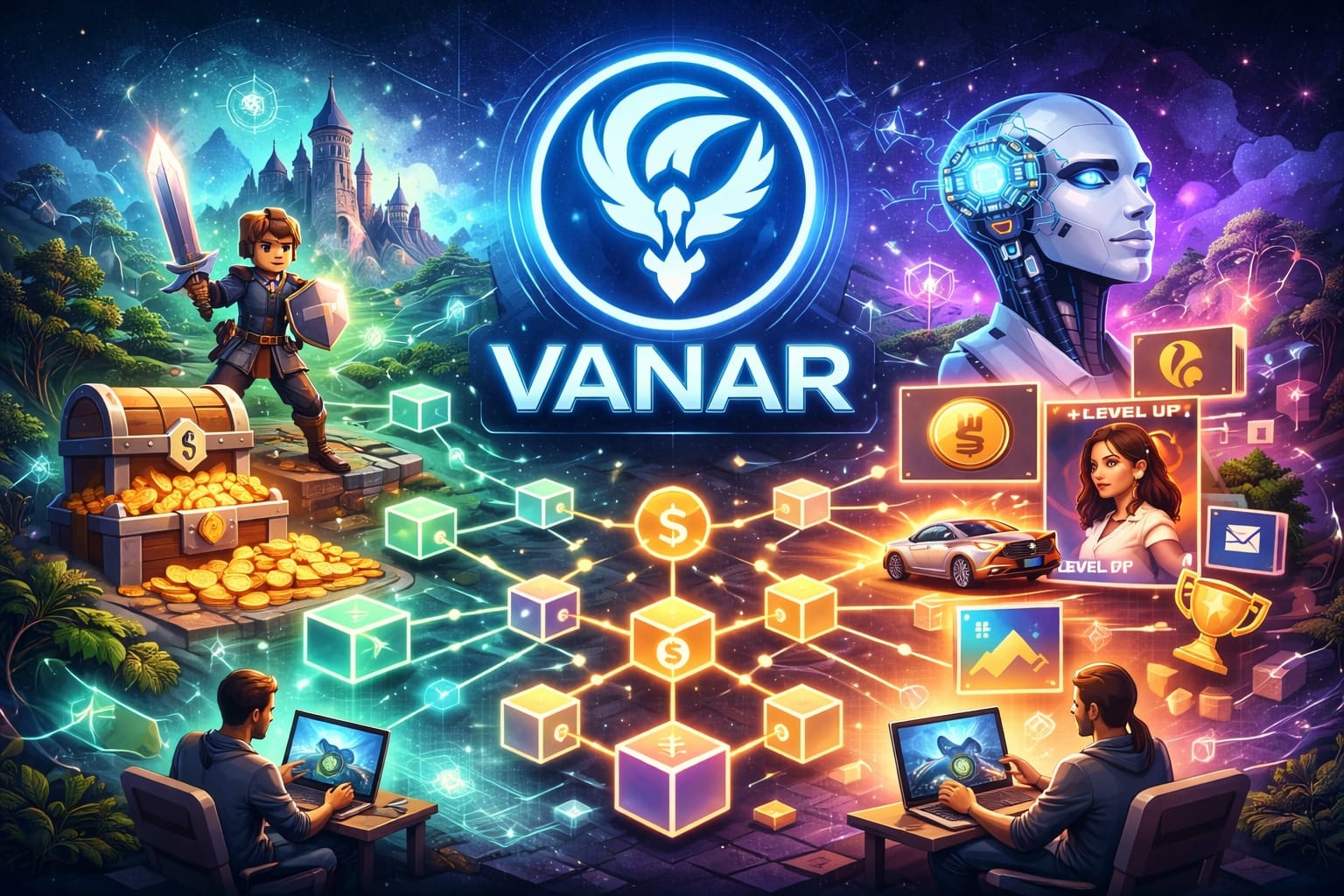
There are real risks ahead. Governance around pricing requires trust. Validator distribution must stay healthy. Regulation will not politely ignore consumer-facing crypto forever. And the promise of AI-native blockchain will only be proven when millions of users stress it at once. Vanar is not immune to failure. But it is unusually honest about what it’s trying to fix.
At its core, Vanar is less about Web3 and more about adulthood. It treats blockchain not as a revolution that needs constant explanation, but as infrastructure that should quietly disappear. If it succeeds, users won’t talk about Vanar as a chain. They’ll talk about a game they loved, a digital item they kept, or an experience that felt personal in a way most online systems never do.
And that may be the most human ambition of all: building technology that finally stops asking for attention—and starts earning trust instead.
