
Plasma XPL keeps moving forward quietly in February 2026, and what stands out to me is how naturally it connects Bitcoin level security with Ethereum style programmability. Through its canonical pBTC bridge and NEAR Intents integration, Plasma is opening access to over one trillion dollars of Bitcoin liquidity while still holding a dominant four point eight billion dollars in USDT onchain. Even with XPL trading around zero point zero seven eight nine and showing oversold conditions, the network fundamentals feel stronger than ever. I see Plasma acting as the connective layer between Bitcoin stored value, Ethereum smart contracts, and real world payment rails, especially as Plasma One pushes toward one hundred thousand daily users. It feels like long dormant Bitcoin capital is finally being activated in a clean and thoughtful way.
pBTC Bridge Bringing Bitcoin Into Active Use
The pBTC bridge is easily one of the most important pieces of the Plasma roadmap. Scheduled to go live after audits in mid 2026, it brings a one to one Bitcoin representation directly into Plasma without relying on centralized custodians. Bitcoin is locked on the main network, and Plasma verifiers confirm the state using bonded security that evolves from multisignature setups toward zero knowledge threshold systems.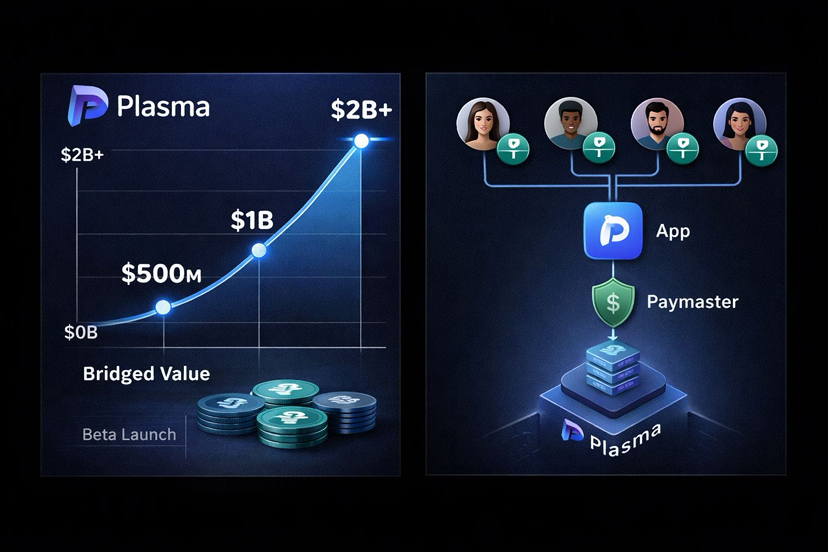
From my perspective, this is where things really click. Once pBTC is minted, it can be used inside EVM smart contracts for lending, stablecoin paired trading, or even everyday spending through Plasma One. Transactions settle in under a second thanks to PlasmaBFT. When users want their Bitcoin back, the process reverses cleanly as pBTC is burned and native BTC is released, with penalties for any verifier misbehavior.
What excites me is how simple this makes Bitcoin participation in DeFi. There is no reliance on fragile bridges or opaque custodians. Bitcoin holders finally get yield opportunities and composability without taking on extra trust assumptions, and Plasma becomes a natural extension of Bitcoin rather than a risky detour.
Ethereum Compatibility With Payment Level Precision
Plasma runs Ethereum contracts exactly as developers expect. Solidity code works as is, tools like Hardhat and Foundry behave normally, and wallets connect without friction. What feels different to me is the precision. Plasma timestamps transactions at the millisecond level, which removes many of the ordering issues that plague Ethereum during congestion.
This matters more than people realize. Payroll runs execute at exact moments. Forex style arbitrage is not lost to timing races. Gaming transactions settle in a predictable order. On top of that, Plasma delivers guaranteed sub second finality, which is a massive contrast to Ethereum confirmation uncertainty.
Then there is cost. USDT transfers on Plasma are sponsored through paymasters, meaning users pay nothing. Compared to Ethereum mainnet fees or even rollup friction, the experience feels closer to traditional payments than crypto. At the same time, Plasma inherits Ethereum level dispute resolution through fraud proofs, so security is not sacrificed for speed.
I also like how NEAR Intents pulls liquidity from dozens of chains into Plasma pools. Instead of fragmented rollups, assets meet in one place where payments and DeFi remain fluid.
Plasma One Merging Bitcoin And Everyday Spending
Plasma One is where the Bitcoin Ethereum fusion becomes visible to everyday users. It has already gone beyond simple cashback cards and now feels like a real neobank in progress. Upcoming regional expansions add bill payments, mobile top ups, and localized user experiences.
What stands out to me is that users can hold Bitcoin exposure through pBTC, spend stablecoins, and still earn yield in the background. There is no need to sell assets just to participate in daily commerce. On the backend, Ethereum style applications handle lending, trading, and automation, but the user experience stays simple and gas free.
Merchant integrations like Confirmo also make this practical. Businesses receive stablecoins instantly while customers interact with familiar payment flows. It feels like crypto infrastructure finally meeting real commerce halfway.
XPL Token Economics Holding It Together
XPL sits at the center of this system. With a ten billion supply and controlled emissions, it rewards validators while burning fees from non USDT activity. Delegation opens participation to smaller holders, and ecosystem funding keeps development moving.
Even though price action looks weak on the surface, I keep coming back to usage metrics. Plasma holds more native stablecoins than many newer competitors, and pBTC is likely to increase demand further. Bridge operations, lending activity, and neobank services all rely on XPL in different ways, which creates multiple demand paths instead of a single narrative.
February Progress Without Noise
February has been about refinement rather than headlines. Consensus adjustments prepare the network for Bitcoin liquidity. Desktop updates improve developer workflows on Linux systems. Marketing campaigns and DeFi partnerships quietly reinforce liquidity.
To me, this steady execution is what separates Plasma from projects that constantly pivot. There is no rush to chase trends. Each upgrade supports the same core vision.
Where Bitcoin And Ethereum Finally Meet
Plasma XPL feels like a rare point of convergence. Bitcoin brings unmatched security and value. Ethereum brings programmability and developer depth. Plasma adds speed, cost efficiency, and payment focus.
When I look at the pieces together, it is easy to imagine a future where massive Bitcoin capital flows into programmable systems without sacrificing safety. Stablecoins move freely, smart contracts operate instantly, and users interact through simple financial tools.
If over a trillion dollars in Bitcoin and hundreds of billions in stablecoins truly begin to flow through rails like Plasma, the financial patterns that emerge could look very different from anything we have seen so far.

