

I’ve spent a lot of time looking at how blockchain tech is evolving, and if there’s one project that actually feels like it’s built for the "real world" in 2026, it’s Plasma (XPL).
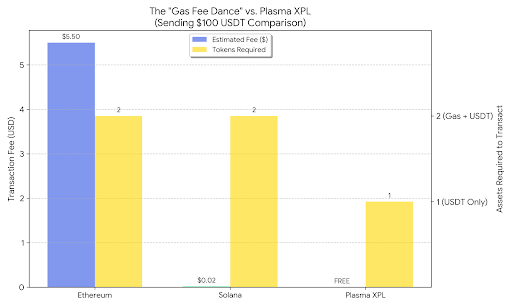
Most people ( including me)are tired of the "gas fee dance".the annoying requirement of holding $ETH or $SOL just to send $100 in stablecoins. Plasma is the first time I’ve seen a Layer 1 blockchain solve this by making stablecoins the primary citizens of the network, not just an afterthought.
Here is my deep dive into why this architecture is a game changer.
THE "WHY": SOLVING THE FRICTION OF DIGITAL DOLLARS
When I look at the payment landscape, the friction is obvious. On traditional chains, you pay a "tax" (gas) in a volatile asset to move a stable one. Plasma flips the script. It’s designed to be the global rail for the $200B+ stablecoin market, making a USDT transfer as easy as a Venmo ping.
THE THREE-LAYER ARCHITECTURE
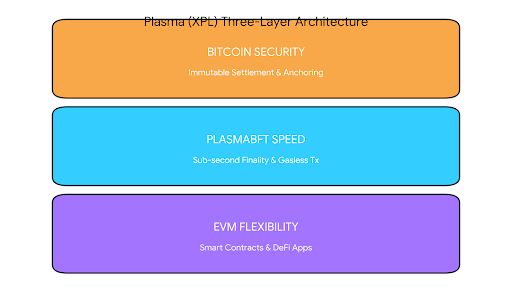
To understand how it works, you have to look at the "sandwich" of tech they’ve built. It’s not just another Ethereum clone; it’s a hybrid that steals the best parts of the industry’s giants.
1. Bitcoin Security: It anchors its state to Bitcoin, giving it "un-hackable" finality.
2. PlasmaBFT Speed: This is where the magic happens—sub-second transaction speeds.
3. EVM Flexibility: It speaks the language of Etherium so every DeFi app you already know can live here.
THE KILLER APP: TRULY GASLESS TRANSFERS
This is the part that usually blows people's minds. Plasma’s "Paymaster" system allows for zero-fee USDT transfers. If you’re a merchant in Jakarta or a freelancer in São Paulo, you don’t want to care about "native gas tokens." You just want to send and receive dollars.
On Plasma, the network handles the complexity in the background. If a fee is required for a complex smart contract, you can pay it in the stablecoin you’re already using.
XPL TOKENOMICS: THE ENGINE UNDER THE HOOD
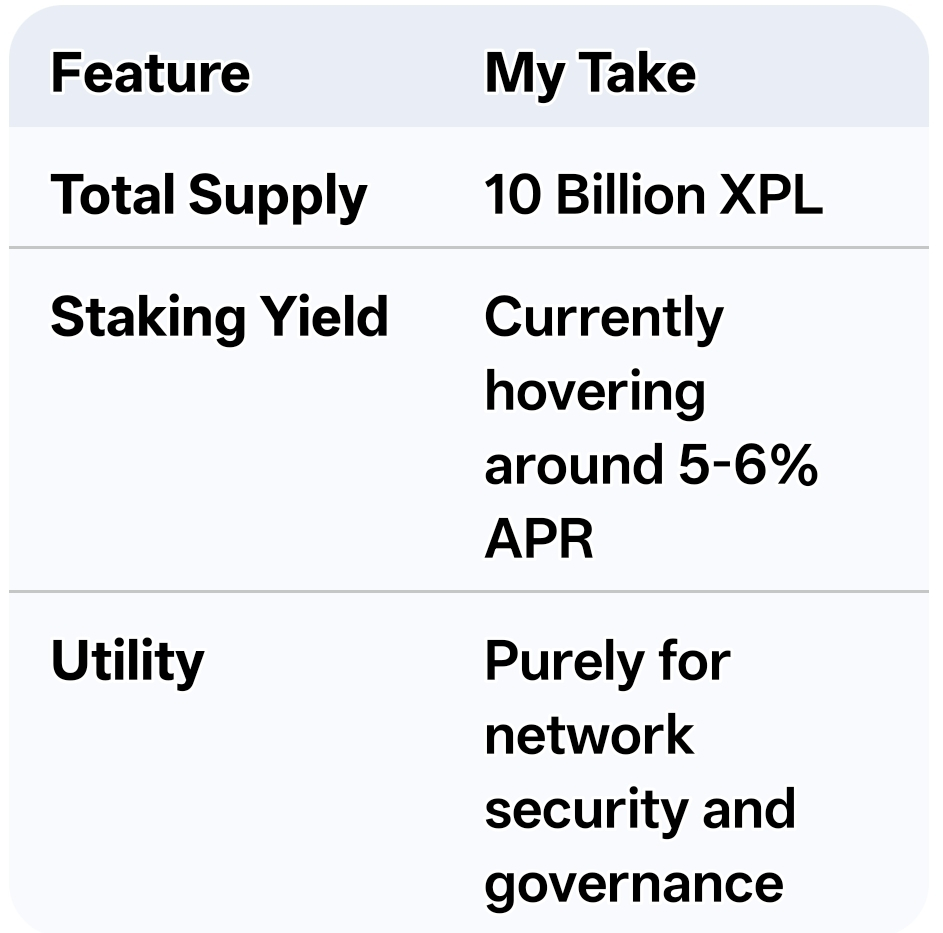
While the users are busy moving stablecoins, the XPL token is doing the heavy lifting behind the scenes. It’s the security collateral. If you want to help secure the network and earn a yield, you stake XPL.
As we move through 2026, the supply dynamics are getting interesting. We have a burn mechanism (similar to Ethereum’s) that eats into the supply during high activity, but we’re also approaching some major unlock milestones for early investors.
LOOKING AHEAD: Th6e 2026 ROADMAP
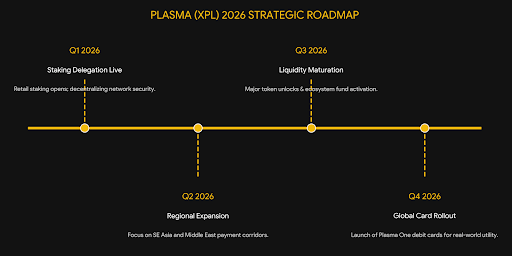
We’re currently in a pivotal year. The "Mainnet Beta" training wheels are coming off, and the focus has shifted to regional expansion. I’m particularly watching the Staking Delegation rollout this quarter. It allows anyone to participate in security without needing a server rack in their basement.
I think that Plasma (XPL) isn't trying to be a "world computer" or a "digital gold." It’s trying to be a payment rail. By stripping away the complexity of gas fees and anchoring itself to Bitcoin’s security, it’s positioning itself as the most practical L1 we’ve seen in years.



