Hello,I’m @Fozia_09 .I want to dive into Plasma what it is,how it ticks,and why it suddenly feels so crucial in crypto right now. I’ve spent time digging into how Plasma handles security,moves money,and protects users,and honestly,it just does things differently than most of the Layer 2s and cross chain bridges out there.
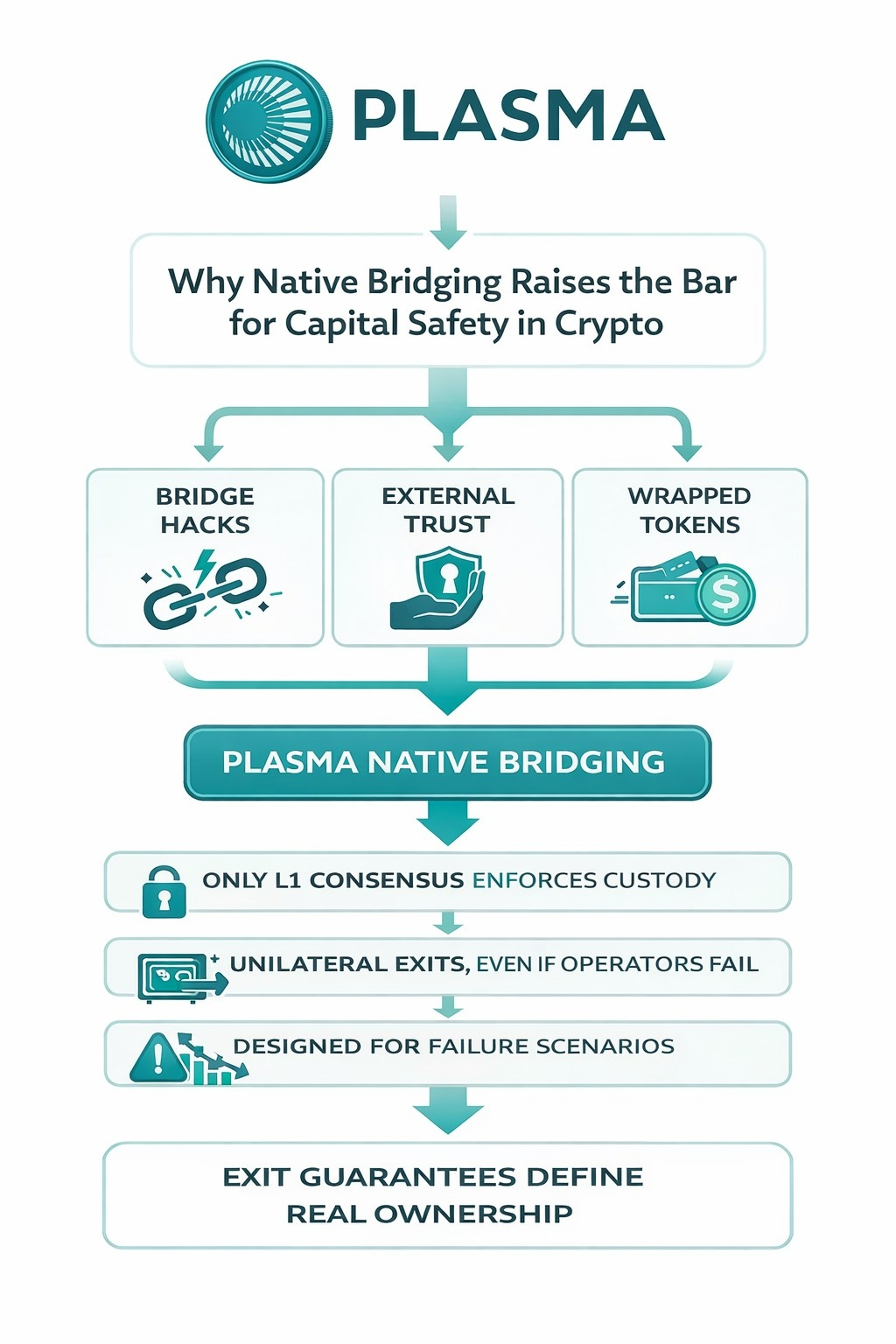
Let’s get real:bridging is still one of crypto’s biggest headaches.Everyone needs bridges to move assets around,but they’re also where most of the big hacks happen.Billions have vanished not because the blockchains broke,but because bridges add extra points of failure.You end up swapping out math and code for human coordination:wrapped tokens,multisigs,off chain relays,outside validators. It’s all fine until things get stressful,and then suddenly,these setups look a lot shakier.
Plasma steps back into the spotlight at a time when everyone’s thinking more about risk than just speed or yield.When capital gets picky,it’s not just about getting your money in it’s about knowing you can get it out safely. That’s where native bridging comes in,and where Plasma isn’t just another Layer 2 or bridge.
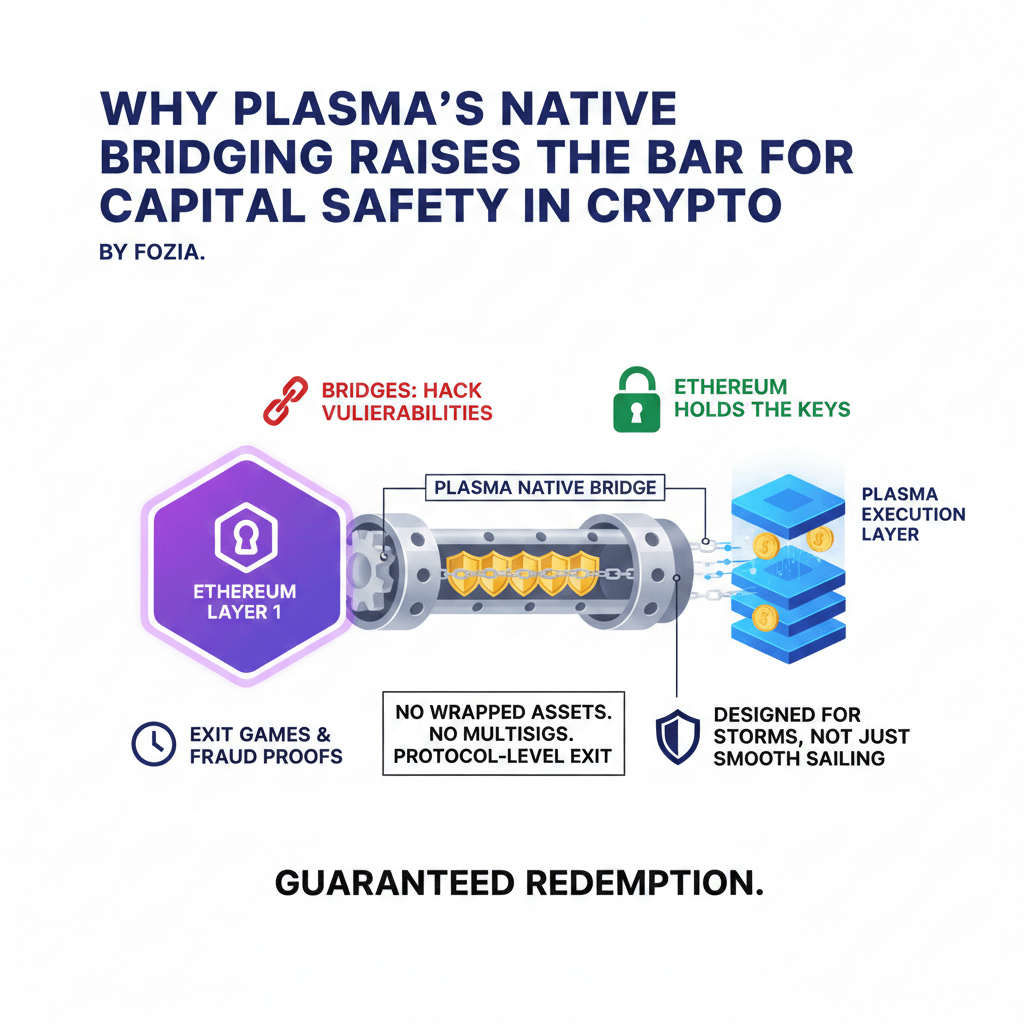
A lot of folks think native bridging in Plasma just means“withdrawals are built in.”That doesn’t really do it justice.In Plasma, Ethereum’s Layer 1 actually holds the keys. You don’t have to trust some smart contract or a group of validators you fall back on Ethereum itself.Exiting isn’t an app level feature;it’s baked right into the protocol.No extra oracles,no off chain governance,just the core chain.
Plasma’s more like a compression layer than a classic bridge.There’s no wrapping or duplicating assets.You lock your tokens on Ethereum,and the only way to get them out is by proving you followed the rules.Think of it like a safety deposit box inside Ethereum’s main vault,not some tunnel between random banks.
What really makes Plasma stand out is how it acts when things go wrong.Every time there’s a big scare market panic,liquidity dries up, or bridges get hacked suddenly everyone remembers Plasma.When people want to stress test their exits,they care a lot less about fast bridges and a lot more about being able to get their money back,no matter what.
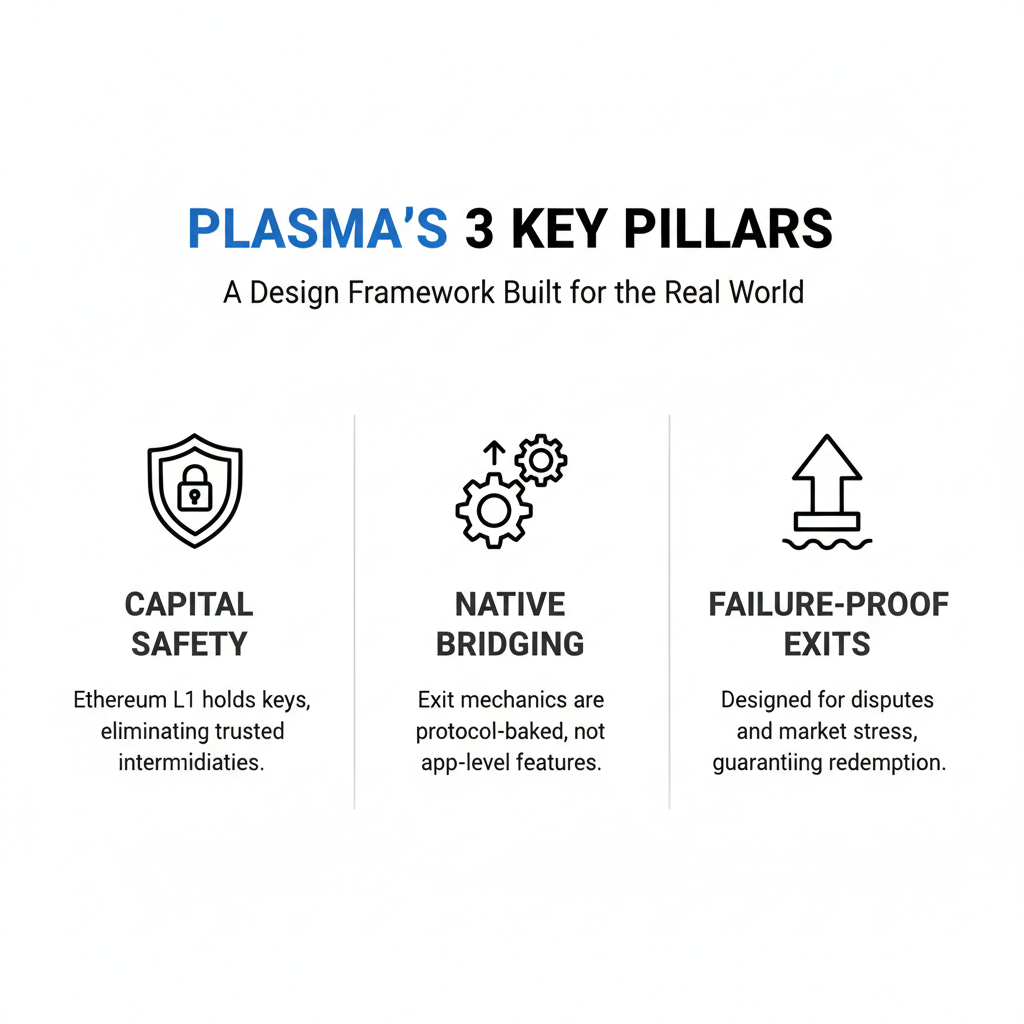
Most bridges are built for smooth sailing,not storms.Plasma,though,expects trouble. Operator goes offline?Validators collude? The market melts down?Plasma treats these as normal risks,not rare flukes.That’s by design.
Plasma also flips priorities.Most rollups chase speed and only bolt on bridging as an afterthought.Plasma?Exiting is the main event.Fraud proofs,challenge periods,exit games it’s all about defending users,so anyone can pull their money out,no begging or votes required.
This changes the whole game.Operators can’t just lock you in.Users don’t have to rely on committees or emergency meetings to get their funds back.It’s more like a guaranteed redemption,the kind you see in old school finance what matters isn’t just your yield,but knowing you can always cash out.
Of course,it’s not perfect.Exits take longer, the process can get complicated during disputes,and you lose some of that instant, composable magic.Plasma isn’t built for high speed trading or quick flips.If you’re building with Plasma,you need patience and a plan for how exits will work.But at least the trade offs are out in the open not hidden behind wishful thinking about bridge safety.
As crypto gets more modular,splitting up execution,settlement,and data,bridging can’t just be an afterthought anymore.It’s a real risk layer.Plasma points toward a future where execution layers race for performance, settlement layers fight to minimize trust,and bridges become core protocol guarantees not just handy add ons.