


Hey folks, OrionPlay here on Binance Square! I've been spending a lot of time lately just watching how AI is quietly reshaping everything around us—from the way we shop to how businesses handle money behind the scenes. And in the middle of all that noise, one project keeps pulling me back in because it feels like it's actually built for this exact moment: Vanar Chain ($VANRY). Not in a hype-y "this will 100x tomorrow" way, but in a "this infrastructure might actually make smart, real-world crypto usable for normal people and companies" kind of way.

What stands out to me about Vanar isn't just another Layer-1 promising speed or low fees (though it has those too). It's how they've engineered the entire stack from the ground up to handle intelligent applications—especially in PayFi and tokenized real-world assets. PayFi, for those who haven't come across the term yet, is basically the fusion of seamless payments with deeper financial logic. Think payments that don't just move money, but understand context, verify conditions, and adapt in real time. Vanar seems positioned to make that practical, not theoretical.
Let me break down why this feels different without getting too technical. Most blockchains treat data like a static photo—stored somewhere, maybe linked via IPFS, and you hope it stays there. Vanar flips that. Their approach compresses and structures real-world data (documents, records, financial proofs) into compact, queryable pieces that live directly on the chain in a way AI can actually read and work with. No brittle external links, no extra hops that slow things down or introduce risk. It's like turning a filing cabinet full of paperwork into a living, searchable knowledge base that smart contracts and AI agents can reason over instantly.
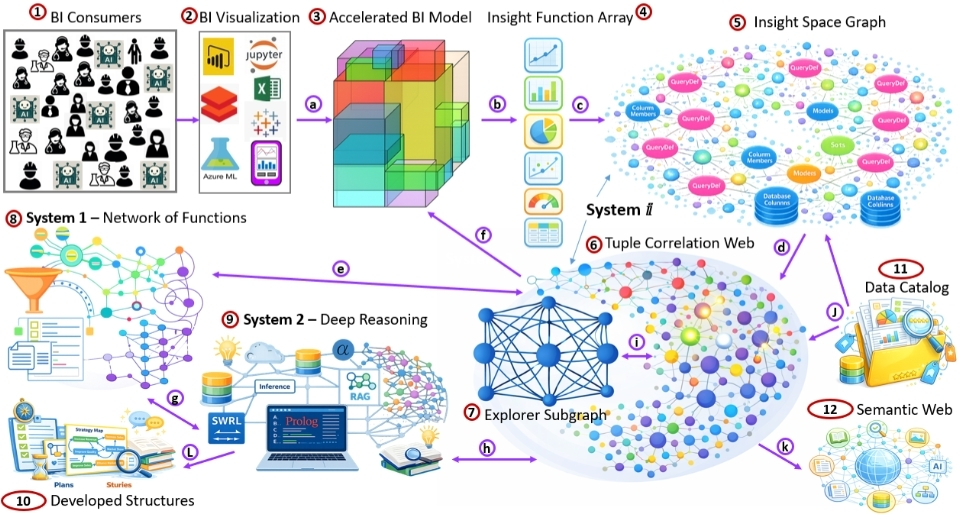
On top of that base layer sits their reasoning engine—think of it as the "brain" that lets applications pull insights, check compliance, or make predictions without needing oracles or off-chain servers for every step. For PayFi, this is huge. Imagine a tokenized invoice or a real estate asset on-chain. An AI agent could automatically verify the document's authenticity, cross-check payment terms, confirm regulatory conditions are met, and trigger the transfer—all in one smooth, auditable flow. No more waiting for manual approvals or dealing with fragmented systems.
This matters because we're heading into an era where AI agents won't just chat with you—they'll handle micro-payments, manage subscriptions, negotiate deals, or even handle conditional payouts in supply chains. But for that to work at scale, the underlying blockchain needs to treat data and logic as first-class citizens, not afterthoughts. Vanar's stack (with its layered design that flows from fast transactions up through semantic understanding and contextual reasoning) is built exactly for those agent-driven workflows.
What really gets me thinking is the enterprise angle. Brands and traditional businesses have been dipping toes into Web3 for years, but the friction has been massive—complex onboarding, unreliable data, high costs for anything beyond simple transfers. Vanar targets verticals like entertainment, gaming, and brand experiences where millions of everyday users already hang out. Tokenized loyalty programs that evolve based on user behavior? AI-personalized in-metaverse purchases that feel as smooth as Apple Pay? Compliant cross-border payments for creators or small businesses that adapt to local rules automatically? These aren't sci-fi anymore when the chain itself can compress, understand, and reason over the supporting data.
Of course, no project is perfect. Building something truly AI-native means solving hard problems around compute distribution, keeping inference fast and cheap (they're talking sub-second execution in some cases), and maintaining security when you're dealing with richer, more complex on-chain data. But the progress they've shown—EVM compatibility so developers aren't starting from scratch, super low transaction costs around fractions of a cent, and growing real-world partnerships in payments—suggests they're tackling these practically rather than just promising moonshots.
Right now, with the broader market still figuring out how to price AI + crypto narratives, $VANRY sits at a point where the tech feels ahead of the hype curve in my view. The token powers the network activity, and as more intelligent applications come online (especially in the upcoming automation and industry-specific layers), the utility should compound naturally.
I've been following Vanar closely because it feels like one of the few projects actually trying to solve the "last mile" problems for mass adoption: making blockchain infrastructure feel invisible while delivering capabilities that traditional systems can't match. It's not about replacing everything else—it's about becoming the intelligent layer where real economic activity can happen with AI smarts baked in.
If you're a developer, think about what you could build when your dApp doesn't just execute code but understands the documents and context behind transactions. If you're a user or investor, picture financial tools that feel proactive and helpful rather than clunky and manual. That's the direction Vanar is pushing toward.
What do you all think? Are you excited about on-chain AI for payments and real assets, or do you see bigger hurdles ahead? Drop your thoughts below—I genuinely read and reply to as many as I can. Let's discuss where this tech could take us in the next 12-18 months.
Always remember, this is just one perspective and not financial advice. DYOR, and only invest what you can afford to lose.
Stay curious,
