If you think airdrops no longer have any new tricks, it just means you haven't seen what Binance is doing. The emergence of Alpha blind boxes is essentially not just 'another airdrop', but Binance's first attempt to completely turn airdrops into a product experience.
First, let's say the conclusion: this is not a welfare upgrade, but a gameplay upgrade.
The logic of past airdrops was very simple—projects received single-point exposure, users participated according to rules, received tokens, and that was it. But Alpha blind boxes have directly changed this approach: instead of allowing users to bet on a single project, multiple high-quality early projects are aggregated into one pool, redesigning the sense of participation with 'randomness + determined value'. You spend Alpha points, and receive 'equivalent tokens + uncertain surprises'. On a psychological level, this is no longer receiving an airdrop, but rather a lottery, unboxing, and drawing cards.
In simple terms, this incorporates the most original and effective user behavior drivers of Web3—probability, expectation, and the fantasy of compound interest—into the Alpha system all at once.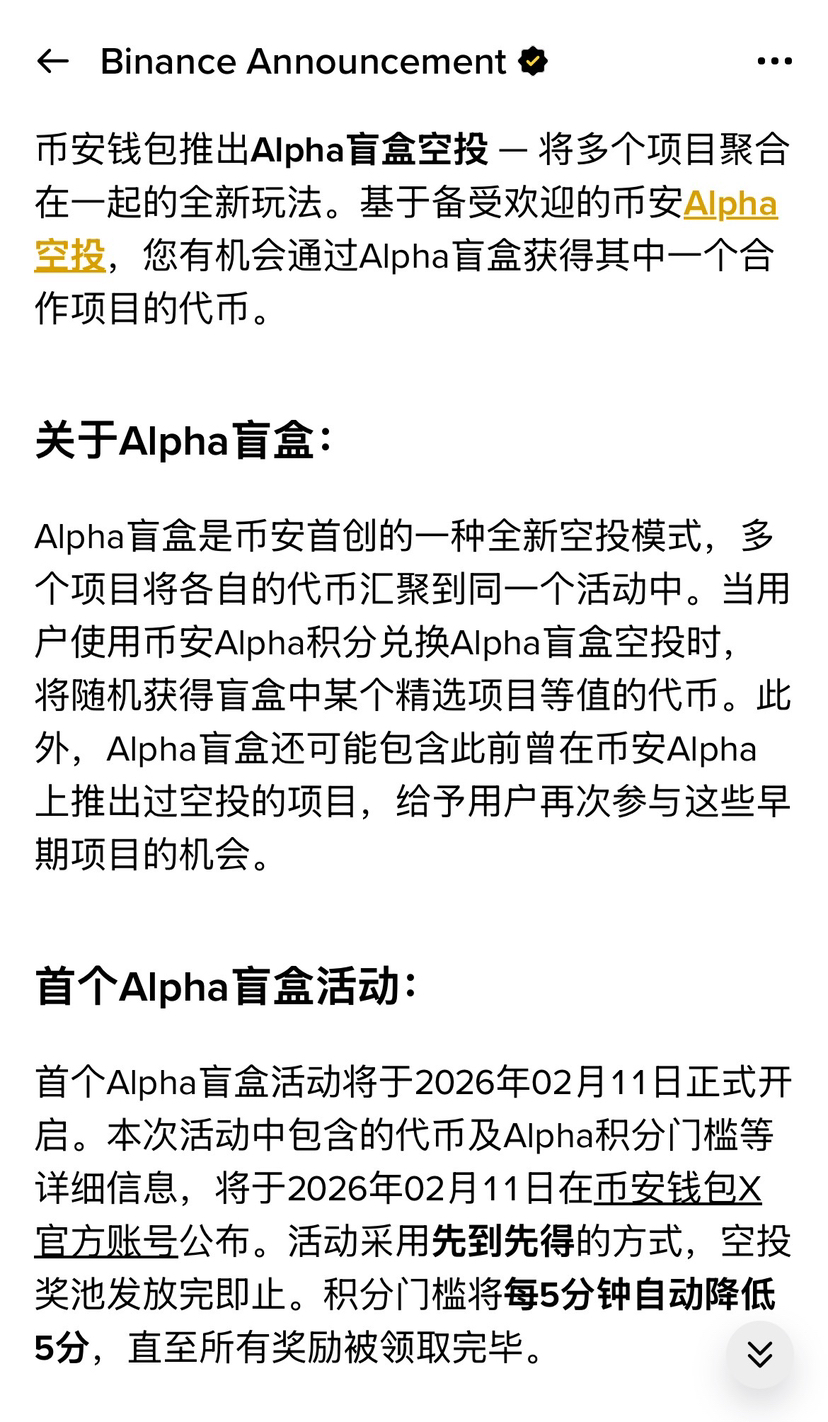
The more ruthless part is that Binance has not sacrificed certainty. The Alpha blind box is not a garbage pool; each blind box contains only one real project token that has been screened by Binance, and it is distributed in equal value. You don't know which one you'll get, but you know 'it won't be a waste'. This is very Binance: it doesn't gamble your life, but it definitely gives you a thrill.
Looking at the mechanism design, the details are all seasoned product thinking. First come, first served + dynamic decline of point thresholds essentially creates a very clear behavior curve:
Those who arrive early exchange higher points for certainty; those who arrive late exchange patience for probability. The entire process does not involve forced games but naturally forms a participation rhythm, where users do not struggle with 'whether to participate' but only with 'when is the best time to click'.
And Alpha points here have achieved a true 'monetization'. Previously, Alpha points were just qualifications, rankings, and thresholds; now they have become hard currency that is consumable, can be gambled with, and can be exchanged for random rewards. This step is equivalent to upgrading Alpha from 'event entry' to 'internal economic system'.
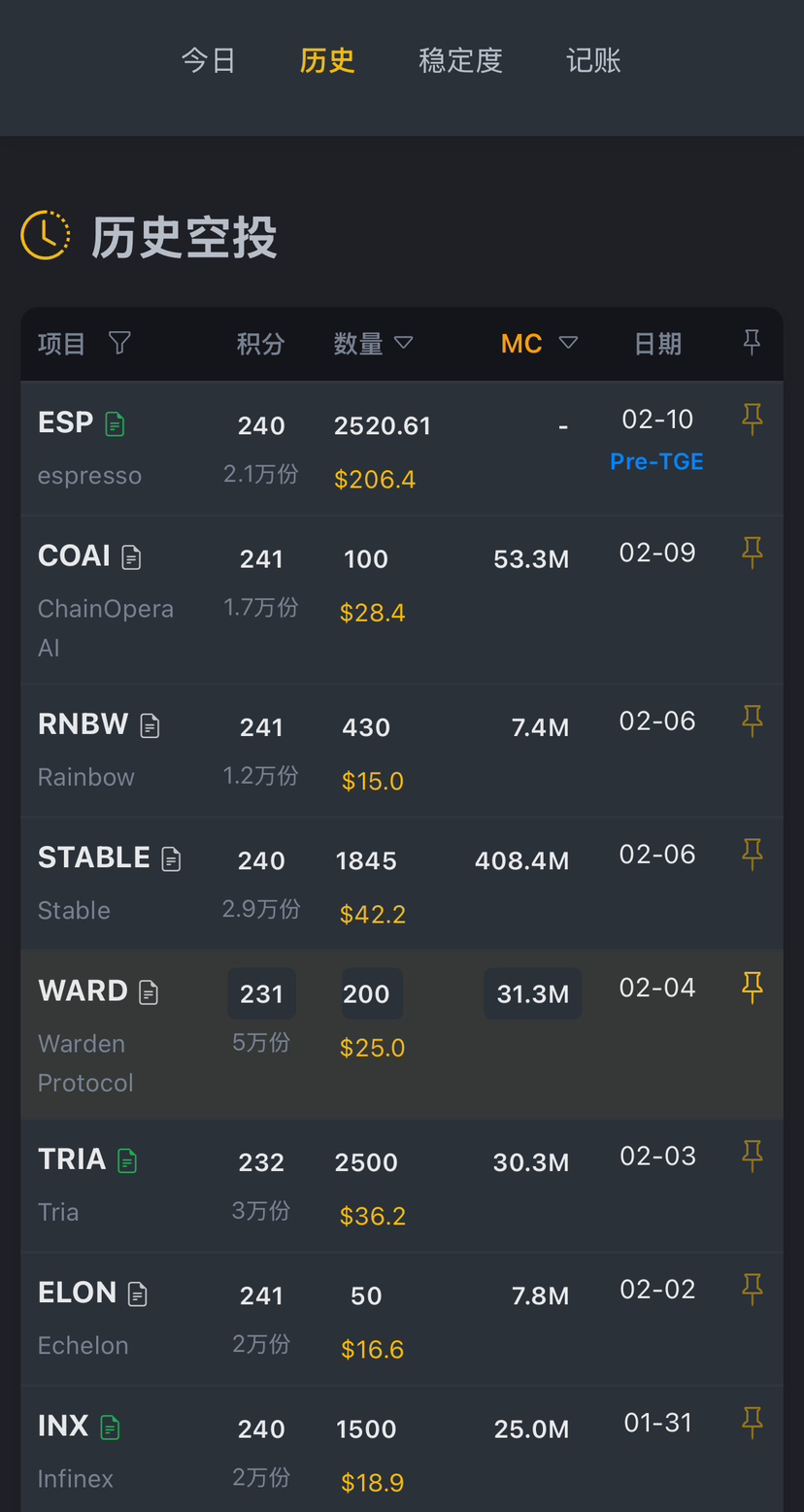
What's even more noteworthy is that the Alpha blind box may even include projects that were previously airdropped. This seems simple but is actually very clever—it directly addresses an old problem: what to do if you miss early opportunities? The answer is: Binance helps you open the door again, and it gives random chances. This '补票机制' (ticket compensation mechanism) is extremely user-friendly for ordinary users and is very easy to create word-of-mouth diffusion.
From the perspective of project parties, this is also a dimensionality reduction. Individual projects no longer need to desperately compete for exposure; instead, they directly leverage Binance's Alpha distribution system, being uniformly packaged, receiving unified traffic, and unified trust endorsement. For early projects with real long-term potential, this is a more efficient cold-start method than individual airdrops.
So you will find that in the matter of Alpha blind boxes, Binance is not just giving away a little more tokens; it is using an event to connect the chain of 'early discovery—participation—distribution—re-participation' and keeping everything within its own ecosystem.
While other platforms are still debating 'whether airdrops are useless', Binance has directly skipped the argument, turning airdrops into a product, making participation a habit, and transforming luck into a designable experience.
To exaggerate a bit, it wouldn't be an overstatement:
While others are still giving out candy, Binance is already building an amusement park.
On February 11, when the Alpha blind box goes live, users who truly participate will clearly realize one thing—this is not you playing a game with Binance, but Binance teaching the entire industry what the correct posture for Web3 user growth is.