Let me pull up a chair and talk to you directly about Vanar Chain and its native token VANRY in early 2026. This project keeps showing up on radar screens as one of the more interesting experiments in blockchain right now, not because of hype or memes but because of the direction it is choosing to build in. I want to break this down in plain language, covering what’s new, what’s been happening behind the scenes, what this tech is trying to solve, and why you should care about all of it. Nothing fluffy. No recycled bullet points. Just what this feels like from the trenches of a community watching it evolve.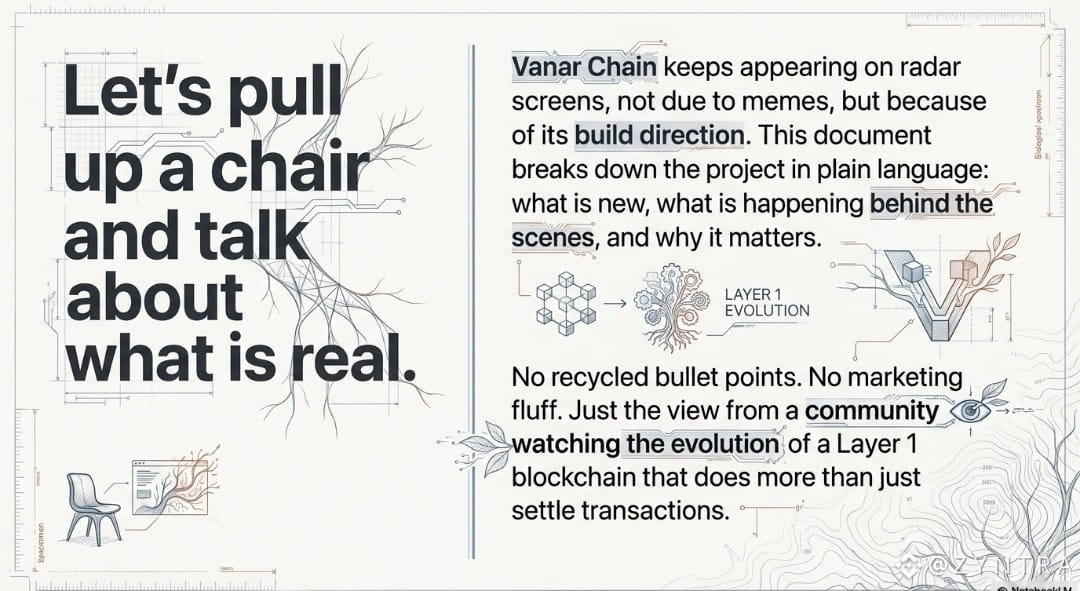
The Evolution of Vanar Chain
Vanar Chain is not one of those chains that launched and then sat waiting for the market to decide its fate. From its earliest days it set out to be a Layer 1 blockchain that does more than just settle transactions. Vanar’s goal has always been to blend core blockchain functionality with smarts that most networks treat as external add-ons. That means trying to bring artificial intelligence capabilities into the base layer itself, not bolted on later like an accessory on a retrofitted car.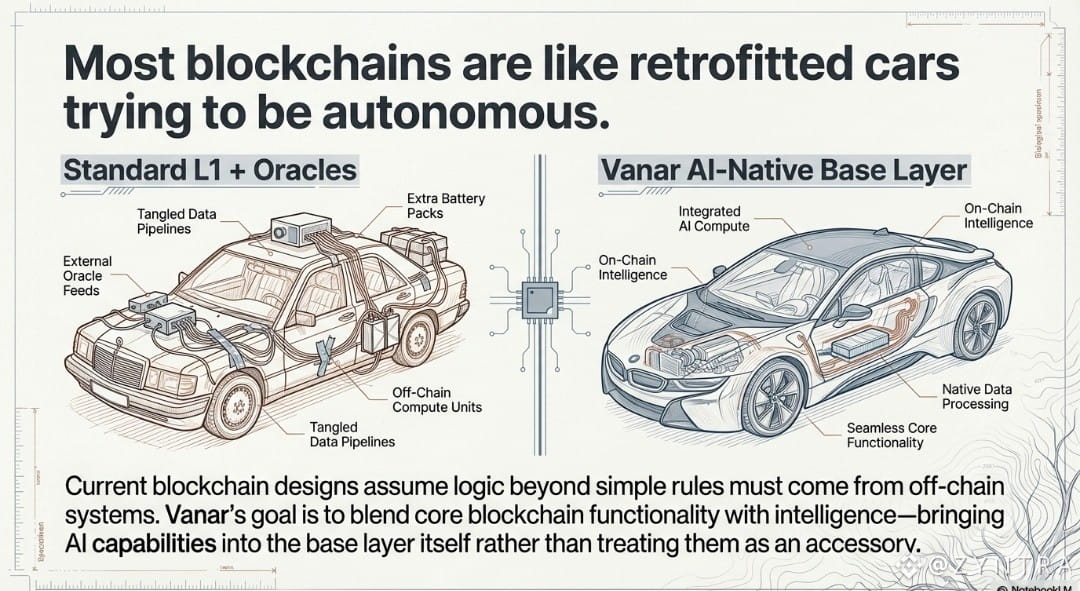
This is a big deal because most blockchain designs assume that logic beyond simple rules comes from off-chain systems oracles or middleware. Vanar says let’s put that logic directly into the blockchain stack so that applications can be smarter, faster, and more autonomous.
That idea AI native instead of AI optional is unusual in this space. But it reflects a clear strategic choice and it shows up in how they talk about their stack, how they try to attract developers, and how they frame VANRY’s role within the ecosystem.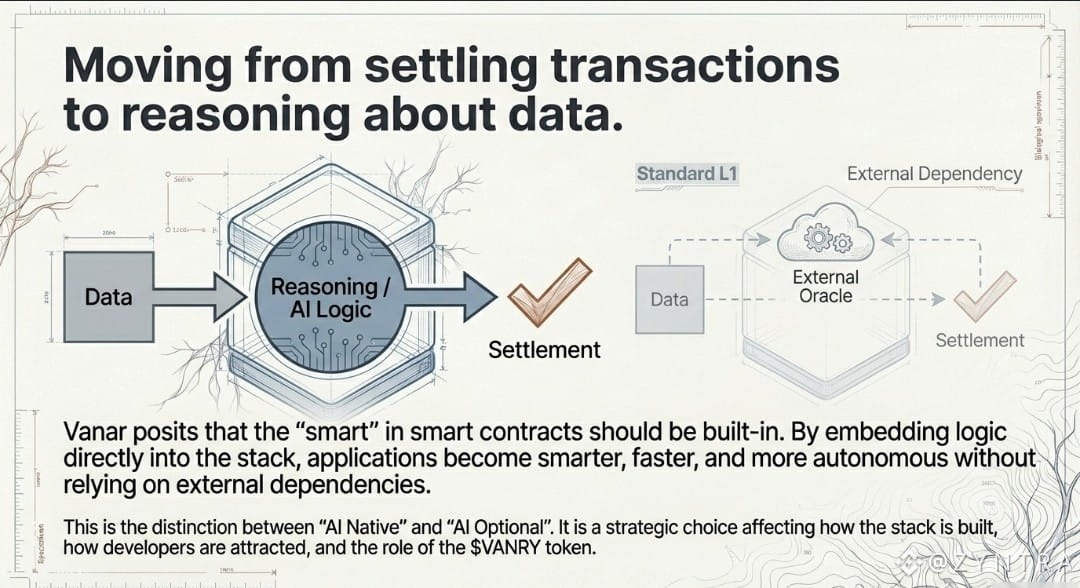
What’s Happened This Year
Here’s what has moved in 2025 and into 2026 for Vanar:
Launch of AI-Native Infrastructure
In January 2026 Vanar officially activated its AI-native infrastructure. This means they now have the foundational layers in place that allow smart contracts and decentralized apps to call on built-in reasoning and data processing logic rather than relying on external oracles or compute layers.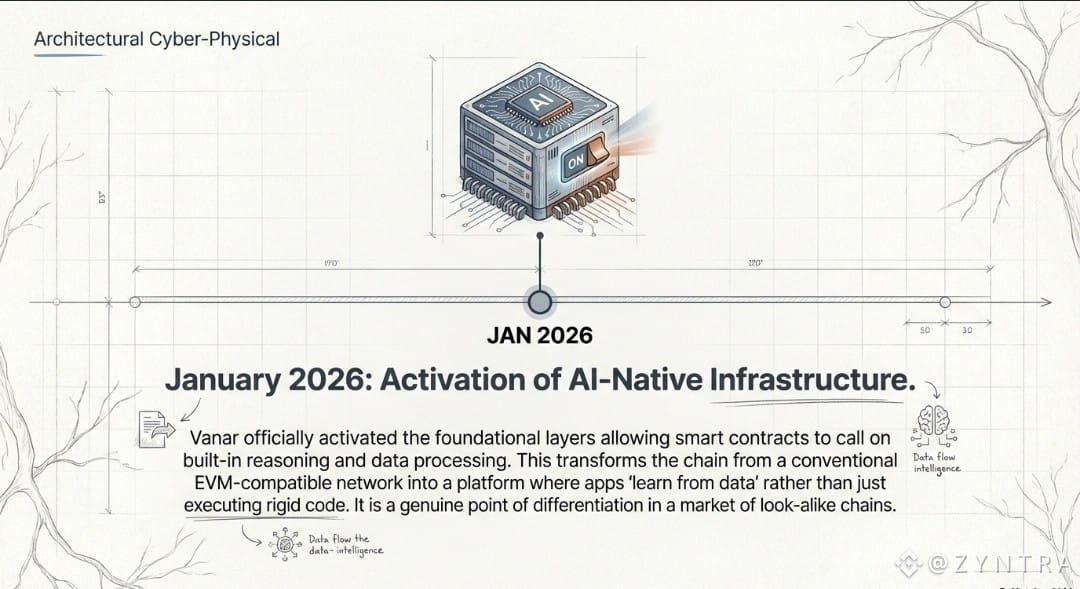
This was a major milestone because it transforms Vanar from a conventional EVM compatible chain into something closer to a platform where you can build intelligent applications that learn from data not just execute code. In a market full of blockchains that look similar, that’s a genuine point of differentiation.
Integration With AI Agent Platforms
Back in late 2025 an AI agent project called Pilot integrated Vanar Chain into its private beta. This integration allowed users to interact with the chain via natural language for basic tasks like checking balances or transaction history and plans were in place to expand that into decentralized finance.
This matters because it gives a real world example of how Vanar’s AI approach isn’t just theory. You can actually use the chain in ways you cannot on most other blockchains like having an AI assistant query on-chain data or help you navigate DeFi actions.
Shifting Tools Toward a Subscription Model
Late last year Vanar redesigned parts of its business model by making core AI tools like MyNeutron live with subscription access instead of being completely free.
This was a smart move for a couple reasons:
It creates a runway for sustainable usage demand rather than pure speculation.
It gives developers something they can reasonably build business models around.
It forces actual product usage rather than just token hodling.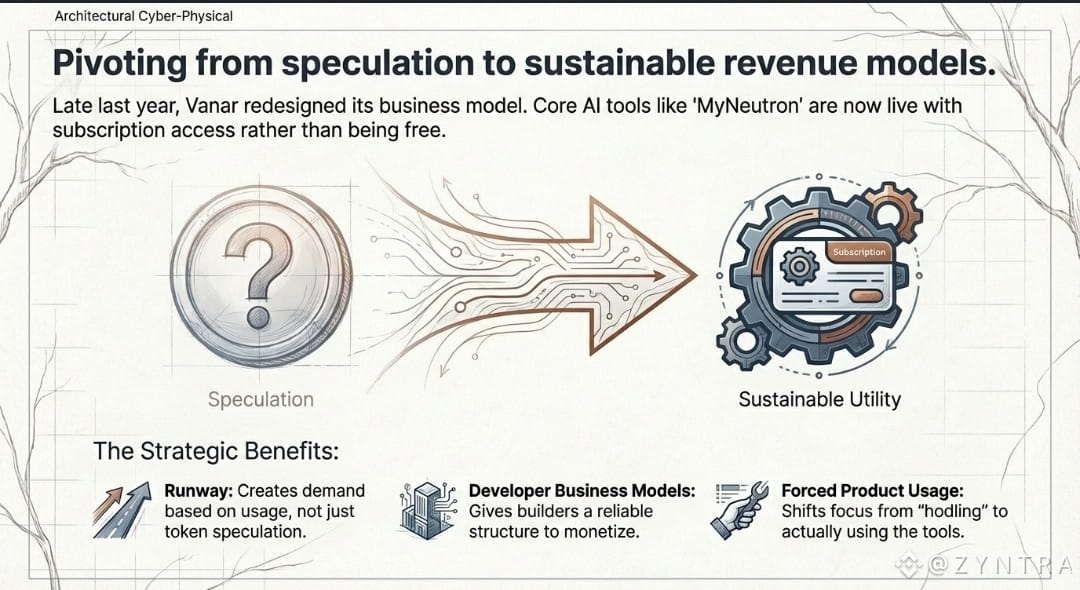
This transition signals that the project wants to produce real revenue flows and not just rely on token price expectations.
Emphasis on Expansion and Multi-Chain Strategy
The roadmap includes plans to deploy Vanar’s semantic compression layer (Neutron) to other chains while Vanar remains the settlement hub.
If this works, it will position Vanar not just as a standalone chain but as an intelligence layer that enhances other chains. It’s a vision of cooperation rather than competition power other ecosystems with Vanar’s data intelligence and let Vanar handle the settlement logic.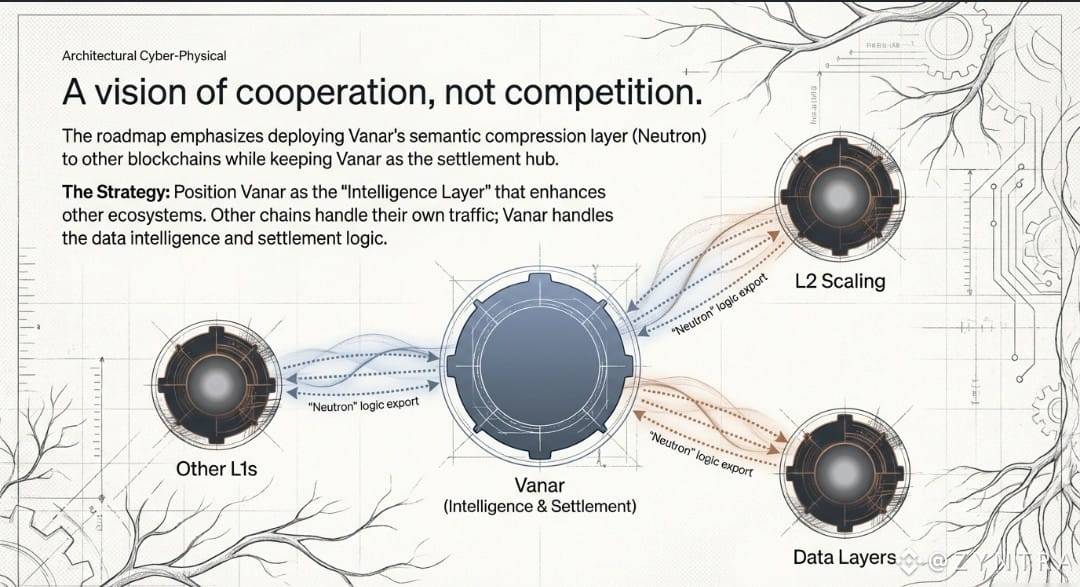
What All This Means in Simple Terms
Let’s strip away the marketing and talk about what this really is:
Vanar Chain is positioning itself as a blockchain that doesn’t treat AI as an afterthought. That means:
Applications built on Vanar can reason about data.
Smart contracts can act based on internal logic rather than waiting on external services.
Developers get tools that let them build interfaces and systems without building every backend piece themselves.
It is essentially building a blockchain where the “smart” part of smart contracts is actually built in by design, not as an add-on.
That’s ambitious.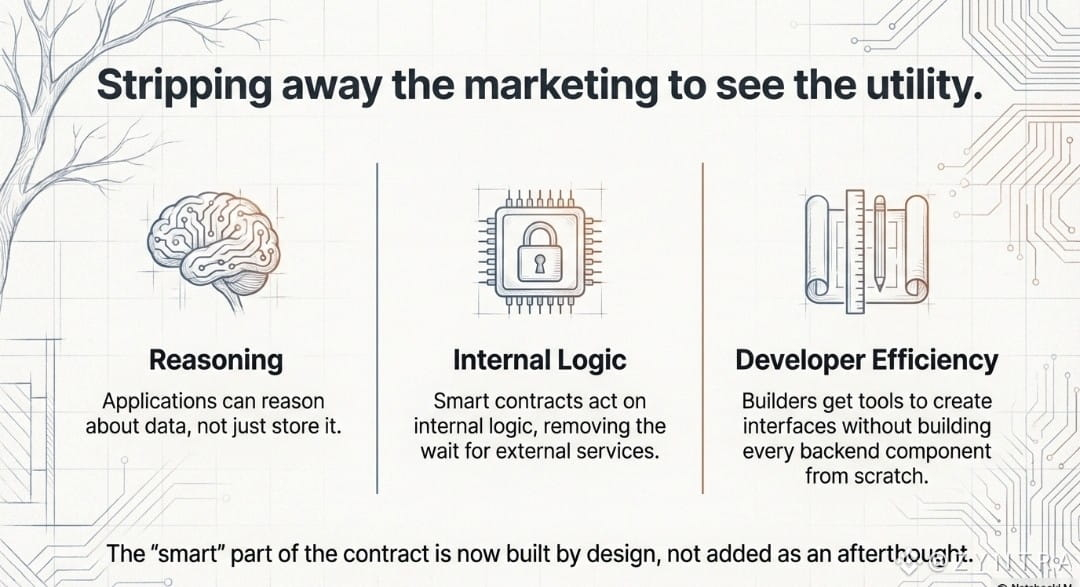
The Price Story and What It Reflects
Right now VANRY’s price is sitting at a low fraction of its previous cycles more than 95 percent below its all-time high.
But here’s the thing that people who watch markets closely know:
Price movements don’t always reflect technical progress. A lot of the recent market pressure comes from broad market sentiment and macro conditions, not because of anything fundamentally broken in the tech itself. There is a disconnect between what is happening on the development side and what is happening in price charts, and that is normal for projects building infrastructure instead of hype.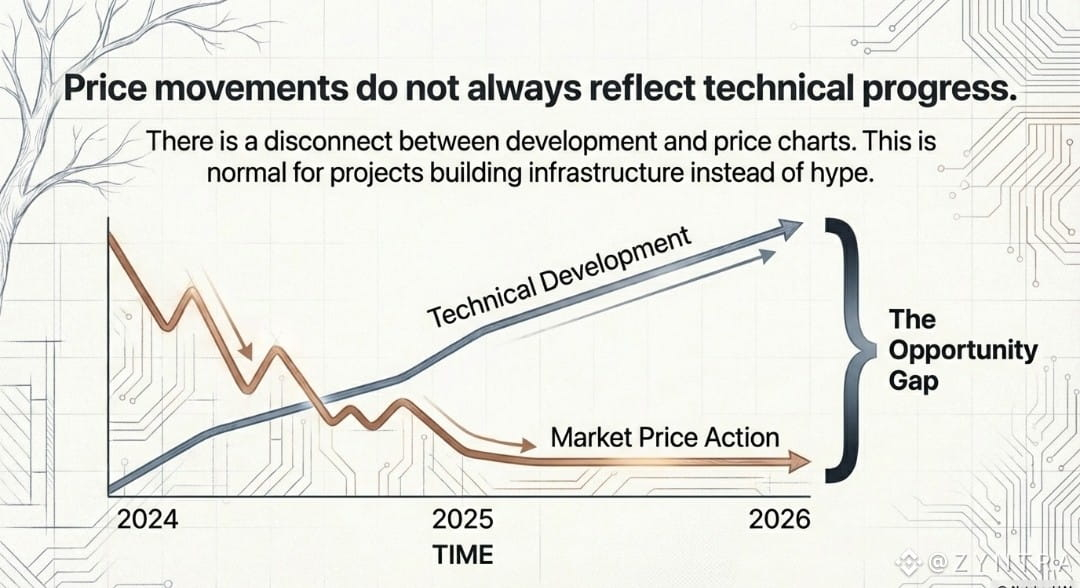
So at the moment the price action might look discouraging, but Vanar’s team is continuing to ship features that matter something that gets forgotten when people focus purely on charts.
Community and Ecosystem Activity
One of the reasons I personally find this project intriguing is the way it has built its community and developer ecosystem.
The Vanar community is active and global, and participation is not just passive. Developers, gaming enthusiasts, builders interested in AI, and token holders are all interacting in ways that go beyond just memes. Discussions around governance proposals, integration ideas, utility use cases, and inclusive feedback sessions are becoming a regular rhythm.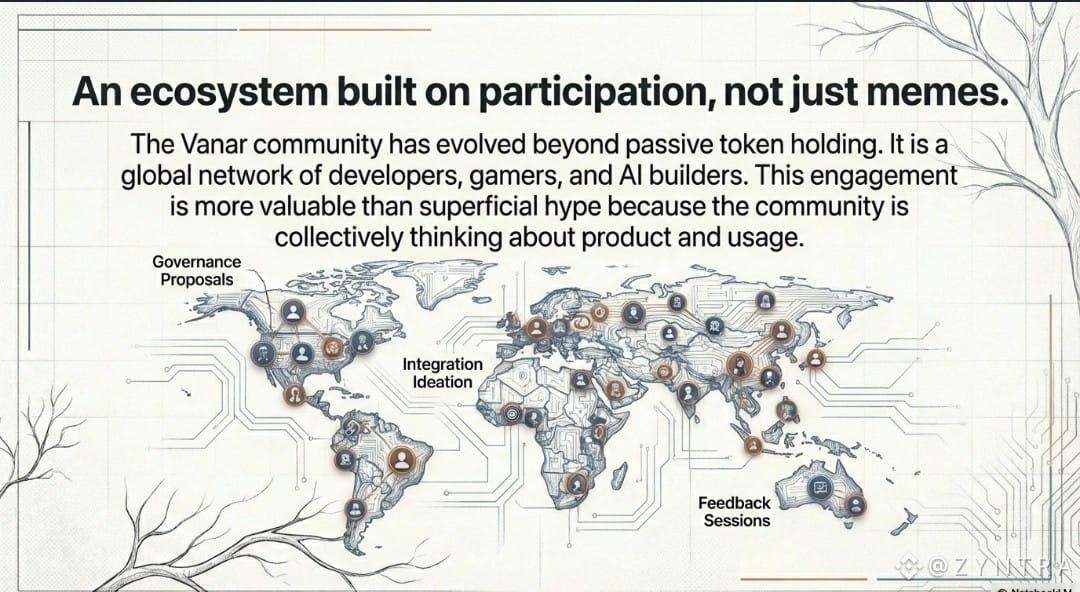
This kind of engagement is far more valuable in the long term than superficial hype because it means the ecosystem isn’t just waiting for price moves it’s collectively thinking about product and usage.
Real Use Cases Emerging
Another important point that not enough people talk about is how applications are actually beginning to use Vanar’s distinct components.
Imagine a decentralized finance app that can assess risk not only by static rules but by contextual understanding of real market data.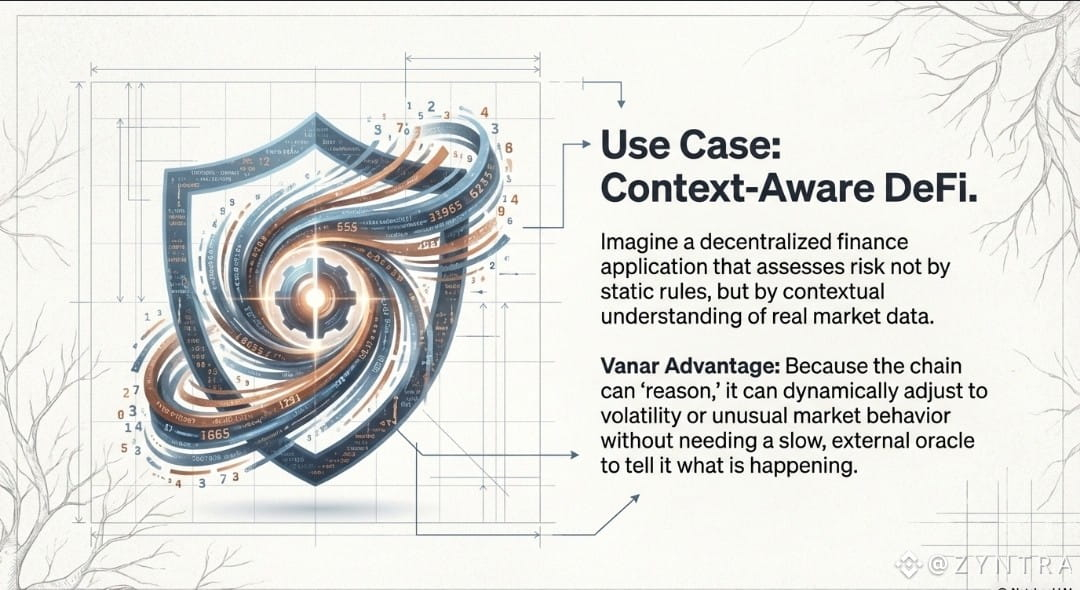
Imagine gaming economies where in-game events or asset behavior is informed by on-chain analytics that are natively accessible rather than stitched together through external providers.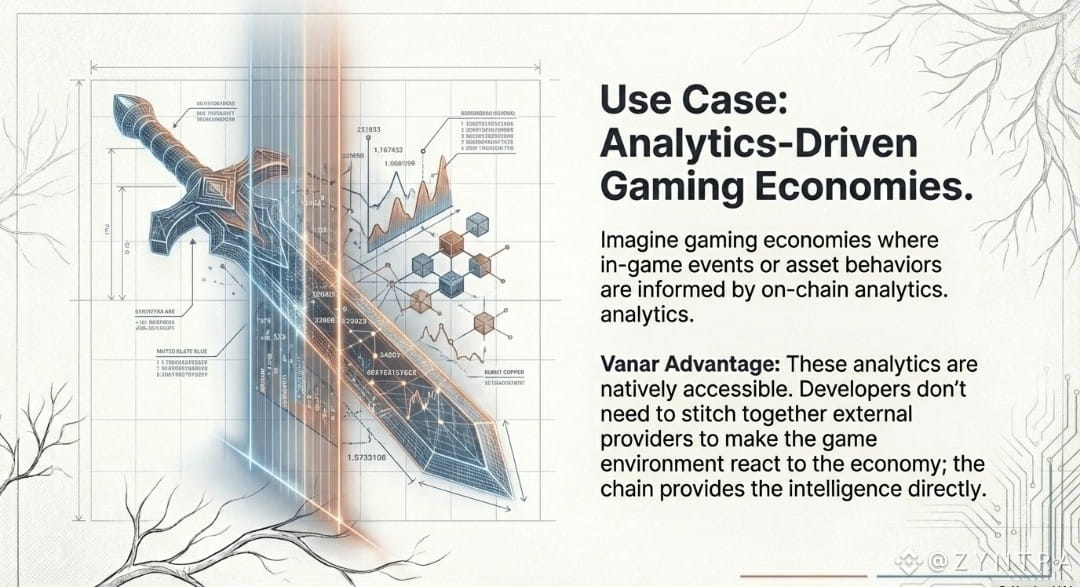
Imagine enterprise data storage where contracts, proofs, legal documents are not only stored efficiently but also understood by the chain itself.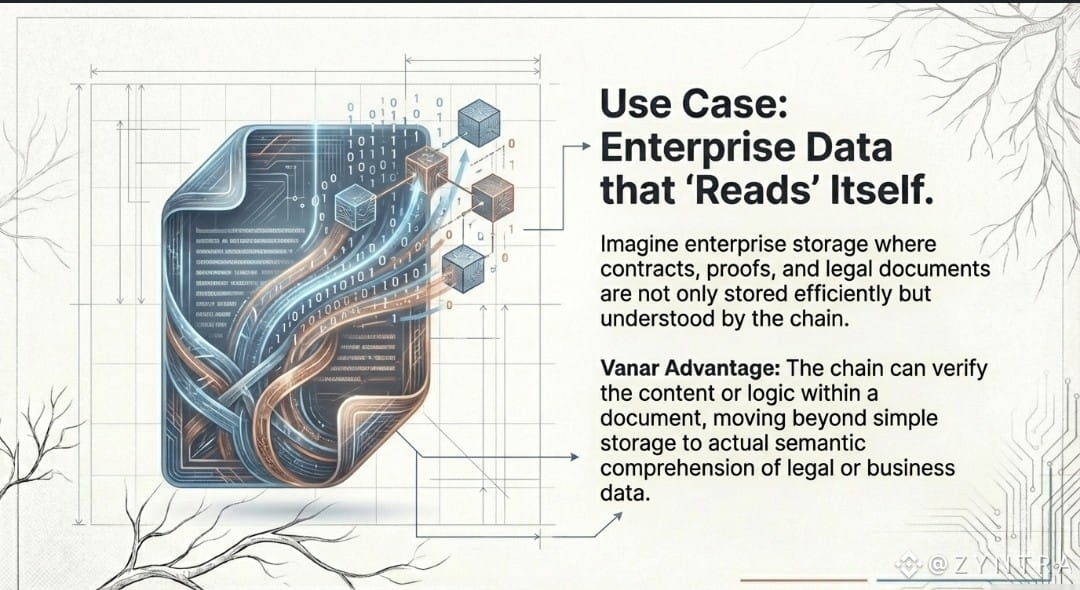
These are not flashy token gimmicks. These are tools that have practical value in a world that is starting to insist that blockchains do more than just settle transactions.
The Road Ahead
Looking at the roadmap and the way the team has executed so far, there are a few big areas to keep an eye on this year and beyond:
Developers building AI-native applications: Not just decentralized apps, but apps that reason and adapt.
Expansion of Neutron technology across ecosystems: If this trend picks up, Vanar could become a hub of intelligent logic for Web3 as a whole.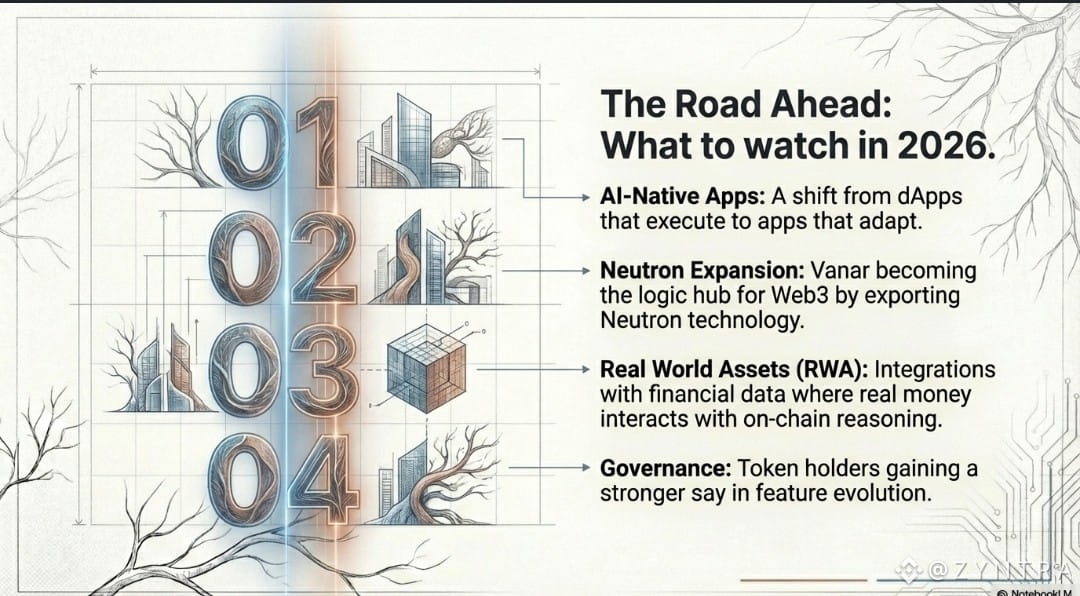
Integrations with real world financial data and real world assets: Because paying real money into real services with on-chain reasoning is a different level of adoption.
Governance participation: As token holders get a say in how features evolve, this could build stronger alignment between value creation and economic participation.
So What Should You Take Away From All This?
Let me be clear:
Vanar Chain is not a typical Layer 1. It is not chasing trends. It is trying to reimagine what a blockchain does at the base level.
Instead of asking how fast it can move tokens, it is asking how intelligently it can process data.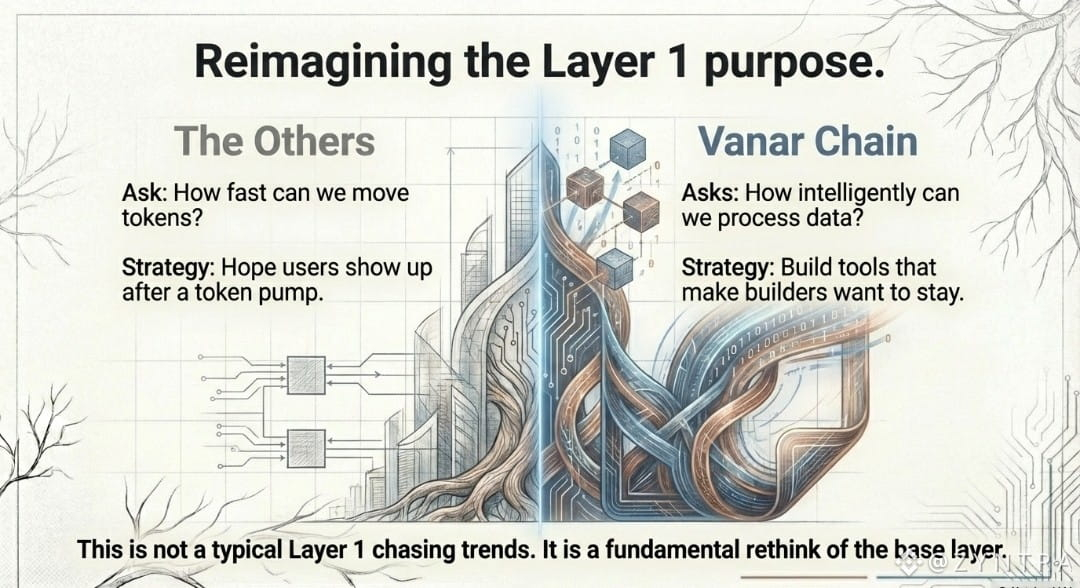
Instead of hoping users show up after a token pumps, it is building tools that make builders want to come and stay.
That approach does not translate to exponential price spikes overnight, but it does translate to lasting infrastructure growth over years.
You might not see Vanar trending on socials every day, but if what they are building works the way it is supposed to, you will see adoption quietly grow in places no one expected.
This is the kind of project worth understanding deeply rather than judging from a chart.
You can feel free to explore the chain, talk with builders in the community, and watch how real applications begin to leverage its AI features.
Because if blockchain evolution truly moves in the direction of intelligence, then Vanar is one of the first projects I can say confidently is trying to build that future, not just talk about it.