
Today we will talk about the one rule that decides whether your trading account survives or gets wiped out
"RISK MANAGEMENT"
Before you search for the perfect strategy or the next big trade, this is the foundation every beginner in crypto and forex must understand.
Many beginners spend countless hours looking for the “perfect strategy” or the “best coin to buy.” They study indicators, watch signals, follow influencers and constantly search for shortcuts. Yet, they often ignore one rule that is far more important than any strategy: how to protect their money. Without proper risk management, even the most brilliant trade ideas will fail.
Risk management is simple at its core.
"never risk more than a small percentage of your account on a single trade".
Professionals generally risk between 1–2% of their account per trade. Beginners, on the other hand, often risk 10%, 20%, or even 50% of their account on one position. This is why many beginners blow their accounts quickly, it only takes one bad trade to destroy months of effort.
Here’s an example:
Suppose your account has $1,000.
You decide to risk 2% per trade → this means your maximum loss per trade is $20.
You enter a trade with a stop loss that would cost you $20 if hit.
If the trade goes wrong, you lose $20. The account is intact, and you still have 980$ to trade another day.
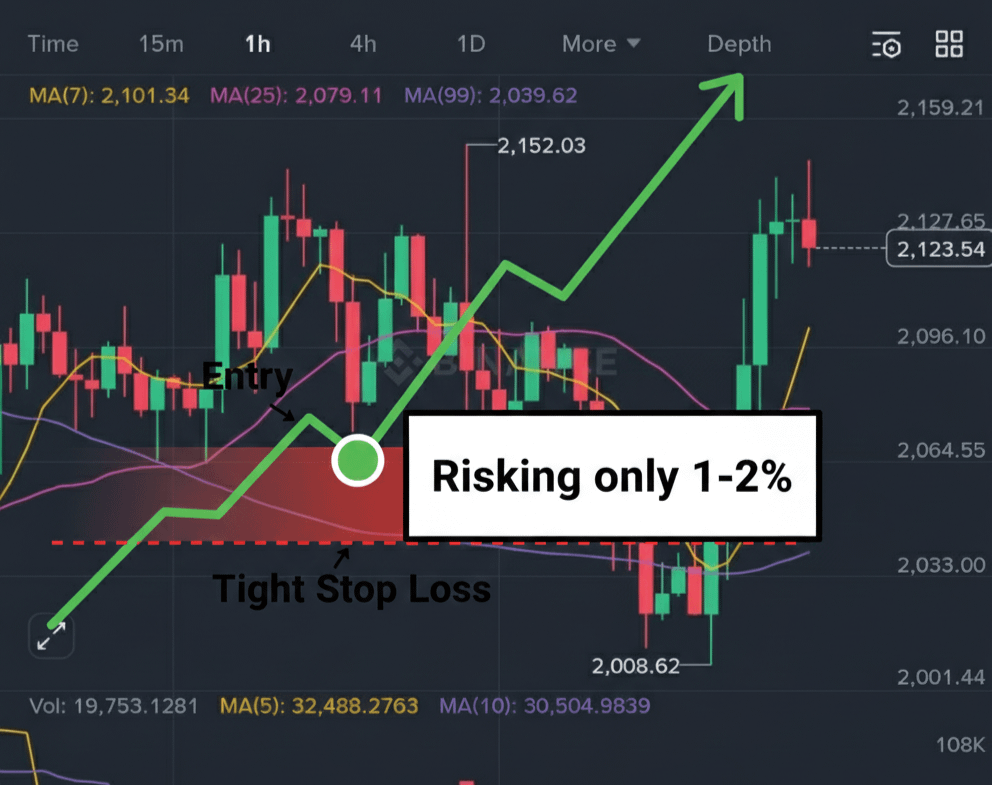
Compare this to a beginner risking 20% per trade, a single wrong move would wipe out $200, 20% of the account and emotionally it’s much harder to recover from that.
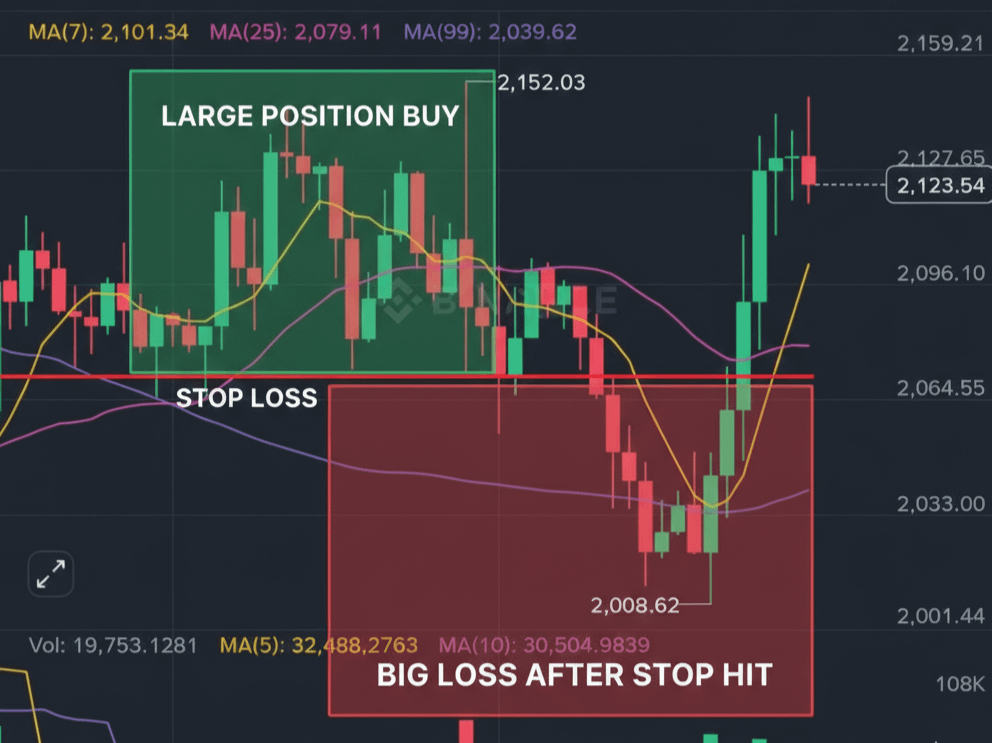
The next part of risk management is position sizing. How much should you buy or sell based on your stop loss? This is crucial because your stop loss defines how much you are willing to lose, and your trade size must match your risk limit.
For example, in crypto:
Your stop loss is $500 away from your entry price.
You want to risk $20.
Your position size = $20 ÷ $500 = 0.04 BTC (if trading BTC).
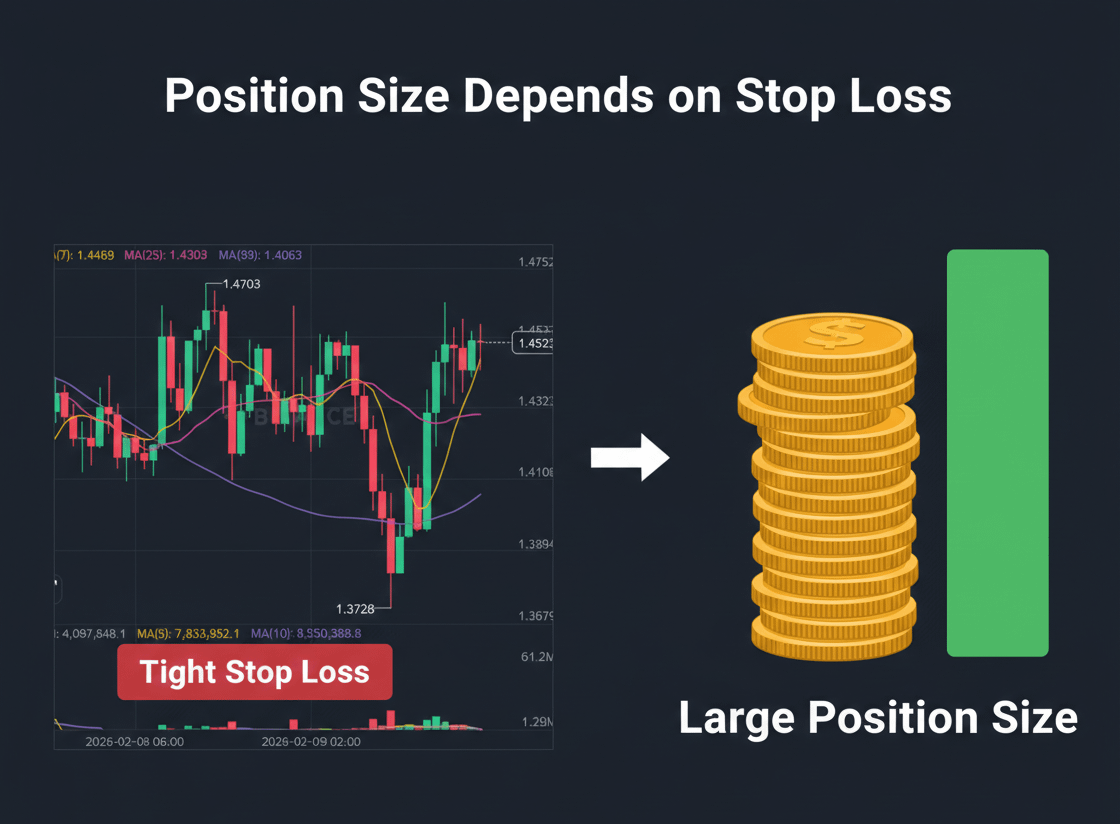
This ensures that no matter what happens, your account only risks the amount you are comfortable losing.
Stop losses are non-negotiable. Never enter a trade without one. Beginners often think they can “let it ride” and hope price reverses. This is gambling, not trading. The market can move faster than your hopes, and one candle can wipe out your account. Stop losses protect your money, the most important thing in trading.
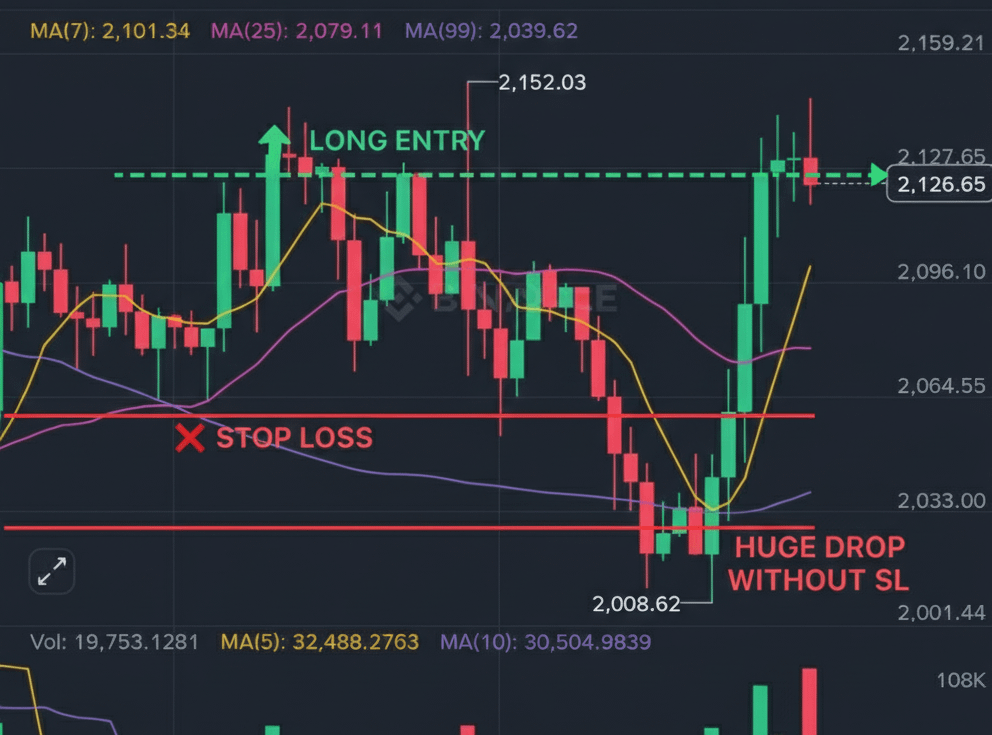
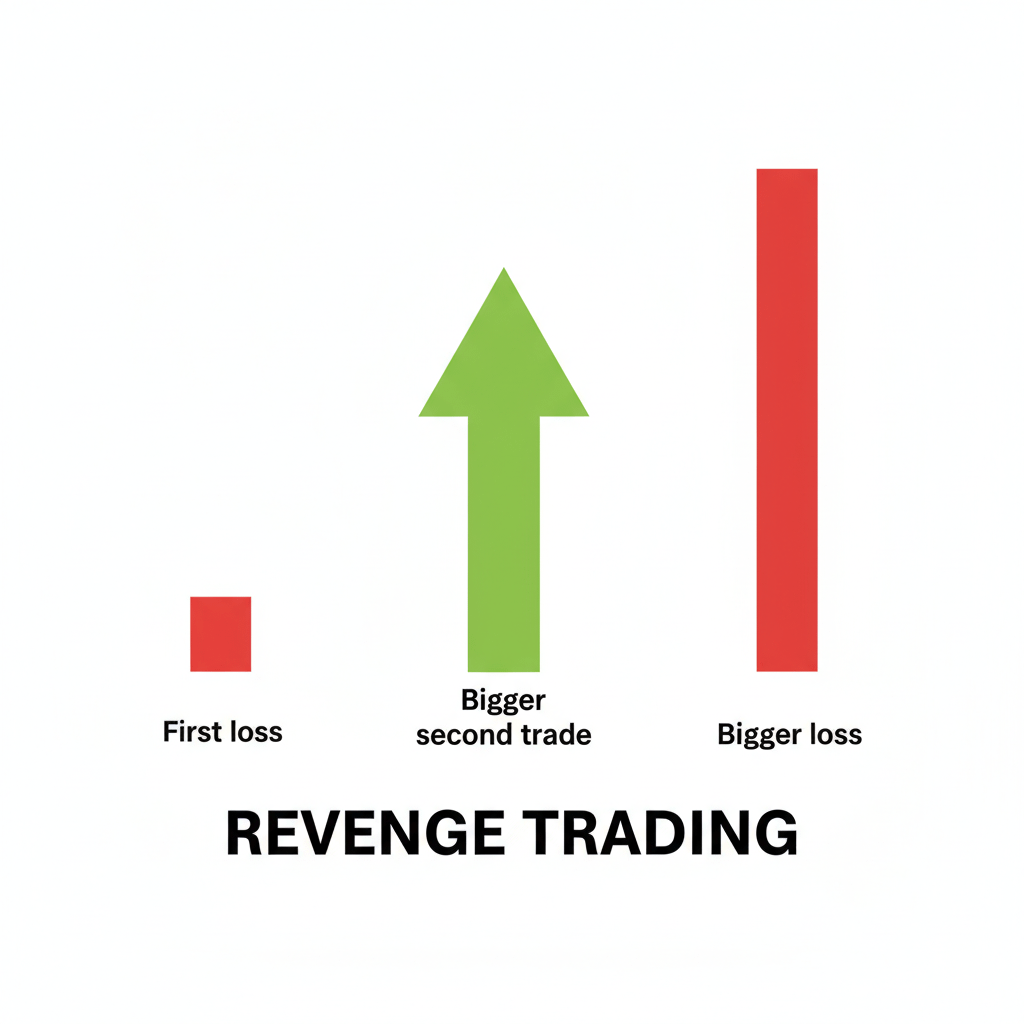
Another key rule is never chase losses. Humans are emotional. After losing a trade, it’s tempting to increase your risk to win it back. This is the fastest way to blow an account. Stick to your 1–2% per trade rule, no matter what. If you lose, step back, analyze and wait for the next proper setup. Emotional decisions destroy accounts, while disciplined decisions protect them.
Risk management also involves thinking in probabilities, not certainties. Even the best trades don’t always work. A setup with 70% probability still fails 3 out of 10 times. If you manage your risk, those losing trades don’t hurt your account. If you risk too much, one failed trade can wipe out the account entirely.
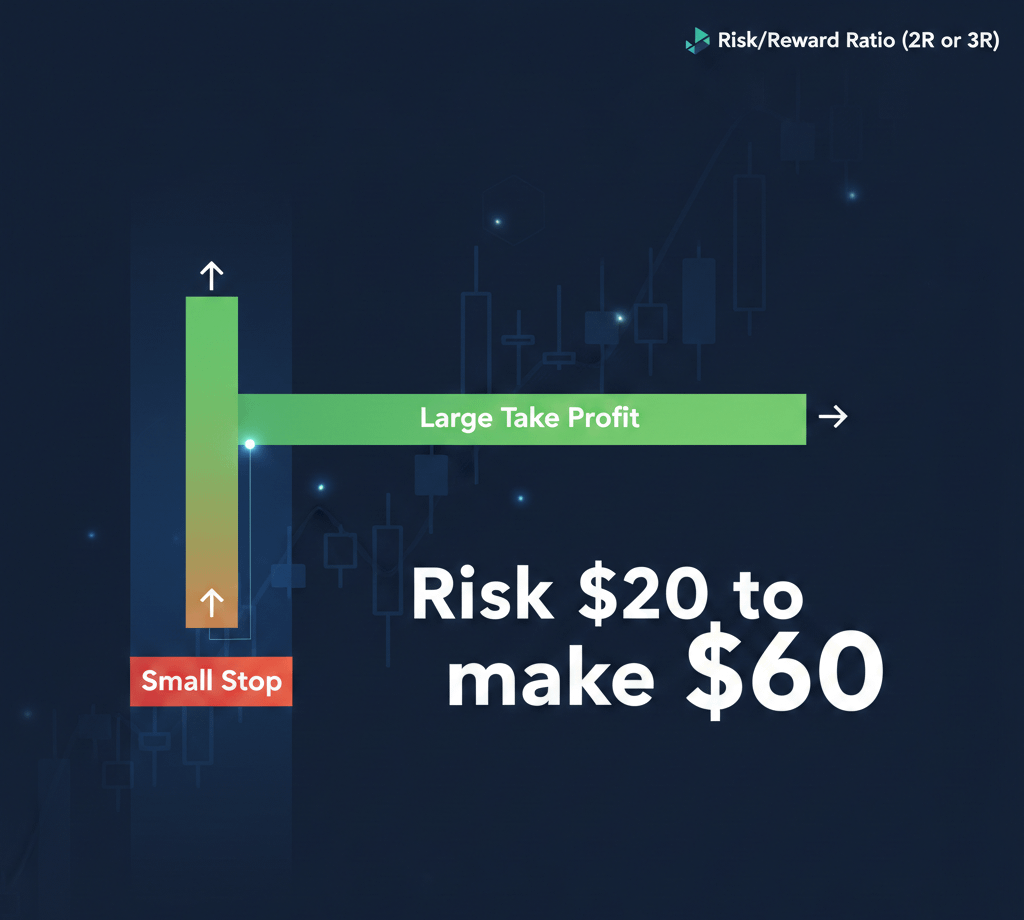
Another often overlooked aspect is risk/reward ratio. Before entering a trade, ask: “If I am wrong, how much will I lose? If I am right, how much will I gain?
Professionals often look for trades where potential profit is at least 2–3x the risk.
Example: Risk $20 to make $60. Even if only half your trades win, you can be profitable. Beginners often do the opposite, risking a lot for very little gain, which ensures a slow and painful account drain.
Risk management isn’t just numbers, it’s a mindset. It teaches patience, discipline and humility. Markets are unpredictable. You will lose trades. You will make mistakes. The goal is to survive long enough to profit consistently. Protecting your capital is more important than catching every move or being right all the time.
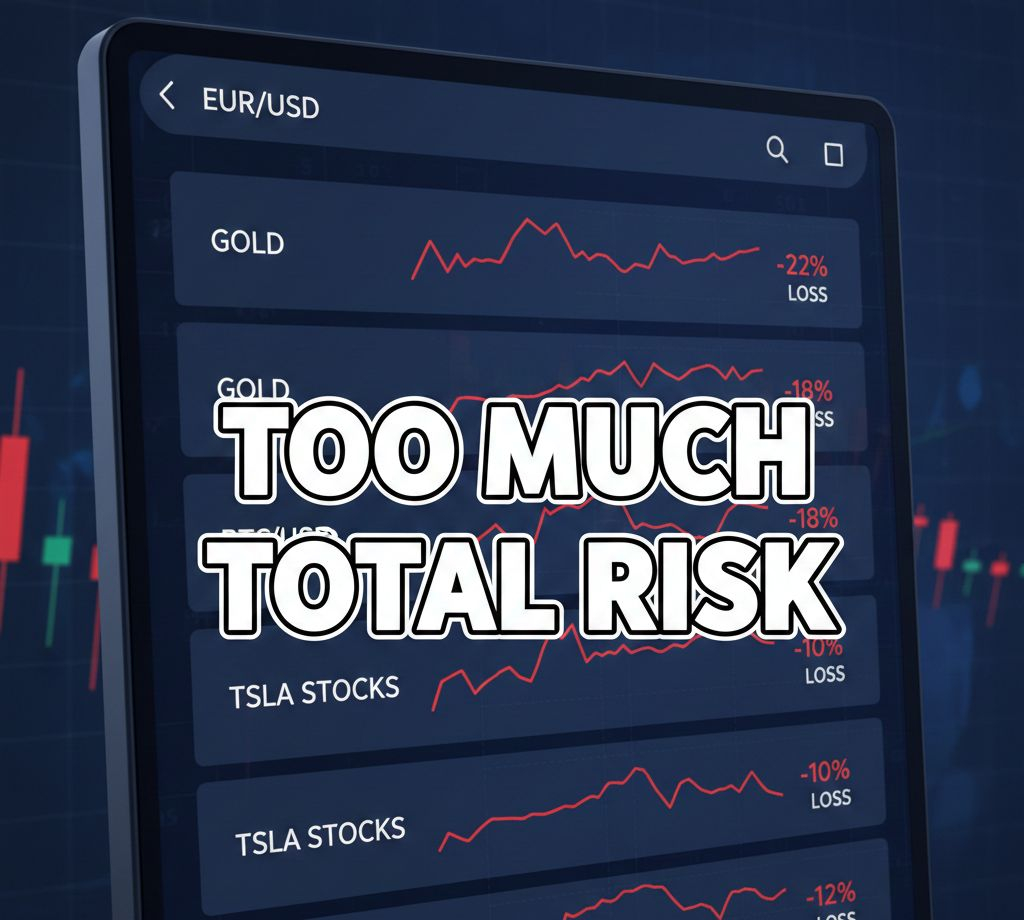
Finally, risk management applies to more than individual trades. Consider overall account exposure. If you have 10 trades open, all risking 2% each, your total account risk is much higher. Professionals always calculate net exposure to avoid large drawdowns. Beginners rarely do this and that is why they panic when multiple trades move against them simultaneously.
In short, risk management is the single most important skill in trading. Without it:
You will overtrade
You will chase losses
You will let emotions control your decisions
You will blow accounts before learning anything
With it:
You survive losses
You stay disciplined
You can learn from mistakes
You can see consistent profits over time
Remember, trading isn’t about being right all the time. It’s about controlling what you can control, your risk and letting the market do the rest.
Follow these simple rules:
Risk 1–2% per trade
Use proper position sizing
Always place a stop loss
Never chase losses
Trade with risk/reward in mind
Manage overall account exposure
Accept losses calmly
Mastering risk management doesn’t make you a genius, but it ensures your account survives long enough for experience and skill to grow. And in trading, survival is the first step toward success.
If you learned something from this, follow me. I share beginner friendly crypto and forex lessons daily.
Also check out my other articles for beginners to learn from
