
ICT FVG, also known as the fair value gap, is a pattern of three candlesticks, where there is an area of no retracement between the high and low of the first candlestick.
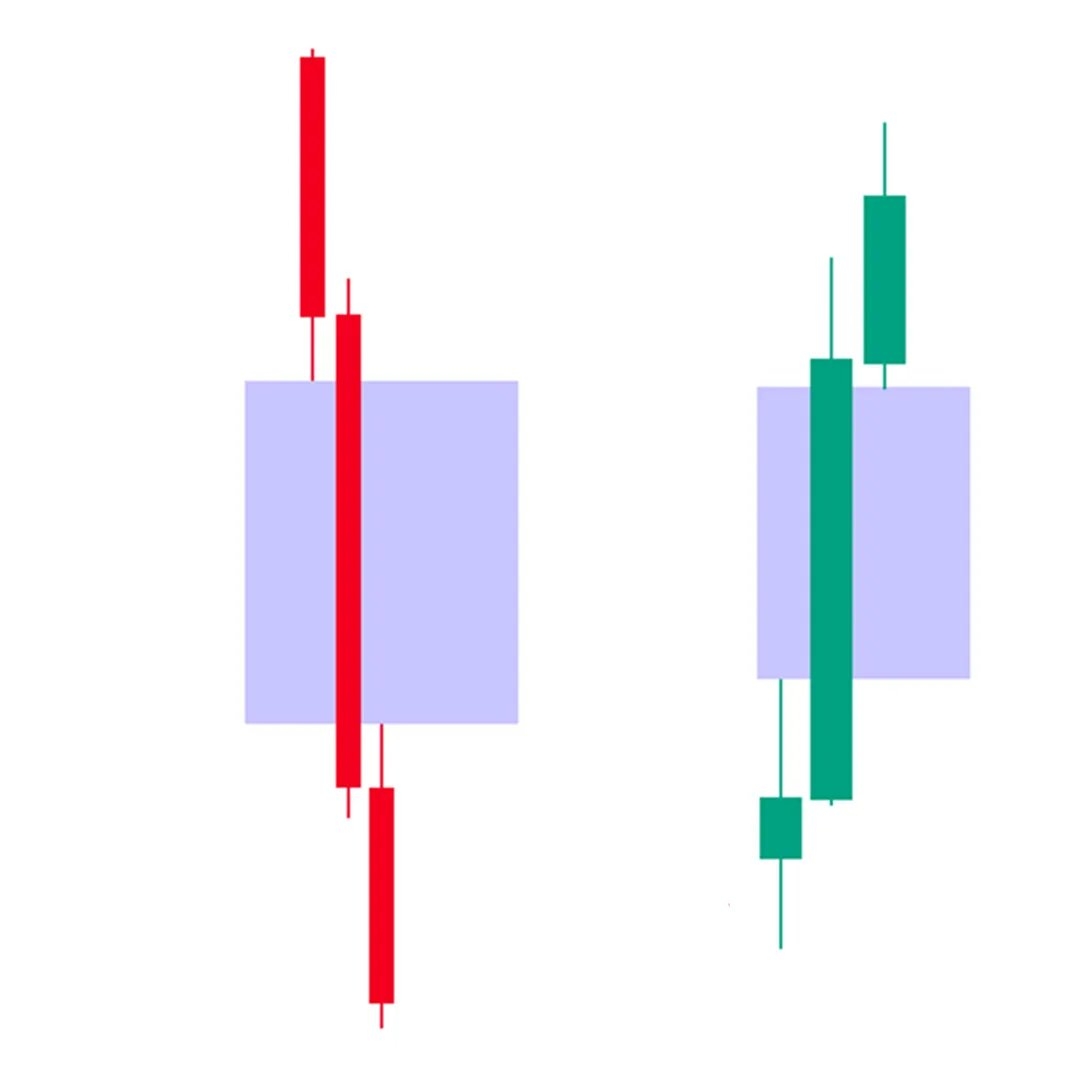
The fair value gap manifests as price imbalance, serving as support and resistance levels on the price chart.
The FVG acts like a magnet, attracting prices back to the fair value gap to balance price delivery.
After retracing to the FVG price, the price reverses and continues its trend.
To trade using the ICT fair value gap, you need to follow these steps:
Step 1 - Determine the market trend: First, we need to identify the market trend of any asset, whether it is a bull market or a bear market.
You can use ICT Daily Bias to predict the direction of price movement.
In an uptrend, the price will create higher highs and higher lows; in a downtrend, the price will create lower lows and lower highs.
Step 2 – Identify Premium and Discount Areas: In a downtrend, you will look for premium fair value gaps; in an uptrend, you will look for discount fair value gaps.
Step 3 – Identify Large Candles: After determining the trend, the next step is to find large candles with a big body and small wicks.
If the market is in an uptrend, we will look for strong bullish candles with the widest body; if the market is in a downtrend, we will look for strong bearish candles with the widest body.
Step 4 – Study the Previous and Following Candles: Once you identify a large candle, now study the candle before it and the candle after it.
The structure of these two candles should ensure that their bodies do not overlap with the body of the middle candle, thereby confirming a reasonable value gap between the wicks of the first and third candles.
Step 5 – Identify the Fair Value Gap: In an uptrend, the gap between the highest price of the first candlestick and the lowest price of the third candlestick is the fair value gap;
In a downtrend, the gap between the lowest price of the first candlestick and the highest price of the third candlestick is the fair value gap.
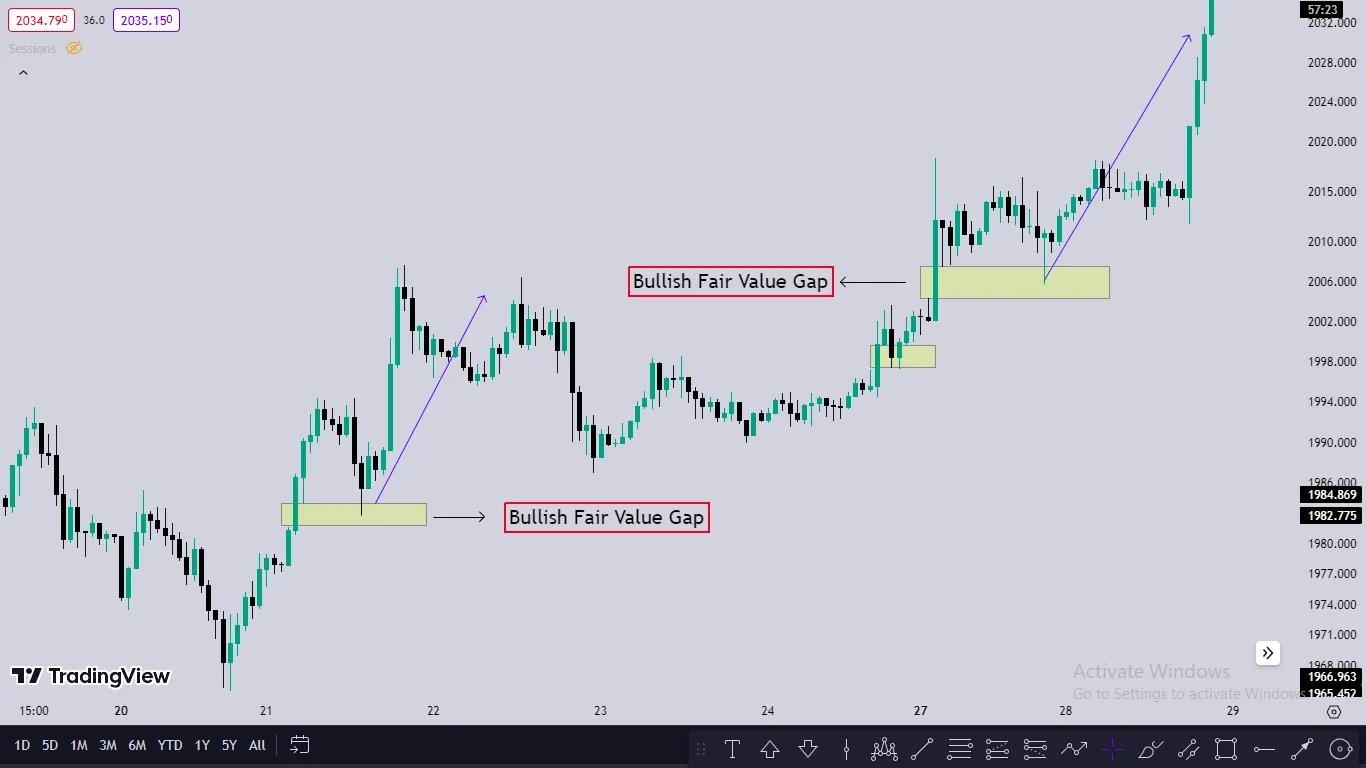
Step 6 – Execute the Trade: If the price is in an uptrend, we will wait for the price to pull back and test the discount fair value gap to balance the trend.
When the price tests a discount fair value gap, you can execute a buy trade by combining it with other technical confirmations (like a rejection or structural change occurring on a lower time frame).
As shown in the image below, the price is in an uptrend, continually creating higher highs and higher lows.
The price pulls back to test the fair value gap and is resisted at the fair value gap, ultimately rising again.
CT FVG can be used for various purposes, for example, it can serve as a tool to find daily deviations using a higher time frame (such as 1 day).
However, if you use fair value gaps as a PD array to find entry points for trades, then you will look for fair value gaps on lower time frames (such as 15 minutes or lower).
When trading with fair value gaps, we should remember that not every fair value gap in the market is suitable for trading. To utilize fair value gaps for trading, we should combine them with other strategies, such as supply and demand or support and resistance levels. At these price levels, fair value gaps can become more reliable trading tools.

