
When I first discovered Plasma it felt like a revelation. Finally someone was asking the question everyone in crypto had been thinking but no one truly answered. What if stablecoins weren’t treated as second-class citizens on chains built for everything else What if a blockchain could be built from the ground up to make moving real-world value like USDT seamless, fast, and low-cost Instead of layering payments on top of general-purpose platforms that inevitably struggle under scale Plasma’s creators reimagined the entire approach. They designed a Layer 1 blockchain where every decision is optimized around rapid settlement and deep integration with the global digital economy. That focus gives Plasma its identity and the potential to change how we experience money on-chain.
The team behind Plasma recognized that stablecoins are not a niche. They are the backbone of modern digital finance. Daily activity by retail users and institutions already revolves around these dollar-pegged assets. Most networks treat them as just one option among thousands. Plasma treats them as first-class citizens. Every feature, every design choice, every user interaction is crafted to remove friction and cost. The network allows zero-fee USDT transfers. You never have to worry about gas tokens. The gas system even allows payments in stablecoins or Bitcoin so users are free from chasing native tokens just to interact with the blockchain.
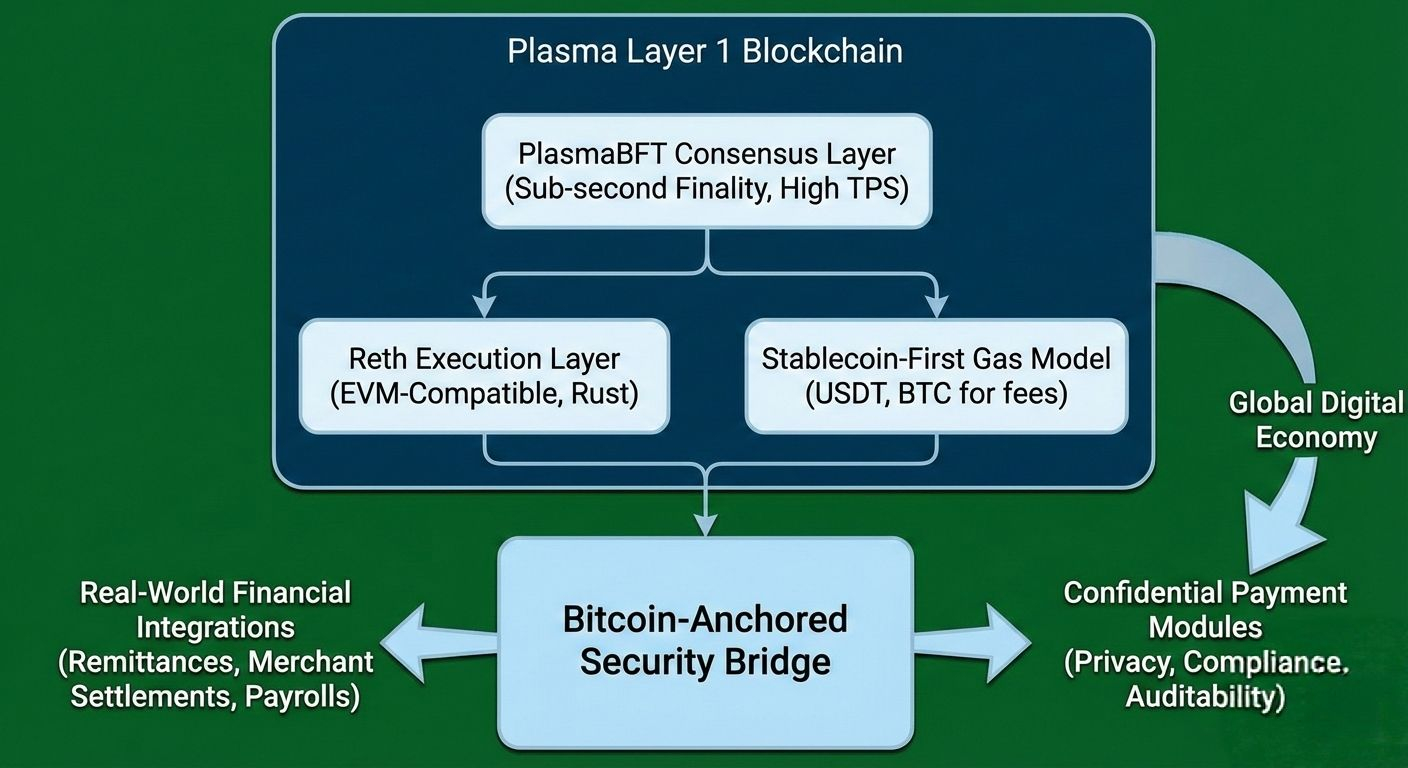
The consensus layer is a marvel in its own right. PlasmaBFT, inspired by Fast HotStuff, delivers sub-second finality and thousands of transactions per second. This is not about showing off throughput numbers. It is about real-world performance. Remittances, merchant settlements, payrolls, and cross-border transfers require reliability and speed that most blockchains cannot deliver. Plasma pipelines the prepare, vote, and commit phases into parallel workflows, finalizing blocks faster while maintaining security against faulty or malicious nodes. This combination of speed, security, and simplicity could finally bridge the gap between blockchain theory and real-world financial needs.
Developers find themselves in familiar territory. Plasma’s execution layer runs on Reth, a high-performance modular Ethereum client built in Rust. Solidity contracts work seamlessly. Applications from the broader EVM ecosystem can be ported without retraining or rewriting. Anchoring Plasma to Bitcoin through a trust-minimized bridge adds security and censorship resistance, giving the chain the battle-tested reliability of the world’s oldest blockchain while keeping all the flexibility of a programmable environment.
Small design choices have massive impact. Plasma allows approved tokens such as USDT or BTC to be used directly for gas payments. Users no longer need to acquire a native token just to pay fees. This subtle innovation aligns the network with how money moves in the real world. People already hold stablecoins for settlement. By allowing them to pay gas in the currency they already use, Plasma flattens the learning curve and makes everyday transactions feel natural.
Privacy and compliance are also considered. Confidential payment modules are in development to allow businesses to shield transaction amounts, addresses, and memo fields while maintaining auditability for regulators. This acknowledges that financial systems must balance privacy, transparency, and compliance. Programmable money can exist in harmony with real-world rules without sacrificing innovation.
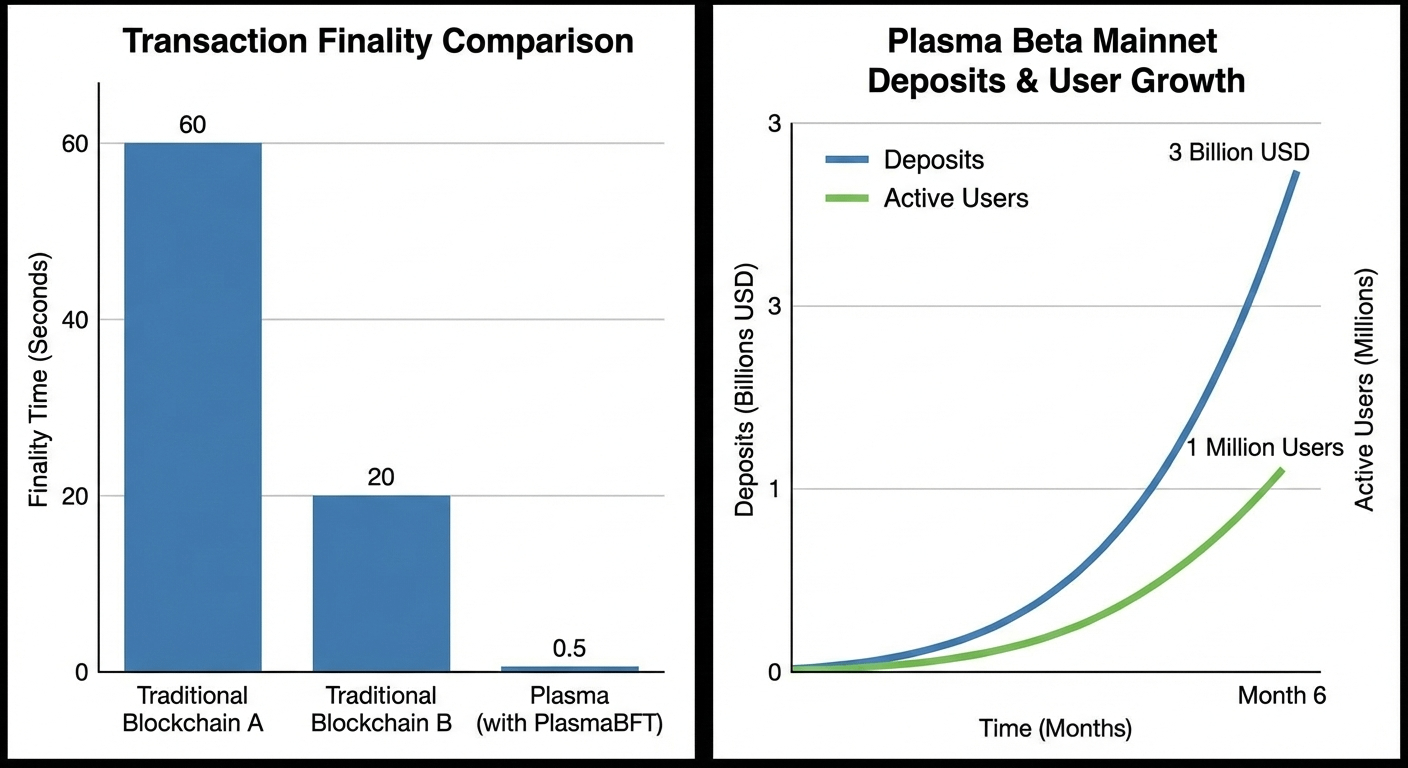
The results speak for themselves. Plasma’s Beta mainnet drew billions in deposits and quickly became a hub for payments, DeFi primitives, and partner integrations. It solves problems both for retail users in stablecoin-heavy markets and institutions that need robust settlement rails. Plasma is not trying to be everything. It focuses on one thing and executes it exceptionally well: moving stablecoins efficiently and securely at global scale.
Watching Plasma evolve, I see a blueprint for the future of money on-chain. Its layered architecture, advanced consensus, stablecoin-first gas model, Bitcoin-anchored security, and developer-friendly tools are more than technical achievements. They represent a philosophy where programmable money is accessible, reliable, and aligned with real-world economic activity. If the world is moving toward digital, global, and programmable money, Plasma is not just participating in that future—it is shaping it.

