The AI-native adaptation advantage of Vanar Chain is fundamentally different from the industry's pseudo-adaptation model of 'sticking AI labels on public chains and later stitching plugins.'
In essence, it's just one sentence:
It's not about adapting AI to blockchain, but rather making blockchain born for AI from day one.
Combining the five-layer architecture of Vanar Stack, consensus mechanism, and ecological layout, its advantages can be broken down into six core dimensions👇
Each item essentially addresses a problem:
👉 Allow AI to operate smoothly on the chain, run stably, and be usable.
1. AI-first underlying architecture: Eliminate 'adaptation friction' from the source ⚙️
Traditional public chain:
Designed for transfers and DeFi → Later AI interface integration
Vanar:
Designed for AI workloads from day one
This is not an upgrade, it's a track change and rebuild.
① Five-layer Vanar Stack closed-loop architecture 🧠
Vanar Stack = Complete AI execution pipeline:
Chain → Basic blockchain layer
Neutron → Semantic memory layer
Kayon → Inference layer
Axon → Automation execution layer
Flows → Scenario adaptation layer
Form a complete closed loop:
Data storage → Inference → Decision-making → Execution → Implementation
AI does not need to rely on external plugins or off-chain systems.
The entire chain is the working environment for AI.
② Full-chain AI data storage 📦
Common industry patterns:
Off-chain database + On-chain settlement ❌
Vanar model:
AI data is stored directly on the chain ✅
Includes:
Memory
Inference record
Execution instruction
Permission rules
Significance is crucial:
👉 AI no longer relies on centralized servers
👉 Data is trustworthy + consistent + verifiable
③ EVM compatibility lowers development threshold 🧑💻
Developed based on GETH fork → Fully EVM compatible
Developers can directly use:
Solidity
Hardhat
Existing toolchain
Migrating AI applications with almost zero learning cost.
This step is crucial:
👉 No need to retrain the developer market.
2. Neutron: Solving the AI 'forgetting' problem 🧠
One of the biggest pain points of AI on chain:
No long-term memory.
Neutron is the 'long-term brain' on the chain.
① Unstructured data → AI-readable data 📄➡️🧠
Can handle:
PDF
Invoice
Contract
Property documents
Through neural compression + algorithm compression
Transform into Seeds (semantic objects)
Difference from traditional chains:
Traditional: Store hash
Vanar: Store data that AI can read directly
This is a qualitative change.
② Persistent context accumulation 🔁
AI's:
Instructions
Permissions
Execution history
All can accumulate over the long term.
Benefits:
AI no longer needs to 're-teach' every time.
AI begins to have a continuously growing context.
③ Support enterprise-level data scenarios 🏢
For example:
Compliance documents → Automatic triggers
Invoice → Automatic accounting
Contract → Automatic execution
AI can truly handle enterprise processes for the first time.
3. Kayon: Solving the AI 'unclear' problem 🔍
AI's biggest controversy:
Decision-making is not explainable.
What enterprises fear most:
Black box AI ❌
What Kayon does is crucial👇
① On-chain native AI reasoning ⚡
No need:
Oracle
Off-chain computation
External server
Directly call Neutron data → Complete reasoning on-chain.
Truly:
Decentralized AI decision-making.
② Explainable & Auditable 📊
Complete record:
Call data
Inference path
Decision result
And can output:
Natural language interpretation
Visual charts
The words enterprises care about most:
Compliance.
③ Support complex business reasoning 💼
For example:
Verify compliance documents before payment
Receipt-triggered automatic settlement
Automated execution of risk control
AI truly begins to possess business capabilities.
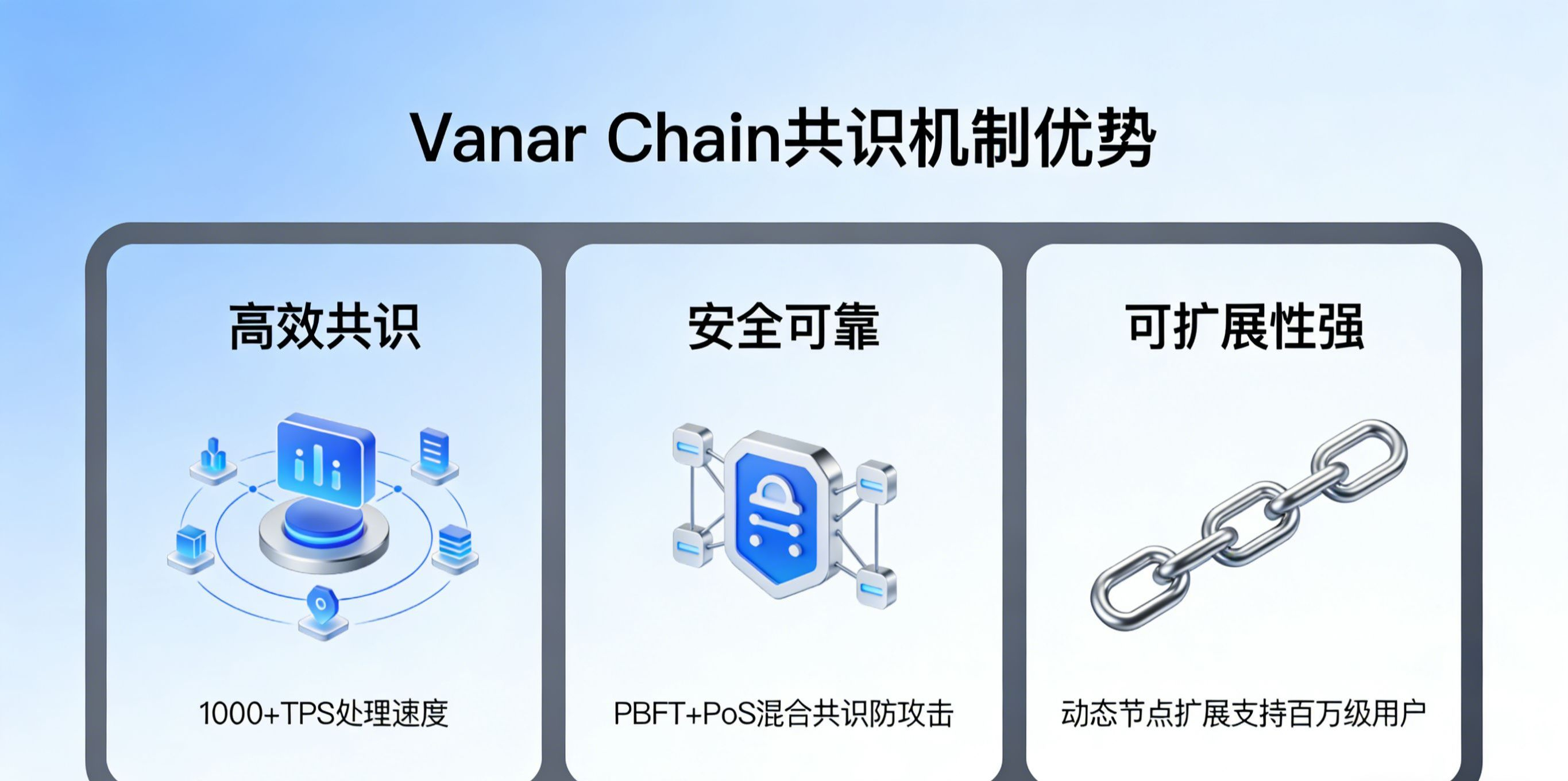
4. Consensus mechanism: Born for AI high-frequency operations ⚡
Vanar adopts:
PoR + PoA dual-layer consensus
Not for speed, but to adapt to AI working mode.
① High-frequency low-fee transactions 💸
AI characteristics:
High frequency
Small amount
Automated execution
Vanar:
3 seconds to block
Fixed low Gas
Let AI work continuously without being overwhelmed by transaction fees.
② Reputation consensus meets compliance 🏛️
PoR characteristics:
Validator identity disclosure
Behavior traceability
Meets enterprise-level auditing and risk control.
③ Decentralization and efficiency balance ⚖️
Join DPoS delegation mechanism:
Avoid excessive centralization of PoA
Ensure consensus efficiency
Lay the foundation for multi-agent collaboration.
5. Automated execution + Automatic settlement closed loop 🔄
One of AI's biggest weaknesses:
Cannot press buttons, cannot operate UI.
Vanar directly addresses:
Let AI operate without pressing buttons.
① Axon automated execution layer 🤖
Transform reasoning results → Automatic execution actions
And add:
Permission barriers
Behavior control
AI can work, but will not overstep.
② Native AI settlement 💰
AI can automatically complete:
Pay Gas
Reconciliation
Revenue sharing
Form a true closed loop:
Decision-making → Execution → Settlement → Completion
No need for human participation.
③ Industry scenario adaptation 🌍
Flows layer supports:
Games
PayFi
Supply chain
RWA
AI is no longer just a tool; it begins to become an economic participant.
6. Cross-chain + Ecology: Let AI step out of a single chain 🌐
AI cannot be locked on a single chain.
The design of Vanar has considered this from the beginning.
① Start cross-chain from Base 🔗
AI can cross-chain:
Call assets
Obtain data
Execute operations
Avoid multi-chain adaptation costs.
② AI development tools improved 🧰
Provide:
ADK development toolkit
Vanar Hub
NVIDIA computing power collaboration
Make developing AI Agents easier.
③ Connecting to the real economy 💳
Cooperate with Worldpay:
Supports fiat deposits from 146 countries
AI can directly participate in the real economy for the first time.
Summary: Understand Vanar in one sentence 🎯
Traditional AI public chain:
👉 Connect AI to the chain
Vanar Chain:
👉 Make blockchain a workplace for AI
AI in Vanar can:
Can remember 🧠
Can explain 🔍
Can execute 🤖
Can settle 💰
Can cross-chain 🌐
This is the true meaning of an AI-native public chain #vanar @Vanarchain $VANRY