
For more than a decade, Crypto and AI have developed as two parallel streams. Crypto focuses on ownership, decentralization, and trust without intermediaries. AI focuses on optimization, automation, and data-driven artificial intelligence.
But moving into the 2024–2026 phase, these two fields are no longer just 'parallel'. They are converging – complementing each other to create a completely new infrastructure layer for the digital economy.
👉 AI needs Crypto to decentralize, increase transparency, and create economic incentives
👉 Crypto needs AI to be smarter, more efficient, and approach Mass Adoption
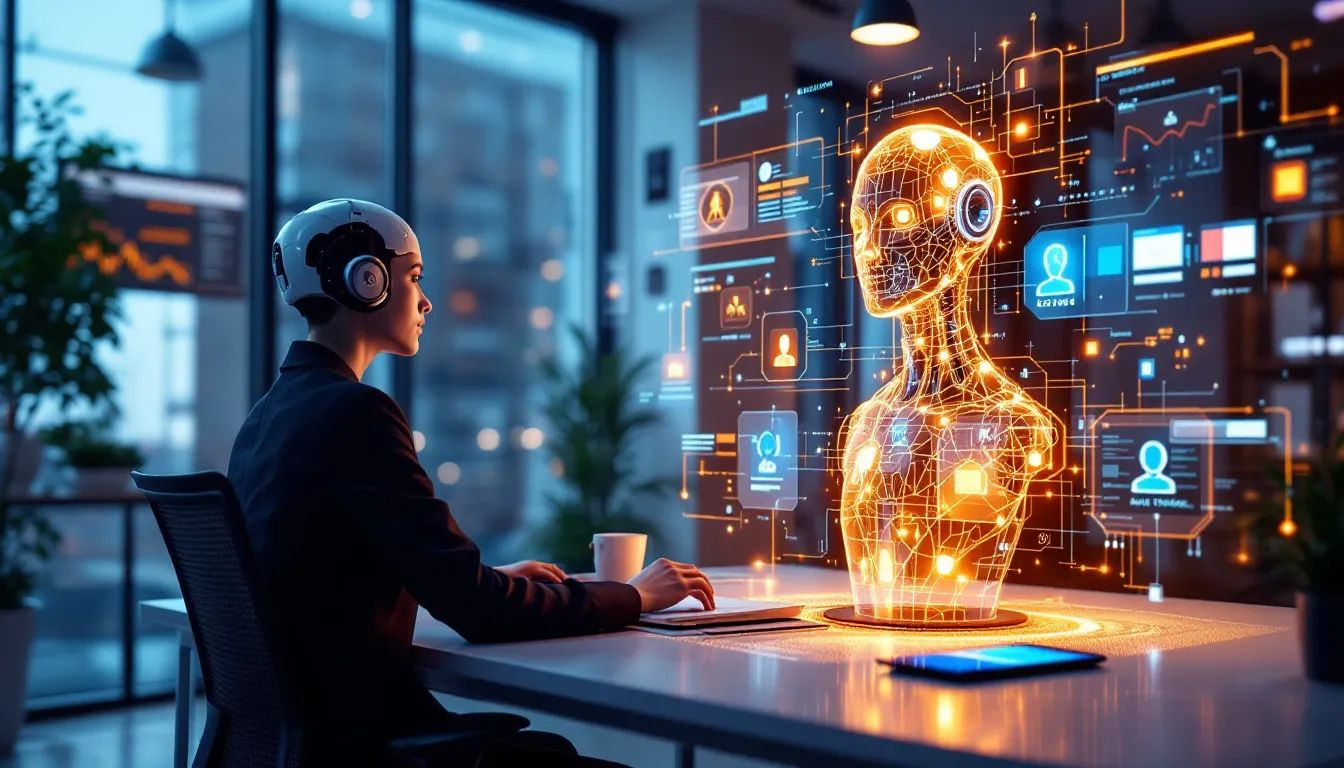
🧠 Why must AI and Crypto meet?
1️⃣ AI concentration → power risk
Today, the strongest AI is in the hands of:
Big Tech
Data conglomerates
Closed models
Issues:
User data is exploited
AI's decisions are not transparent
Users are not allowed to share the value they create
2️⃣ Crypto solves the trust & incentive problem
Blockchain provides:
Transparent ledger
Data ownership
Tokenizing incentives (economic rewards)
👉 When AI runs on or is attached to blockchain, trust is encoded into the infrastructure rather than promises.
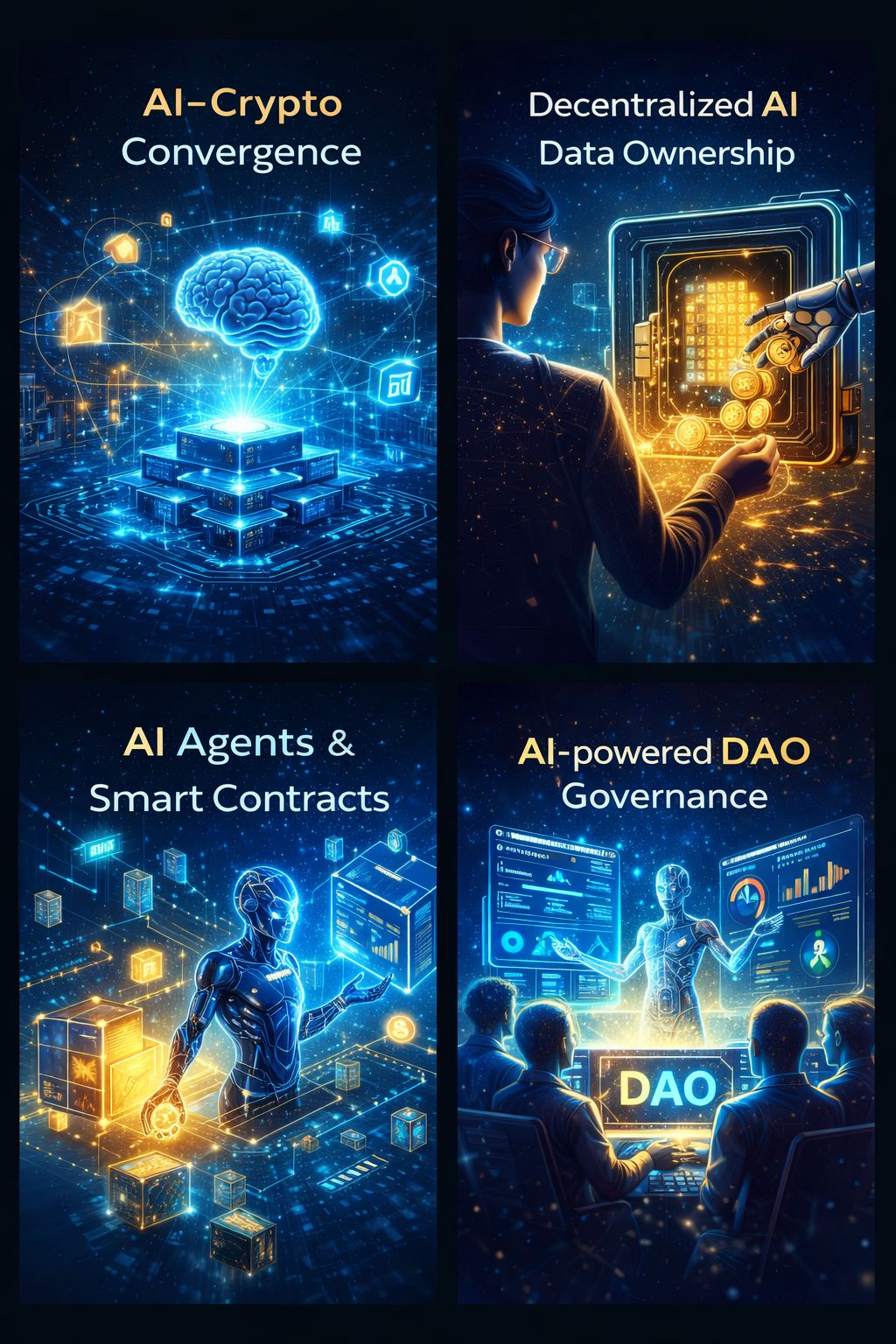
🧩 5 main convergence layers of AI–Crypto
🔹 1. AI as a Service (decentralized)
Instead of relying on centralized servers, AI can:
Run on distributed networks
Provided by the community
Token payment
For example:
Marketplace for buying and selling inference
Share GPU/compute
➡️ Reduce monopolies, increase competition, open access to AI.
🔹 2. Data Ownership & AI Training
AI lives off data, but data is being:
Silently collected
Not sharing benefits with creators
Crypto allows:
Data tokenization
Permissioned access
Direct rewards for data contributors
➡️ Data becomes an asset class.
🔹 3. AI Agents + Smart Contracts
A highly promising direction: Autonomous AI Agents operating on-chain
AI can:
Transaction signing
Optimize strategy
Interact with smart contracts
Applications:
AI trader
AI treasury manager
AI DAO operator
➡️ From 'code is law' → 'intelligence executes law'
🔹 4. DeFi + AI: Smartening up decentralized finance
Traditional DeFi:
User manual dependent
Risks from emotional behavior
AI helps:
Risk management
Optimize yield
Fraud detection
Results:
DeFi becomes user-friendly for non-tech users
Reduce human error
🔹 5. AI Governance & DAO
Current DAO:
Manual voting
Slow decision-making
Easily manipulated
AI can:
Proposal analysis
Scenario simulation
Optimal decision proposal
⚠️ Important: AI does not replace decision-making power, but enhances decision quality.
⚠️ Major challenge of AI–Crypto convergence
🔸 1. AI can still be manipulated
Data bias
Prompt manipulation
Model drift
➡️ Blockchain does not make AI 'perfect', it just makes it easier to verify.
🔸 2. Scalability & cost
AI needs large compute
Blockchain has limited throughput
➡️ Layer 2, modular blockchain, and off-chain compute are the keys.
🔸 3. Legal & ethical
AI trading itself?
AI asset management?
Who is legally responsible?
👉 This is a long-term game, not a short-term trend.
🔮 Where will AI–Crypto go in the next 5–10 years?
A few noteworthy scenarios:
🤖 AI Wallet: crypto wallet that optimizes assets
🧠 Personal AI Agent: AI representing users on Web3
🌐 Autonomous Economy: AI ↔ AI trading with each other
📊 Tokenized Intelligence: AI models become investable assets
➡️ At that point, blockchain not only stores value, but also stores intelligence.
AI and Crypto are not two 'trend-mixed' narratives. They are two missing pieces of each other.
AI brings intelligence
Crypto brings trust and ownership
This convergence may:
Redefine the Internet
Restructure finance
And return data power to users
#AIagent #AI #Web3AI #DecentralizedAI


