
The evolution of blockchain technology has followed two broad waves:
1. Infrastructure experimentation (Bitcoin, Ethereum), and
2, Ecosystem specialization (DeFi, NFT ecosystems, gaming chains).
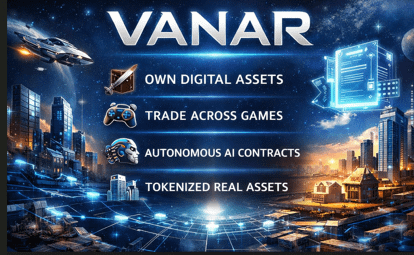
Vanar positions itself as a meta-infrastructure layer — one that supports cross-sector applications rather than purely niche communities. This research article investigates Vanar’s structural design and the plausible transformation it may drive, particularly in digital ownership, autonomous AI systems, gaming economies, and enterprise adoption.
Vanar employs a high-performance consensus algorithm designed to ensure: High throughput — thousands of transactions per second.
Fast finality — rapid confirmation times suitable for real-time applications.
Low cost — economical transaction fees to support microtransactions in gaming and enterprise contexts.
The protocol’s architecture addresses key bottlenecks observed in legacy chains: congestion under mass usage, high gas fees during peak periods, and uneven developer adoption due to technical complexity.Smart Contract Execution Environment
Vanar supports:
Turing-complete smart contracts
Developer-friendly SDKs
Modular execution frameworks
These elements facilitate deployment of decentralized applications (dApps) with predictable performance and security guarantees.
Vanar prioritizes cross-chain compatibility, enabling:
Bridge mechanisms with other blockchains
Asset transfers across ecosystems
Shared liquidity pools with partnered chains
This interoperability reduces isolation and increases composability, addressing a common weakness in single-chain solutions.
VANRY Utility Functions
The VANRY token underpins the Vanar ecosystem with multi-faceted utility:
Gas Payments: Serves as the native currency for transaction and execution fees.
Staking & Security: Validators stake VANRY for network security and earn rewards.
Governance: Potentially enables decentralized decision-making for protocol upgrades.
Marketplace Liquidity: Acts as exchange medium for gaming assets, NFTs, and enterprise token products.
This design anchors economic activity within an incentive-aligned framework rather than pure speculation.


