
A few days ago in the live stream, I was chatting and reminiscing about playing video games every day as a child. I remembered when I was in Houston last year browsing Game Stop and bought a bunch of old game discs. Today, I dug them out and took a look, and in that moment, I could almost smell the scent of alcohol and cotton swabs.
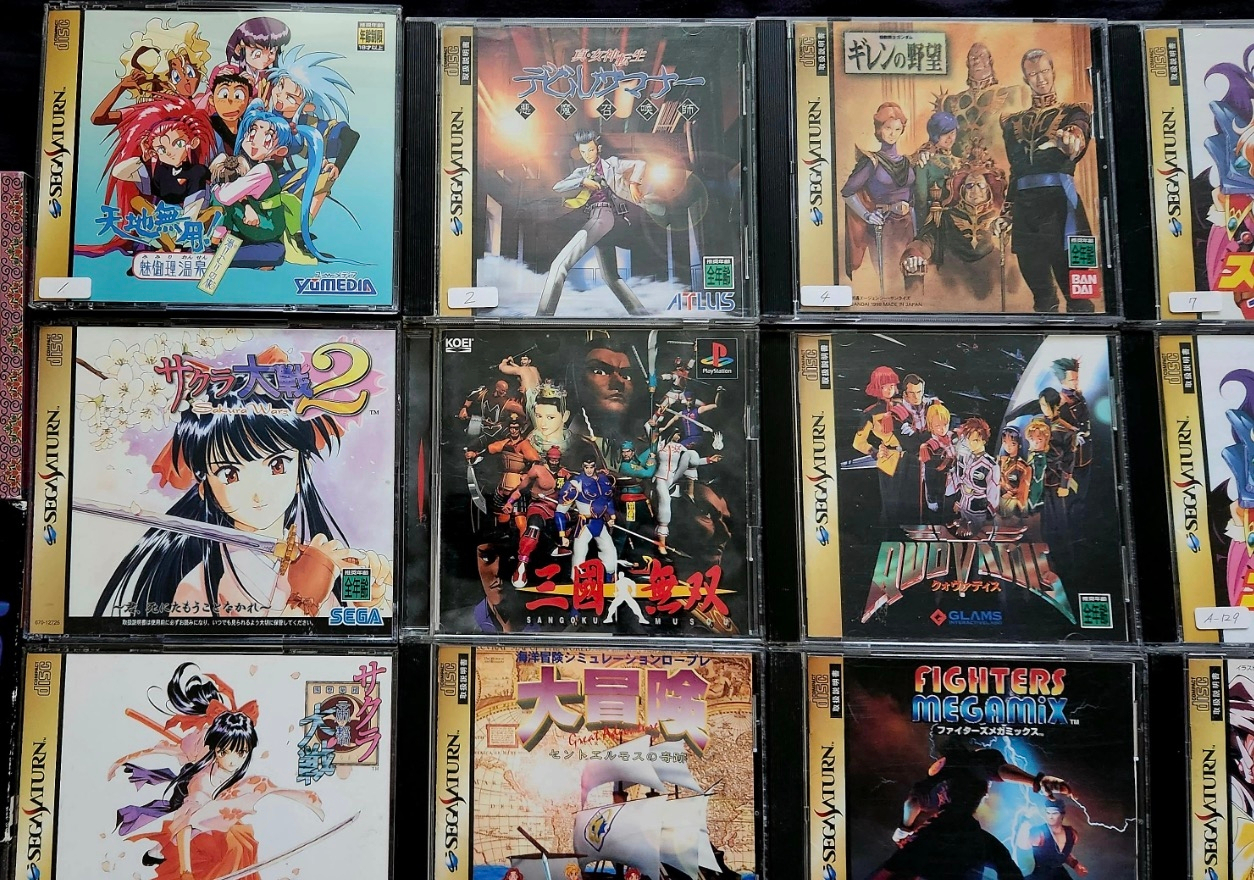
Kids today have no idea about the pain we experienced back in our day. They have cloud saves and auto saves when playing games. But during the era of the FC Famicom and MD, the scariest part of playing RPGs wasn't the crazy bosses, but losing your save data. At that time, hundreds of hours of effort relied on that one little battery inside the cartridge. If the battery died, or if the cartridge had a bad connection, turning it on would reveal—no save data. That feeling of the sky collapsing was more painful than a breakup.
To save the game, we invented various 'mystical' methods: crazily wiping the gold fingers with alcohol on a cotton swab, blowing air at the cartridge, and even mastering the '0.1-second rapid battery swap' skill... but all these efforts could only yield a 30% success rate. In the remaining 70% of the time, we could only cry in front of the screen. That's when I understood a principle: half of the fun in games comes from operation (computing power), and the other half comes from memory (data). Without memory, you can only spin in the first level forever.
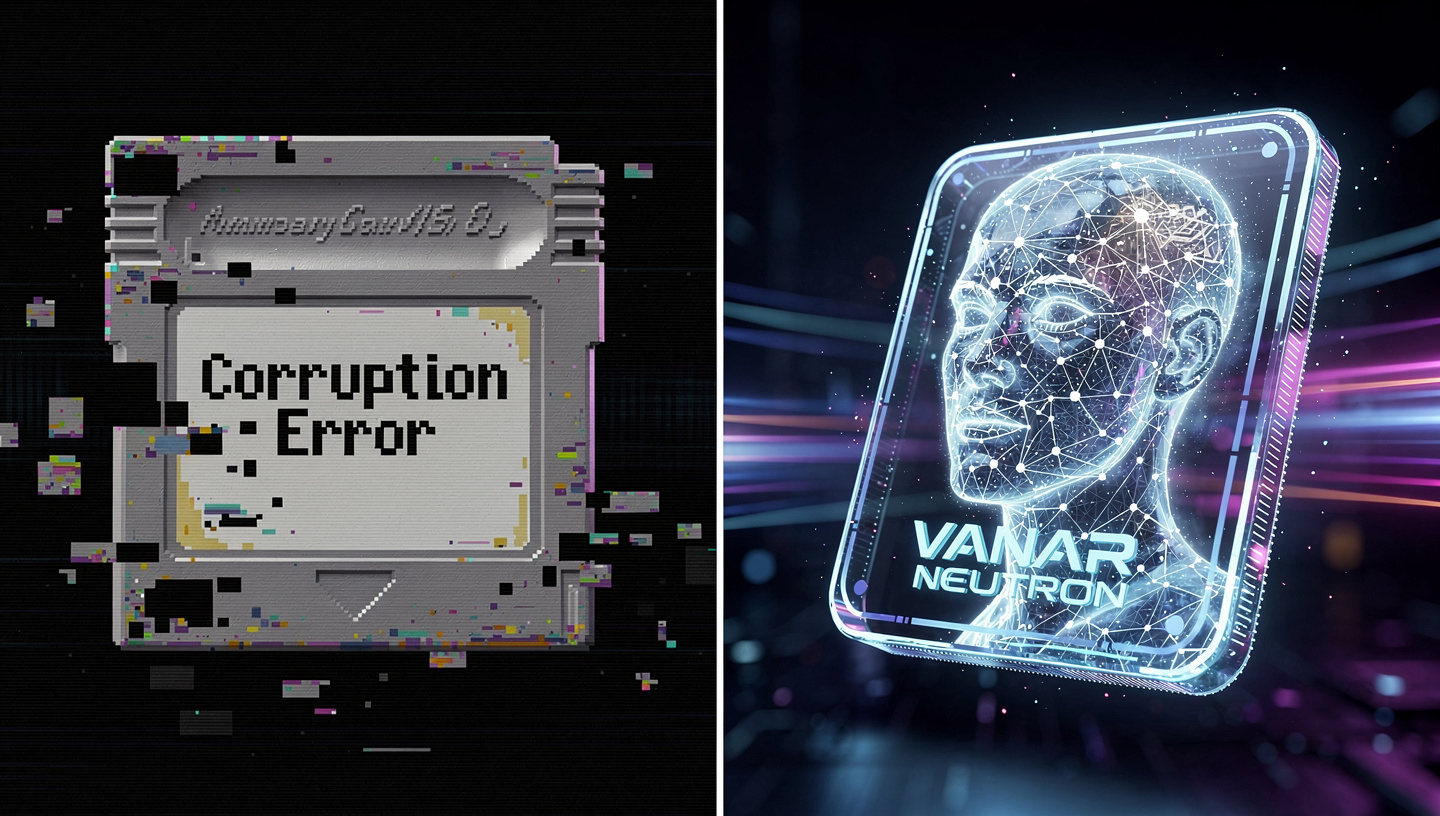
Why suddenly talk about this?
Because recently, while researching this public blockchain, that anxiety of 'being afraid of losing the save' suddenly came back.
Have you noticed? Today's AI (like ChatGPT) is essentially an FC game console without a memory card. It's smart, powerful, just like FC is fun. But it has no long-term memory! You teach it your preferences and habits for half a day, close the window, open a new one, and it forgets you again. It's like a butler with Alzheimer's, always meeting you for the first time. This is not just a user experience issue; it's the Achilles' heel of AI evolution.
These days, I've been digging through Vanar's technical documentation, especially the part about Neutron (semantic memory layer). At that moment, I slapped my thigh: isn't this the 'original memory card' of the AI era?
This thing is quite interesting. It can compress 25MB of complex video data into a 'seed' of 47 characters. This reminds me of how we used to fit the entire (Resident Evil) world into a few KB of memory cards. This is what it means to 'fit it in'.
More importantly, it is 'living' memory. Previous memory cards could only store dead data, but Vanar stores 'semantics'. It's like how DC's memory cards could raise pets. Your AI Agent exists on the chain, it remembers that you saved it last month, remembers that you hate eating cilantro, remembers your tone.
Because on the chain, as long as Vanar is there, your AI memory will never deplete like an FC battery. This is the true 'eternal save'.
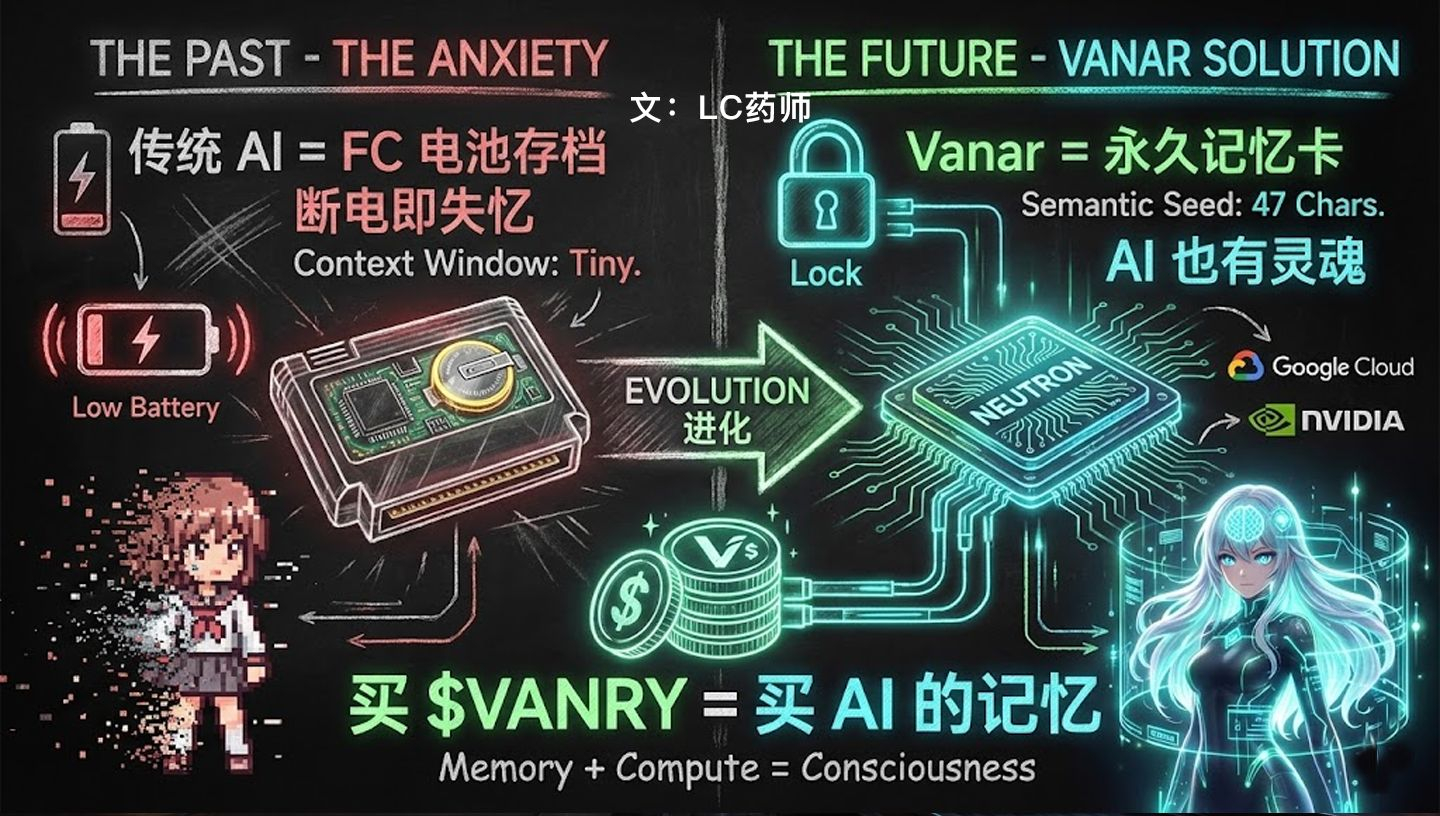
Back in the day, I was willing to spend more money on original cards to avoid losing saves. Now, I heavily invest in $VANRY because I understand the logic of the future: in the future AI world, computing power (graphics cards) will become cheaper, but memory (exclusive data assets) is priceless. Whoever controls 'memory' controls the soul of the user.
Vanar is not just a public blockchain; it is the 'save manager' for billions of AI Agents in the future.
If you also experienced the era of 'wiping batteries with alcohol', you should understand why Vanar's 'memory infrastructure' is truly a necessity.
After all, life cannot be saved, but Web3 can.
