
"This is not a conflict of interest; it is a fusion of interests."
When Donald Trump's second son, Eric Trump, celebrated the USD1 circulation surpassing 5 billion with a string of fire emojis, he may not have realized that this seemingly ordinary business milestone is pushing the American constitutional system toward a dangerous crossroads. This is not just a simple family business expansion, but a complex power restructuring involving presidential pardon powers, top global exchanges, sovereign wealth funds, and the trillion-dollar stablecoin market.
The intertwining of Binance, the Trump family, and the Abu Dhabi sovereign fund is rewriting the rules and boundaries of the crypto market.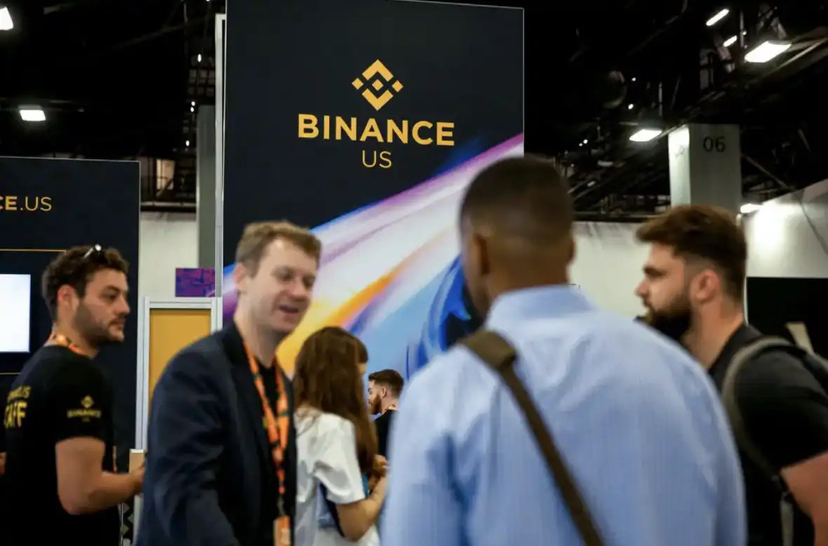
One, $5 billion "Pardon Bonus": The monetization of power from prison to a cryptocurrency empire.
Rewind to October 2024, Zhao Changpeng is still serving a four-month sentence in a U.S. federal prison. Just a year later, he not only received a full pardon from President Trump but also became the "key engine" of the latter's family's cryptocurrency business. This dramatic turnaround of fate is itself a loud slap in the face of the American judicial system.
The dependency revealed by the data is shocking:
• 85% of USD1's supply is concentrated in Binance accounts, even though the platform is not open to U.S. users.
• A $2 billion investment from the Abu Dhabi sovereign fund MGX, settled entirely in USD1, is the largest stablecoin payment in history.
• A $40 million "USD1 Acceleration Plan" reward pool, funded by World Liberty, distributed to global users through Binance.
According to the latest data from DefiLlama, the market capitalization of USD1 has reached $3.2 billion, ranking seventh among stablecoins. For a stablecoin that was only issued in April 2025, this growth rate can only be explained by "political privilege." In contrast, it took USDC several years to reach the same scale.
What is even more intriguing is the profit distribution structure: the Trump family entity receives 75% of the net income, DT Marks DeFi LLC holds 22.5% of the governance token WLFI, with a book value of approximately $380 million. According to a Financial Times investigation, the Trump family has made over $1 billion from cryptocurrency business in the past year.
This is not business success; it is the monetization of power.
Two, Binance's "American Dream": Strategic Return After Pardon
Zhao Changpeng's pardon is by no means the end, but rather the starting point for Binance's return to the U.S. market. Although he no longer holds daily management positions, his influence continues to permeate through two co-CEOs—especially through He Yi, the co-founder with whom he has children.
Binance's "Americanization" process is accelerating:
• March: Binance executives meet with U.S. Treasury officials to discuss regulatory relaxation.
• April: News of a commercial partnership with the Trump family project emerges
• October: Obtains a pardon from Trump, CZ publicly states he wants to "make the U.S. a cryptocurrency center."
• December: He Yi assumes the position of co-CEO, deepening cooperation with World Liberty.
This "point-to-surface" strategy is clearly visible: By deeply binding with the president's family project, Binance is trying to soften regulatory attitudes, with the ultimate goal of restarting Binance.US operations. There are even reports that Binance is considering reducing Zhao Changpeng's shareholding to alleviate compliance obstacles.
But the problem is: when the compliance path of exchanges relies on the "political umbrella" of the president's family, where is the fairness of market rules?
Three, Regulatory Arbitrage and the "Trump Loophole" of the (GENIUS Act)
The (GENIUS Act) signed in 2025 was originally intended to establish a regulatory framework for stablecoins, but ironically, it may be tailoring arbitrage space for the Trump family.
The core contradiction of the bill:
• Clearly prohibits stablecoin issuers (such as World Liberty) from directly paying interest to users.
• Leaves loopholes: Does not prohibit exchange platforms from providing yields, creating conditions for business arrangements.
Binance's "USD1 Acceleration Plan" is precisely exploiting this gray area. Although World Liberty claims that the reward funds are borne by itself rather than Binance, this model of "issuer funding + platform distribution" essentially evades regulatory intentions.
More dangerous signals are coming from within the White House. Trump has signed the (GENIUS Act) and publicly supports another piece of legislation under review by Congress—this bill will lower the threshold for cryptocurrency trading platforms to operate in the U.S. At the same time, Treasury Secretary Basent made it clear at the White House crypto summit: "We will use stablecoins to maintain the dollar's status as the world's reserve currency."
Policymakers, regulatory enforcers, and the largest beneficiaries, at this moment, are a trinity.
Four, The "Political Donations" of Global Sovereign Funds? The deeper metaphor of MGX transactions.
In early 2025, the $2 billion investment from the Abu Dhabi sovereign fund MGX is a key sample for understanding this power game. This is not just a commercial investment, but also a geopolitical bet.
The peculiarities of trading:
• Payment Tool: Fully using USD1, rather than traditional fiat currencies or mainstream stablecoins.
• Time-sensitive: Just as Zhao Changpeng seeks a pardon, Binance attempts to return to the U.S. market.
• Chain of Interests: MGX→Binance→World Liberty→Trump Family, forming a closed loop.
Senators Elizabeth Warren and Jeff Merkley sharply pointed out in a letter to ethics officials: "The Trump administration may provide policy conveniences to the UAE or Binance in exchange for its huge financial returns." This concern is not unfounded—when the president is both a policymaker and a business beneficiary, every regulatory decision is implicated in the transfer of benefits.
The more hidden risk is: if foreign sovereign funds can "fawn" by purchasing stablecoins issued by the president's family, how will the independence of U.S. foreign policy be guaranteed? Will the cryptocurrency market become a new channel for "political donations" in the 21st century?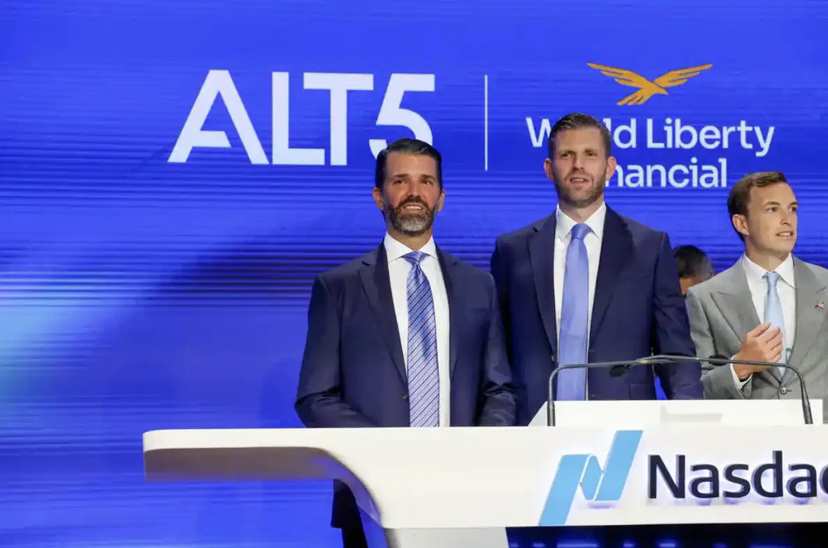
Five, Ethical Black Hole: When the President Becomes a "Cryptocurrency Magnate"
Lee Reiners, a crypto policy expert at Duke University, warns loud and clear: "Due to the existence of World Liberty and USD1, Trump has a direct economic interest in this game." This interest is not indirect or vague, but immediate and quantifiable—every additional $100 million in USD1 circulation allows the Trump family to earn millions of dollars in annualized returns (based on a 4% money market fund return rate).
The overlap of multiple role conflicts:
1. Policymakers: Lead the (GENIUS Act) and subsequent crypto legislation.
2. Business Participants: Holding 60% equity in World Liberty through family entities, sharing 75% of net income.
3. Judicial Influencers: Exercising pardon power to release Zhao Changpeng, changing the fate of Binance.
4. Global Promoters: Endorsing family projects as the "chief cryptocurrency advocates."
The White House spokesperson claims "assets have been handed over to a trust fund, and there is no conflict of interest," but this statement falls apart in the face of the transparency in the cryptocurrency market. The transaction records on the blockchain are clear: 85% of USD1 is in Binance, $2 billion comes from Abu Dhabi, and $40 million in rewards flows to global users. These numbers do not lie.
Six, Market Impact: Trust Crisis and "Trump Premium"
In the short term, the expansion of USD1 seems to inject vitality into the market. But in the long term, this **"political-business integration" model** is eroding the foundation of the cryptocurrency industry.
Triple distortion of the market:
1. Unfair competition: World Liberty gains traffic tilt from Binance and a huge investment from MGX through political privilege, while other stablecoin issuers (such as Circle and Paxos) are at a natural disadvantage. Coinbase's inclusion of USD1 in its listing roadmap is, to some extent, a forced follow-up rather than a result of market competition.
2. Regulatory Capture: When the leaders of regulatory agencies (Treasury, SEC, CFTC) are appointed by the president, and the president profits from the cryptocurrency industry, regulatory independence vanishes. The SEC has suspended its investigation into World Liberty's main investor Sun Yuchen, which is clear evidence of regulatory capture.
3. Systemic Risks: The reserves of USD1 are primarily invested in government money market funds; this "stablecoin-government bond" cycle appears safe, but once the political situation changes (such as Trump leaving office or policy shifts), it could trigger a liquidity crisis. More dangerously, if Binance faces another setback due to compliance issues, the concentration of 85% of USD1 could lead to catastrophic liquidity exhaustion.
Seven, Future Projections: Three Possible Scenarios.
Scenario One: Comprehensive Regulatory Compliance (Probability 30%)
Congress passes stricter stablecoin legislation, plugging the "exchange platform interest payment" loophole, requiring the president's family to completely divest from crypto assets. Binance's return to the U.S. market is hindered, and USD1's market share shrinks to the level of traditional stablecoins.
Scenario Two: Establishment of the "Trump Cryptocurrency Standard" (Probability 50%)
The loopholes of the (GENIUS Act) have been legitimized, and the World Liberty model has become the industry benchmark. More political families will follow suit, leading the stablecoin market into the "political endorsement" era, with regulation devolving into formalism.
Scenario Three: International Countermeasures and Division (Probability 20%)
The EU, UK, and other jurisdictions refuse to recognize the compliance of USD1, launching competitive central bank digital currencies (CBDCs). The global stablecoin market is divided into "Dollar Political Zones" and "Diverse Regulatory Zones," exacerbating fragmentation in the crypto industry.
Conclusion: Examining the collusion of power and capital in "extreme panic."
Returning to the cryptocurrency fear and greed index mentioned at the beginning of the article—when market sentiment fell to an extreme low of 7, the Trump family's cryptocurrency empire surged against the trend. This divergence is itself the strongest signal: this is not a prosperity driven by technological innovation, but a bubble created by the monetization of power.
The alliance between Binance and World Liberty reveals the darkest possibilities of the cryptocurrency market—when the commercial incentives of exchanges, the profit model of stablecoins, and the policymaking power at the highest levels intertwine, market rules become the game manual of the powerful. Zhao Changpeng's pardon is not the end, but the beginning of this "political-business revolving door" mechanism.
For ordinary investors, participating in the "high-yield" promotions of USD1 is essentially providing ammunition for the wealth accumulation of the president's family; for industry practitioners, this trend of "political privilege" is stifling genuine technological innovation; for regulators, every compromise is overdrawn trust in the financial system.
The future of the cryptocurrency market should not be written by Washington's family offices and Dubai's sovereign funds.
As the World Cup whistle is about to blow and the prediction market is about to explode, we need to soberly examine: in this "extremely panicked" market cycle, the real risk is not price volatility, but the systematic erosion of market rules by the collusion of power and capital.
Do you think the Trump family's cryptocurrency layout will have long-term benefits or structural harm to the market? In the era of "political stablecoins," how should ordinary investors protect themselves? Feel free to leave your thoughts in the comments, like, and share to help more people see the full picture of this power game! #Bitcoin谷歌搜索量暴升 #何时抄底? #易理华割肉清仓 #黄金白银反弹 #币安比特币SAFU基金 $BTC $BTC


