

Let me start with a very realistic issue.
In the past two years, almost all chains will casually mention when communicating externally:
"We are low-energy consumption" "We are very environmentally friendly" "We are much better than PoW."
It all sounds right, but the problem is—
These statements hardly ever affect their product design.
In other words, the attitude of most chains towards energy is:
Save if you can, but whether you save or not doesn't affect my ability to get the system running.
Vanar obviously doesn't think so.
If you look at its technical roadmap, API design, and positioning for enterprises and entertainment together, you'll find a counterintuitive judgment:
Vanar is not about 'reducing blockchain energy consumption,' but assuming: the energy budget is limited, and the system must learn to restrain itself from the beginning.
This is not an attitude issue; it is engineering philosophy.
1. Why 'zero carbon' is not a slogan for Vanar, but a constraint condition
Vanar's chosen track is very clear: entertainment, brands, IP, AI Agents, long-running digital systems.
These things have one thing in common: they are not short-term interactions, but exist continuously.
You can imagine that if a chain is to carry:
• Long-running AI agents
• Continuously generated and called memory data
• Entertainment interaction aimed at global users
• Enterprise-level brand activities and digital assets
So it is not facing 'how much energy does a single transaction consume,' but rather — the energy curve of long-term operation.
If this curve is uncontrollable, it cannot be accepted by the real world.
This is also why Vanar has not taken the 'compute power for security' route from the very beginning.
It assumes one thing: energy is not infinite, and carbon emissions will be accountable.
Under this premise, the system can only be designed to prioritize 'energy saving.'
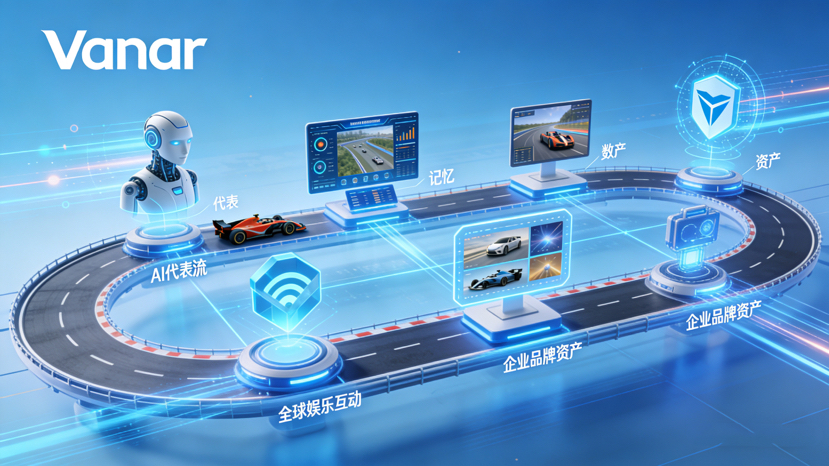
2. Vanar's first key choice: not relying on consumption to prove security
Vanar adopts a low-energy consensus mechanism, rather than the PoW model of 'burning electricity for trust.'
But this is not the focus. The focus is: it does not bind security and energy consumption together.
Many systems subconsciously still believe: 'safer = more computation = more consumption.'
Vanar's logic is reversed: security comes from structure, not waste.
By ensuring deterministic finality, fast block generation, and less redundant computation, it reduces system-level ineffective actions.
The significance of this matter is: you do not need to constantly consume resources to 'prove you are working.'
Just like a city does not need to prove it is alive by constantly tearing down and rebuilding buildings.
3. The real energy consumption black hole is not in consensus, but in 'meaningless data permanence'
Here is a point that Vanar is overlooked by many people.
The vast majority of chains focus on 'block generation' and 'consensus' when discussing energy consumption.
But in long-running systems, the real energy consumption killer is:
• Unlimited data writing
• Permanent storage without filtering
• Every interaction is treated as a 'memorable' event
Vanar's attitude towards 'memory' precisely solves this problem.
Neutron memory layer does not 'store everything' but introduces qualifications and filtering mechanisms.
Only data that can be continuously called, verified, and reused is qualified to enter the long-term memory layer.
You can understand that: not all behaviors deserve to consume long-term energy.
This itself is a kind of 'carbon constraint logic.'

4. Why does Vanar emphasize API rather than the chain itself
Let's look at another detail:
Vanar's recent external narratives almost all revolve around API, BaaS, and zero-perception access.
Behind this is actually a very realistic energy judgment.
If every brand, game, AI team has to understand the chain, deploy contracts, and manage nodes themselves,
Then the energy waste will grow exponentially.
Vanar does 'centralized energy saving':
Compressing the complex, high-consumption parts into an efficient underlying system,
Exposing only the minimum necessary interfaces to the outside.
You use API not because it is 'convenient,' but because it is the path with the lowest overall energy consumption.
Just like the public transport system in a city, it is not for show, but to avoid everyone building their own car.
5. Zero carbon is not 'no consumption,' but 'meaningful consumption'
Here I want to say something very important.
Vanar is not pursuing the fantasy of 'zero consumption.'
It pursues: every consumption corresponds to real value.
• Memories that are frequently called are worth long-term storage
• Assets that are used long-term are worth maintaining their state
• Behaviors involving real users are worth leaving traces
Conversely:
• Noise data
• One-time marketing
• No continuous interaction
Should not be burdened by the system for a long time.
This is a very 'urban planning-like' mindset.
Not all buildings can enter the city center,
Not all behaviors are worth permanent energy supply.

6. Why do I say Vanar is more like building a 'digital city' rather than a chain
Many chains are more like 'highways': emphasizing throughput, speed, and transaction volume.
Vanar is more like planning a city that exists for a long time:
• Has energy budget
• Functional zoning
• Long-term residents (AI / IP / Brand)
• Memory and history
• There is also elimination and updating
In this structure, 'zero carbon' is not a moral label,
But is the precondition for whether the city can exist.
Moon's idea:
If you treat blockchain only as a financial tool, the energy issue can be discussed later.
But if you really want it to carry long-term activities of entertainment, AI, brands, and the real world, then energy is not a cost item, but the starting point of design.
Vanar is at least very clear on one thing:
No unsustainable system can become a long-term digital civilization.
It is not about making the blockchain 'look greener,' but forcing it to learn to think like a city.
