


I keep watching people analyze Plasma the same way they analyze every new Layer 1, and it's driving me crazy.
They're comparing transaction speeds. Counting ecosystem projects. Measuring TVL growth like it's 2021.
But the more interesting question, the one that actually matters, is simpler. What was this thing built to do?
Ethereum was built to be a world computer. Every design decision flows from that. Solana went all-in on trading speed. Bitcoin? Censorship resistance, full stop.
Plasma picked something different: moving stablecoins between addresses without friction.
That's it. That's the whole thing.
And once you see that, everything else makes sense.
The Tax You're Paying Without Realizing
Here's what's wild about settling on Ethereum.
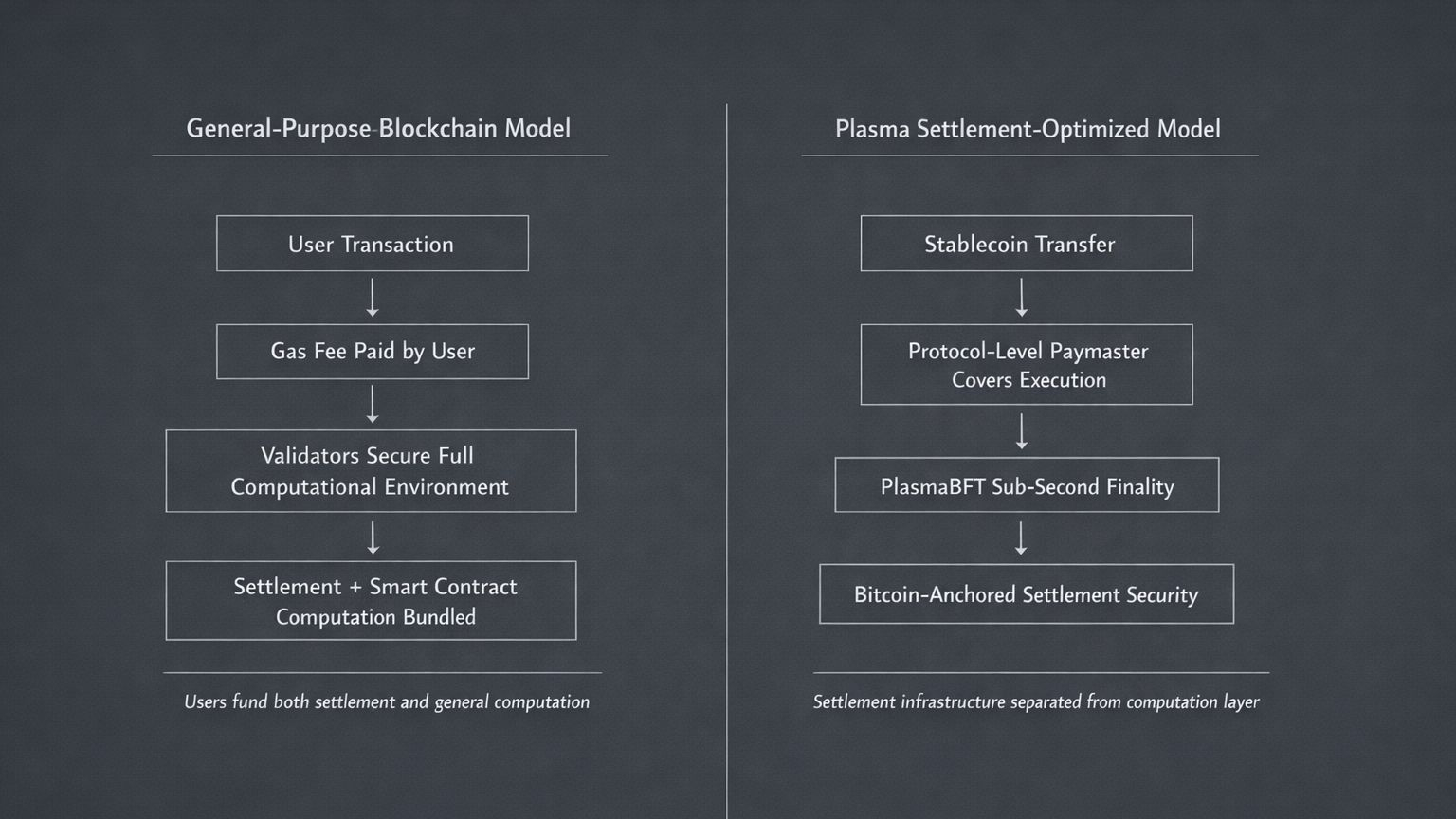
When you move USDT, you're not just paying for your settlement. You're subsidizing the entire computational environment. DeFi protocols, NFT marketplaces, DAO governance, all of it.
You're buying computational security when all you actually need is settlement finality.
It works. But the cost structure is misaligned.
Plasma makes a different trade. Separate settlement from computation entirely.
Bitcoin anchoring handles settlement finality. PlasmaBFT does sub-second execution. Protocol paymasters absorb costs for stablecoin transfers. Full EVM compatibility through Reth means your tools still work.
Legacy systems equate security with identifiable legal entities. Plasma equates security with cryptographic immutability anchored to the most censorship-resistant network that exists.
This isn't "Ethereum but cheaper." It's treating settlement like infrastructure and computation like an application layer.
The Question Treasury Departments Actually Ask
There's a conversation that happens in CFO offices that crypto people never hear.
It's not about gas fees. It's about jurisdictional resilience.
When you're routing settlement across Buenos Aires, Singapore, Lagos, São Paulo, regulatory environments that shift based on geopolitical relationships, you're asking one thing.
"If pressure hits our infrastructure in one jurisdiction, does everything fragment?"
Plasma's Bitcoin anchoring isn't ideological. It's the answer to that specific operational question.
Fifteen years of demonstrated continuity across sanctions, regulatory conflicts, institutional pressure. That's not theory. That's track record.
This is a direct consequence of Plasma's Bitcoin-anchored settlement design, where finality comes from cryptographic state commitments rather than jurisdiction-bound validator entities.
When the Asset and the Infrastructure Finally Match
Right now businesses do something strange.
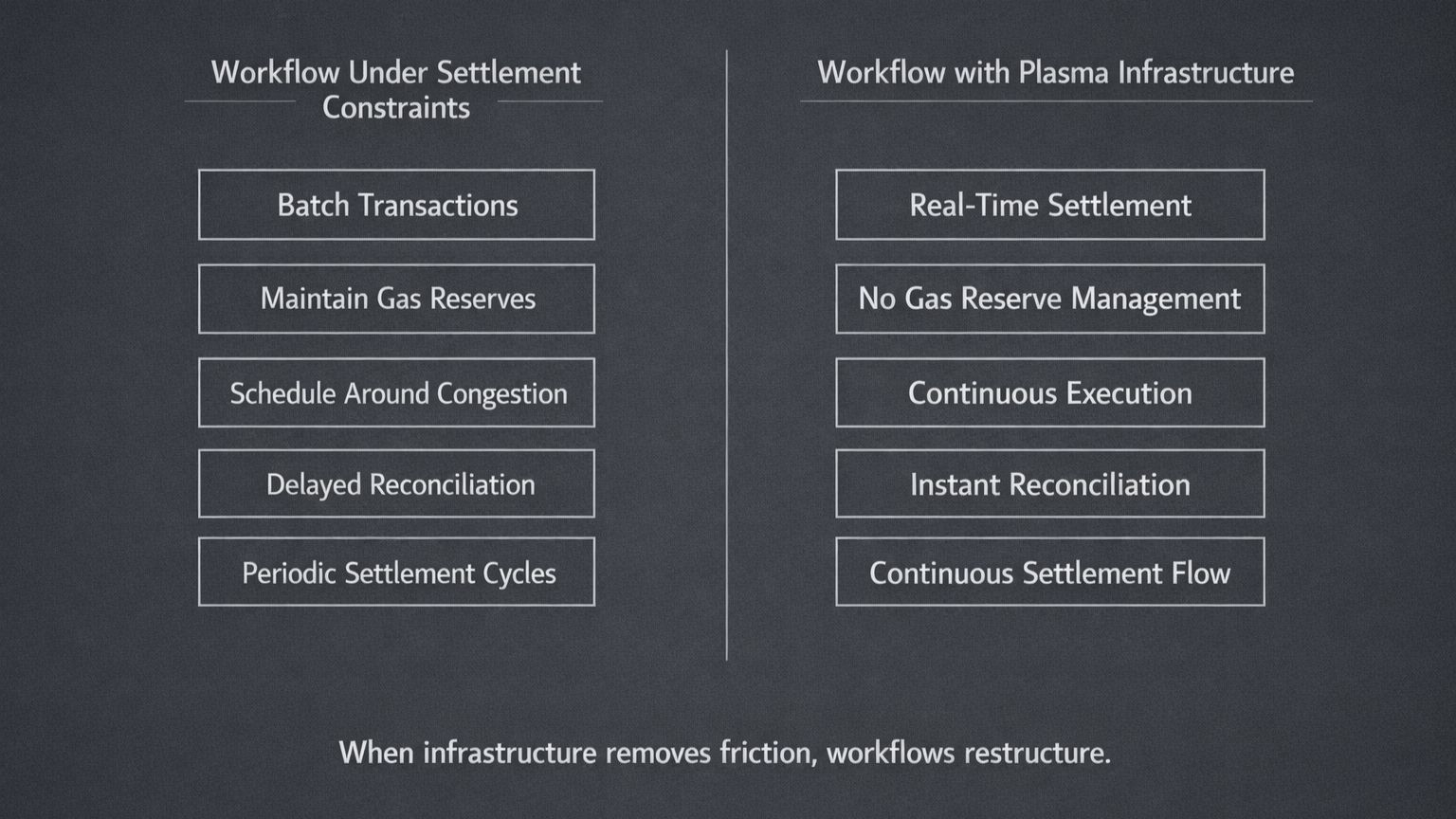
They hold dollar-pegged stablecoins but maintain reserves in volatile ETH just for transaction execution.
Working capital locked earning nothing. Volatility exposure from memecoin launches, not actual business activity. Accounting complexity tracking assets held purely for operational overhead.
Plasma's gasless USDT model eliminates this mismatch structurally.
Payment processors stop maintaining gas reserves. Treasury departments deploy full capital at yield. Settlement operations don't require cross-referencing volatile asset prices.
The workflow doesn't improve. The complexity it was designed to handle just disappears.
The Framework Nobody's Applying Yet
Markets are still valuing Plasma like a blockchain. Ecosystem size, developer activity, daily addresses.
But when settlement infrastructure eliminates working capital drag while maintaining security, the framework shifts.
Visa gets valued on settlement volume, not developer count. Payment processors on margin capture, not users. Clearing houses on whether critical infrastructure depends on them.
Plasma combines Bitcoin-anchored security, PlasmaBFT sub-second finality, gasless transfers via protocol paymasters, and full EVM compatibility.
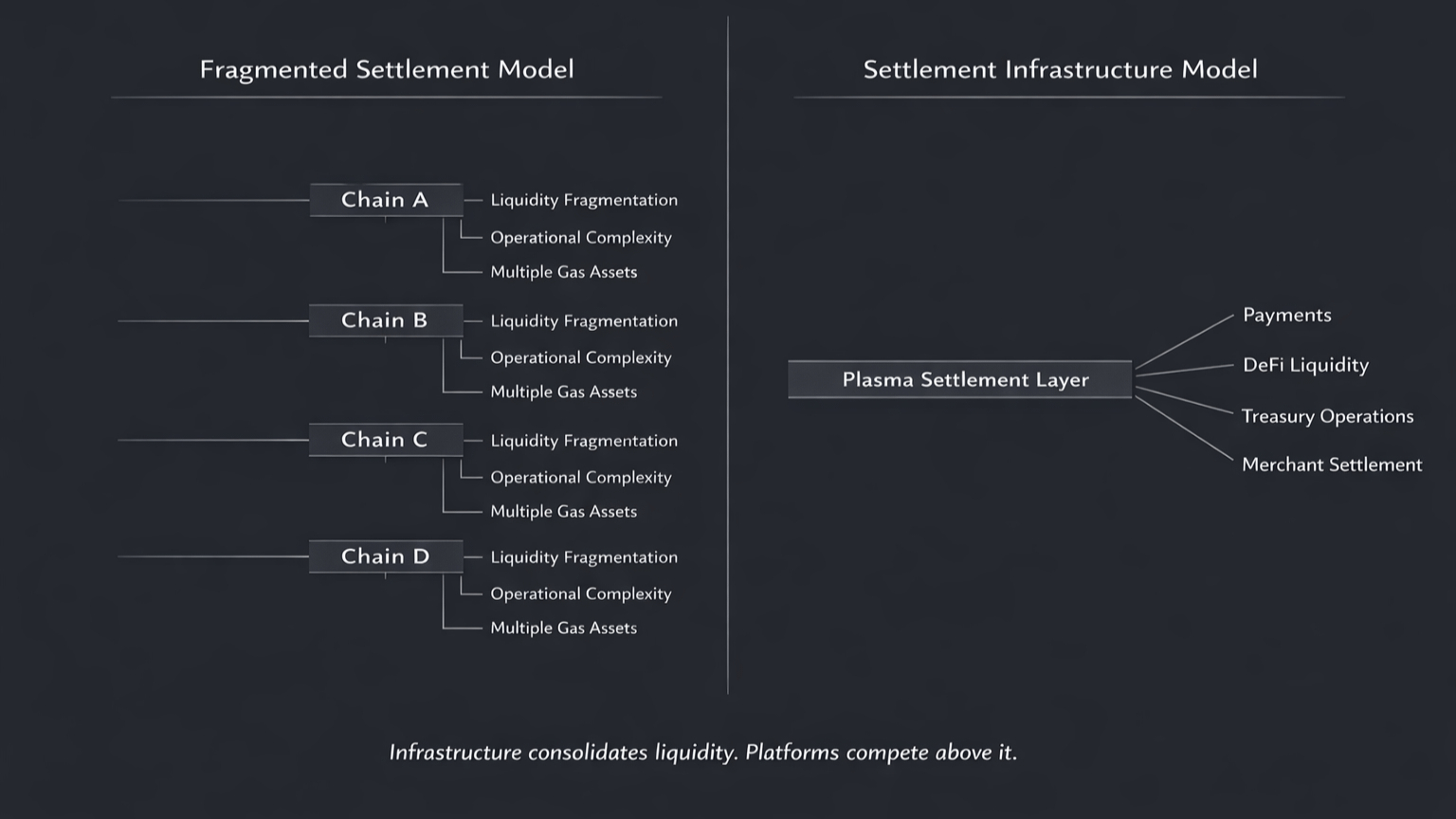
These are not blockchain features. They are infrastructure positioning.
The question is not which blockchain wins DeFi growth.
It is which infrastructure becomes default for dollar settlement because alternatives feel structurally inefficient.
What I keep thinking
The market is pricing this as a blockchain project competing for mindshare.
The system is behaving like financial infrastructure competing for settlement market share.
That gap does not stay open.
When it closes, the question will not be why we did not see it coming.
It will be when settlement infrastructure stopped being evaluated like a blockchain.


