

Brothers, let me be clear: right now, the market sentiment is as bad as 'everyone in the group is on mute'. If you want me to forcefully hype up a project as 'about to take off', I can’t do it, nor do I want to.
But the Vanar Chain ($VANRY) has been increasingly awkward for me to look at lately - not the awkwardness of being 'empty', but the kind of awkwardness where 'it's secretly changing its shell'.
At first, I categorized it as: chain games/metaverse, riding the wave when the traffic was good, and being thrown in the corner to gather dust when the market was bad. However, in the past couple of days, I went through its official website, trading data, and the recent updates for 2026, and I realized it's doing something more dangerous and more realistic.
It is pulling itself hard from “entertainment entry” to “AI-native L1 + PayFi/RWA underlying stack.”
If this thing succeeds, VANRY is not about “telling stories,” but “changing tracks.” If this thing fails—then it's not just a small drop, but a direct collapse of the narrative.
⸻
1) First, the most realistic: what is the current size of this coin? Don’t study with illusions.
I don't like empty talk; I first look at the data to calm myself.
According to CoinMarketCap's current measurement, VANRY is around $0.006, with a 24h transaction volume fluctuating in the range of a few million to nearly ten million dollars, a circulation of about 2.29 billion, a maximum supply of 2.4 billion, and a market cap of about 14 million dollars (not ranking very high).
By the time you read this, you should have understood:
This is not the kind of project where the market value is already very large and can only be slowly polished; it now resembles a small but still alive narrative test bed.
The advantage of a small market cap is high elasticity; the downside is: as long as the market does not buy it, it can also “quietly remain small.”
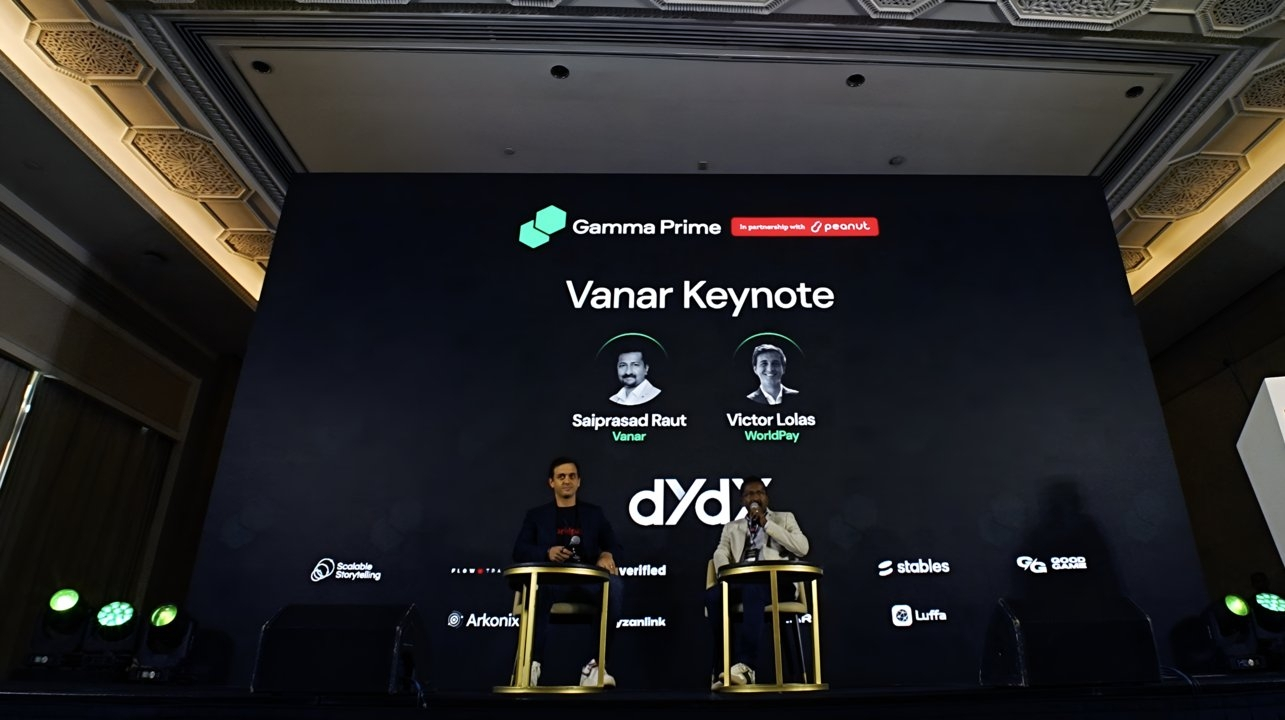
2) What exactly has changed recently? In one sentence: from “for people to play” to “let the chain think for itself.”
Vanar's official definition is now directly as an AI-powered blockchain, emphasizing a complete “AI Native Infrastructure Stack,” with service directions also mentioning keywords like PayFi and RWA that are more inclined towards “real-world implementation.”
More critically, in the recent updates, there is a very glaring time point:
Around January 19, 2026, the project emphasized directions like “AI-native stack/AI integration.”
Why do I say “dazzling”?
Because many chains shout AI, but most are:
“We will support AI projects,” “We welcome AI developers,” “We will have AI tools in the future”—this kind of talk is as good as not hearing it.
And the feeling I get from Vanar this time is: it is striving to make AI a “part of the chain,” not “an application on the chain.” The difference between these two is very large:
• “Running AI applications on-chain” is just ecosystem publicity;
• “AI-native” is trying to change the underlying methodology (at least that's how the narrative is packaged).
Of course, I'm not foolish: narrative does not equal delivery. Just because it dares to set the direction so firmly shows that it understands it can no longer rely on the “chain gaming” model to make a living in the large market of 2026.
⸻
3) What makes it think it can succeed? I only recognize two “verifiable” grips.
Grip One: Partners and “entry methods” are indeed leaning towards the real world.
Vanar's official partner page directly lists names like NVIDIA (at least on the level of “ecosystem cooperation publicity,” it is moving towards mainstream resources).
Moreover, third-party interpretations repeatedly mention its collaborations and layouts in gaming, AI, payments, etc.
I am always cautious about “partners” because many projects write “cooperation” very broadly.
But you only need to remember one judgment method:
If cooperation cannot translate into “products/users/transaction volume/developer activity,” treat it as marketing first.
Grip Two: At least it is still continuously outputting “roadmaps” and ecosystem narratives.
If you look at some recent content about Vanar on Binance Square, the core is all centered around the roadmap for 2026, ecosystem expansion, and even describes it as a narrative upgrade from “gaming chain” to “AI-native L1.”
I won't treat plaza posts as authoritative, but it reflects a reality: the community is cooperating to tell new stories, instead of slacking off.
⸻
4) But I have to pour cold water: Vanar's real risk is not “price volatility,” but “narrative transformation failure.”
Let’s say something unpleasant, brothers:
The market is currently impatient with “old narratives” and very selective with “new narratives.” If you want to shift from chain gaming to AI-native L1, you are essentially changing users, developers, and funding sources.
This will bring three hard risks:
Risk A: The AI-native thing can easily end up being PPT-native.
If you want to build an underlying stack, you must present something that “developers can use, users can perceive, ecosystems can run.”
Otherwise, it will be: the official website writes very high-level, but the on-chain data is very ordinary.
Risk B: Small market cap does not bring “inevitable gains,” but “easier to be overlooked.”
Now $VAN-115, the funds view it in a very utilitarian way:
“Can you clarify the new narrative within a quarter and make on-chain activities feel more ‘real’?”
If it can't be done, just continue to lie in the 0.x cent zone as background noise.
Risk C: The track is too crowded.
AI + L1 + PayFi + RWA, these lines are all extremely competitive. If Vanar's advantage is just “I have it too,” then it can't win.
It must form a memorable positioning, such as:
“Entertainment entry brings users in, then the chain’s underlying structure uses AI/compliance/data structure to capture financial scenarios”—only if this closed loop is successfully implemented can it be said to have truly found its uniqueness.
⸻
5) So how do I personally do it? (Not advice, just my own “survival first” observation method)
My attitude towards Vanar is very simple: not in a hurry to believe, but will keep an eye on it.
What to focus on? I have set three “verifiable” indicators for myself:
1. Perceptible growth on-chain/ecosystem: not “announcing cooperation,” but whether there are continuous product launches, developer activities, and user behaviors that can be seen.
2. Are AI-related capabilities grounded as tools: such as lower-threshold interactions, usable AI agents/components, rather than abstract concept stacking.
3. Are trading and liquidity healthy: transaction volume and prices don’t need to skyrocket, but cannot be long-term “valued without volume.”
If at least two of these three can see significant changes in the first half of 2026, then Vanar may not really be “scrap.”
If I can't see it—then I'll treat it as if I've read one more story today, so I won't be hurt by the story later.
⸻
6) The last sentence is a “cold humor summary.”
Many people ask me: “Why are you still looking at such small coins?”
What I have in mind is:
Because in a bear market, everyone wants to find certainty; but certainty often belongs only to large funds.
Small funds must learn to survive by identifying “people changing direction” amidst a lot of noise, and then verifying at minimal cost whether they are just bluffing.
Vanar Chain ($VANRY) is currently at this stage:
It is not certainty; it is a “transformation gamble.” The gamble is fun, but don’t get too obsessed.
Brothers, staying alive is the most important.
-207 -209

-163