
Plasma separates itself sharply from Ethereum’s Layer 2 landscape by delivering purpose-built payment performance rather than generalized scaling. While Ethereum L2s optimize around throughput compromises and Solana chases raw parallelism, Plasma focuses on one objective only: stablecoin transfers that never slow down and never surprise users with fees. The result is a network sustaining 10,000 transactions per second with zero-fee USDT transfers and sub-second finality, even under peak load. In contrast, Ethereum remains constrained at the base layer, and its rollups fragment liquidity while adding latency and operational complexity.
What becomes clear is that Plasma is not competing on theoretical benchmarks. It is competing on production payment reliability, where consistency matters more than peak performance claims.
Sustained TPS: Payments Optimized, Not Opportunistic
Plasma is engineered to hold 10,000 TPS consistently, not temporarily. Its PlasmaBFT consensus runs proposal, voting, and commit phases in parallel, eliminating queue buildup and mempool contention entirely. Combined with tree-structured subchains, this architecture isolates payment flows from DeFi noise, allowing stablecoin transfers to execute predictably even while lending and liquidity protocols remain active. This is why Plasma can process over $100 million in daily stablecoin value without throughput degradation.
Ethereum’s base layer remains limited to roughly 15–30 TPS, which forces activity onto Layer 2 rollups. Individual L2s may handle hundreds of TPS, but they do so in isolation. Liquidity splits across Arbitrum, Base, Optimism, and others, while users face withdrawal delays, sequencing risks, and fragmented execution environments. Scaling exists, but coherence does not.
Solana occupies a middle ground. It sustains 2,000+ TPS in real conditions and advertises much higher theoretical ceilings, yet during periods of congestion, stablecoin throughput collapses into competition with NFTs and memecoins. Under load, payment transactions are deprioritized, pushing real-world transfers behind speculative traffic.
Plasma trades headline numbers for guaranteed payment capacity, which is exactly what stablecoins require.
Fee Design: Zero vs Variable vs Unavoidable
The clearest divergence appears in fees. Plasma sponsors USDT transfers entirely through protocol paymasters, meaning users pay nothing to send or receive stablecoins. Abuse prevention is enforced through rate limits and verification layers rather than pricing users out. Importantly, Plasma still captures value by burning fees on non-USDT activity, preserving token economics without taxing payments.
Solana typically advertises extremely low fees, but those costs are not fixed. During network spikes, transaction fees can increase by an order of magnitude, and payment reliability suffers as blockspace auctions intensify. While these fluctuations are tolerable for traders, they degrade remittance and merchant use cases.
Ethereum’s fee model remains the least suitable for payments. Base-layer fees regularly reach dollars per transaction during demand, and even Layer 2s introduce indirect costs through bridging, batching delays, and sequencer congestion. For frequent or low-value transfers, these frictions compound quickly.
Plasma’s approach removes fees from the payment path entirely rather than attempting to minimize them.
Finality and Reliability Under Stress
Payment systems are judged not by speed in ideal conditions, but by behavior under stress. Plasma has operated continuously since launch without payment interruptions, largely because its architecture avoids global contention. Payment subchains continue processing even when other applications spike.
Solana’s history shows repeated disruptions during high-traffic events, where validator overload leads to stalled execution. Ethereum avoids outages by throttling throughput, effectively forcing congestion pricing as a safety mechanism.
Plasma’s model avoids both extremes. It neither freezes nor price-gates payments.
Practical Payment Outcomes
In real usage terms, the differences are stark. A $10 remittance on Plasma settles instantly at zero cost. The same transfer on Solana may cost fractions of a cent in calm conditions but becomes unpredictable during network events. On Ethereum, even Layer 2 solutions introduce added steps and non-trivial delays.
At scale, the contrast widens. Millions of micropayments can execute on Plasma without accumulating fees or latency. On Ethereum L2s, sequencing queues form. On Solana, congestion skews execution priority away from payments.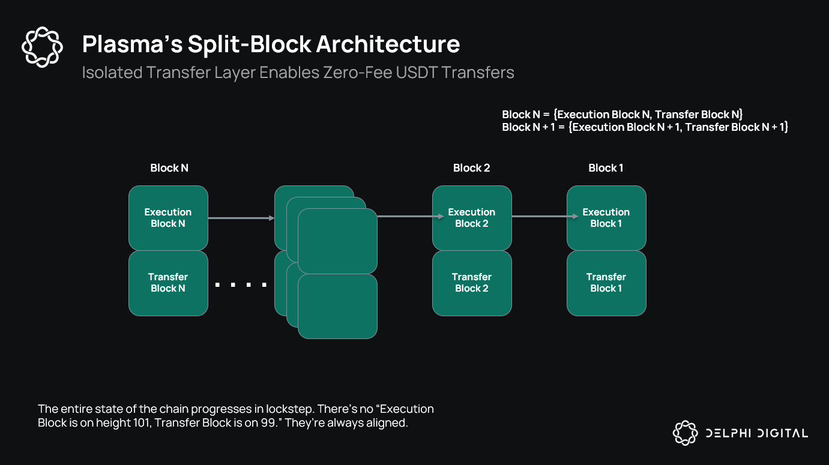
Why This Matters
Stablecoins are not speculative instruments. They are infrastructure. As global digital payments move toward tens of trillions annually, fee certainty and execution consistency matter more than peak TPS claims.
Plasma’s design acknowledges this reality. By eliminating fees where they matter most and guaranteeing throughput where others fluctuate, it positions itself not as a general smart-contract platform, but as payment-grade financial rails.
The benchmark takeaway is simple:
Ethereum L2s scale computation, Solana scales throughput, but Plasma scales trust in payments.

