

Introduction
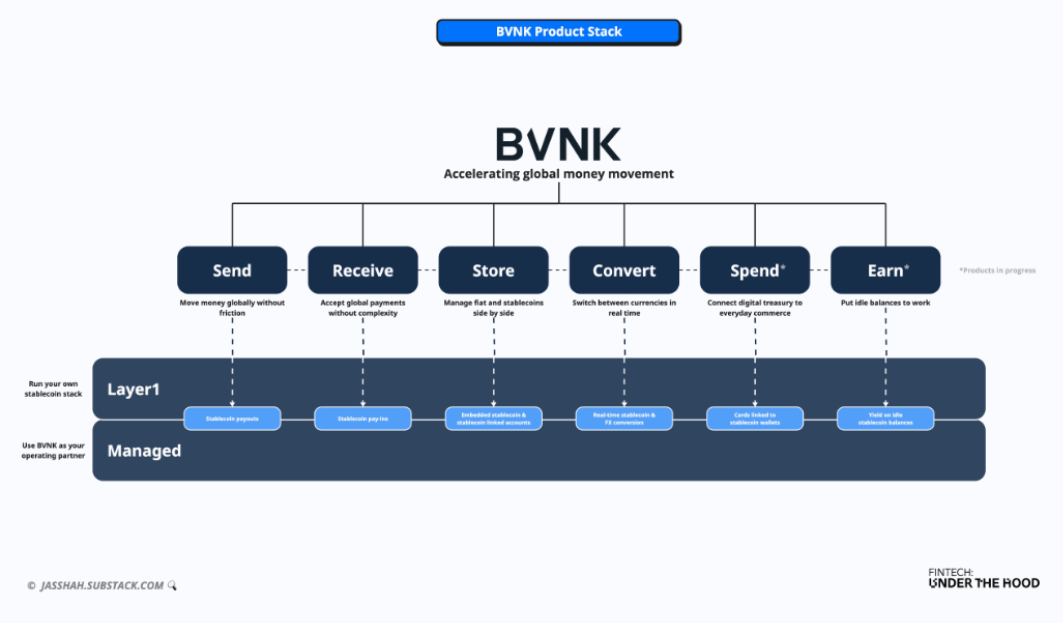
Most Layer-1 blockchains are designed as general-purpose networks. They try to serve everything at once DeFi, NFTs, gaming, governance and in doing so, they often fail to fully optimize for any single real-world use case.
Plasma takes a different approach. It is a Layer-1 blockchain built specifically for stablecoin settlement. Rather than treating stablecoins as just another token type, Plasma designs the entire network around their requirements: speed, predictability, neutrality, and cost efficiency.
As stablecoins increasingly power global payments, remittances, and on-chain finance, Plasma positions itself as infrastructure for where money actually moves, not where narratives circulate.
A Stablecoin-First Design Philosophy
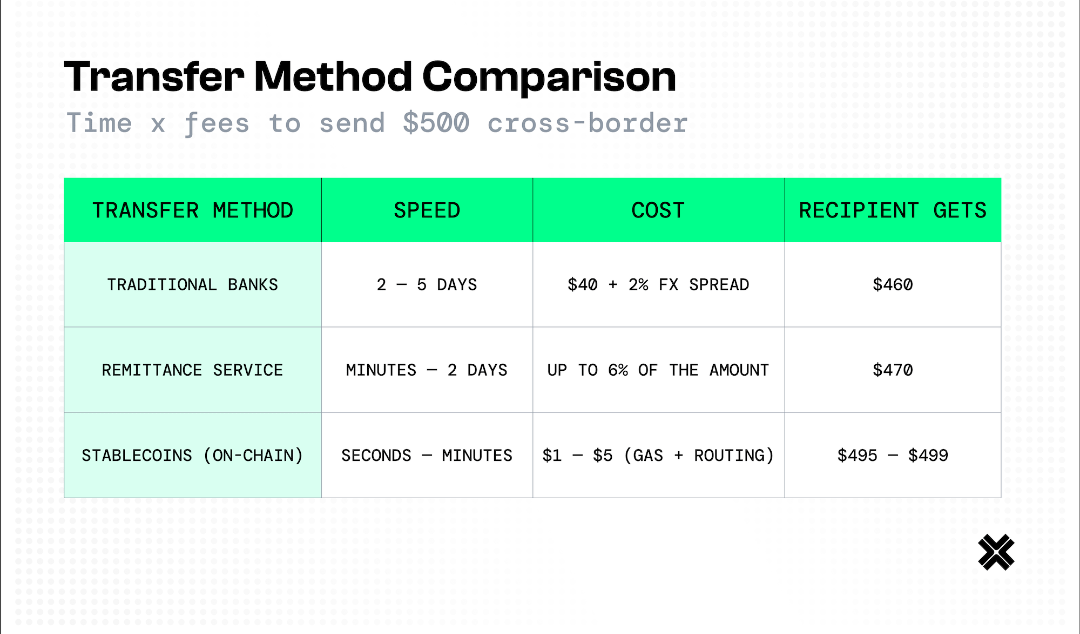
Stablecoins are already one of crypto’s most successful real-world products. They are used daily by millions of people for savings, payments, payroll, and cross-border transfers — especially in high-adoption markets.
Plasma is designed around this reality. Instead of forcing stablecoins to operate inside generalized execution environments, Plasma optimizes the chain itself for stablecoin settlement. This results in:
Faster confirmation times
Predictable transaction behavior
Lower operational friction for users and institutions
By narrowing its focus, Plasma avoids unnecessary complexity and targets a clear, economically meaningful use case.
Full EVM Compatibility with Real Performance
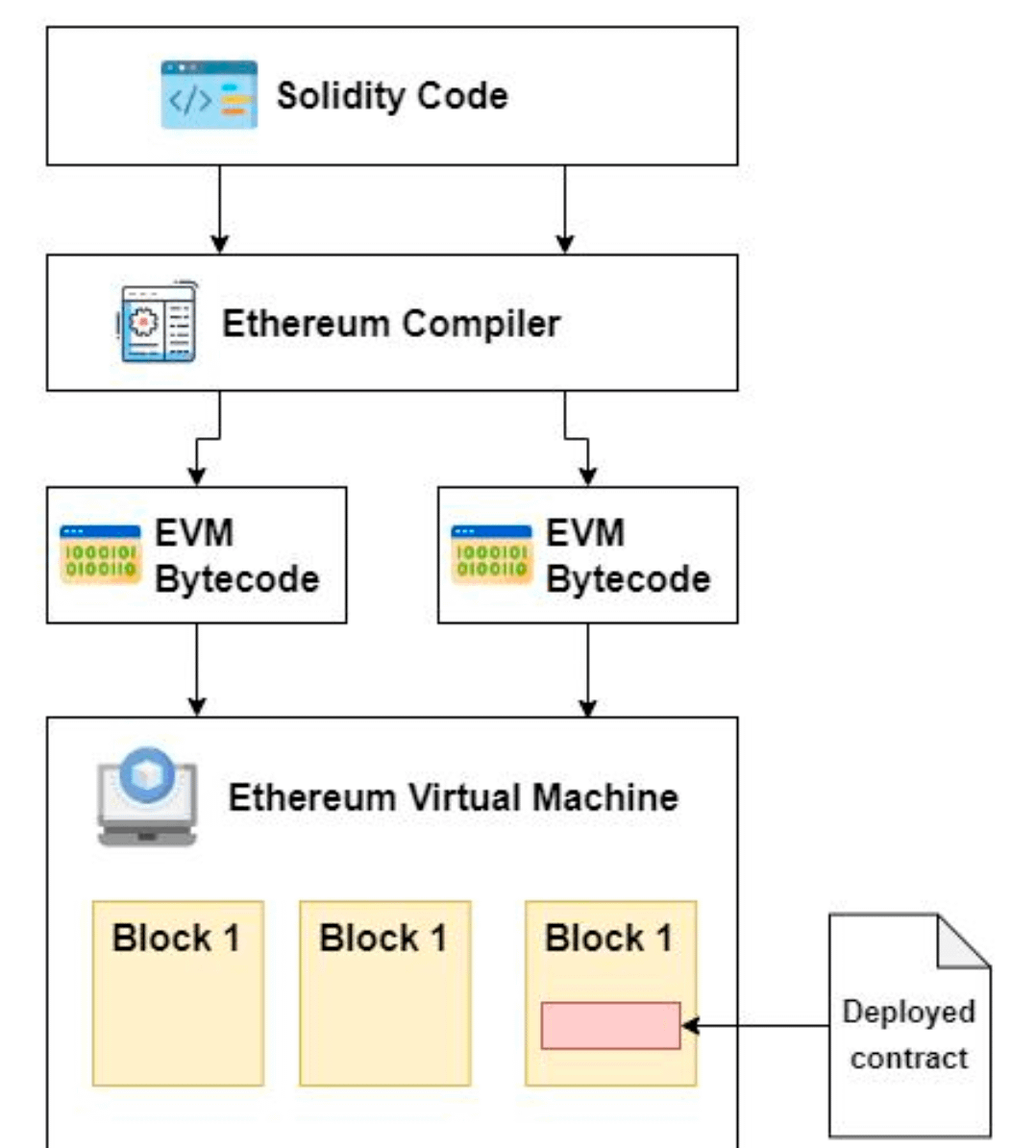
Plasma maintains full Ethereum compatibility through Reth, allowing developers to deploy existing smart contracts without modification. Familiar tooling, languages, and infrastructure remain usable, reducing migration friction.
Where Plasma differentiates itself is execution performance. Using PlasmaBFT, the network achieves sub-second finality, a critical requirement for payment systems and settlement layers. For stablecoin transfers, waiting minutes or even several seconds is often unacceptable. Plasma’s design aligns with real-time financial expectations rather than speculative trading environments.
This combination of EVM compatibility and fast finality allows Plasma to support both developer flexibility and payment-grade performance.

Gasless Transfers and Stablecoin-First Fees
One of Plasma’s most notable design choices is its stablecoin-centric fee model.
Plasma enables:
Gasless USDT transfers
Transaction fees paid directly in stablecoins rather than volatile native assets
This removes a major barrier to mainstream adoption. Users do not need to hold or manage an additional volatile token just to move money. For retail users, especially in emerging markets, this simplifies onboarding and reduces friction. For institutions, it enables clearer accounting and predictable costs.
By treating stablecoins as the primary economic unit rather than an add-on, Plasma aligns blockchain usage with real financial behavior.
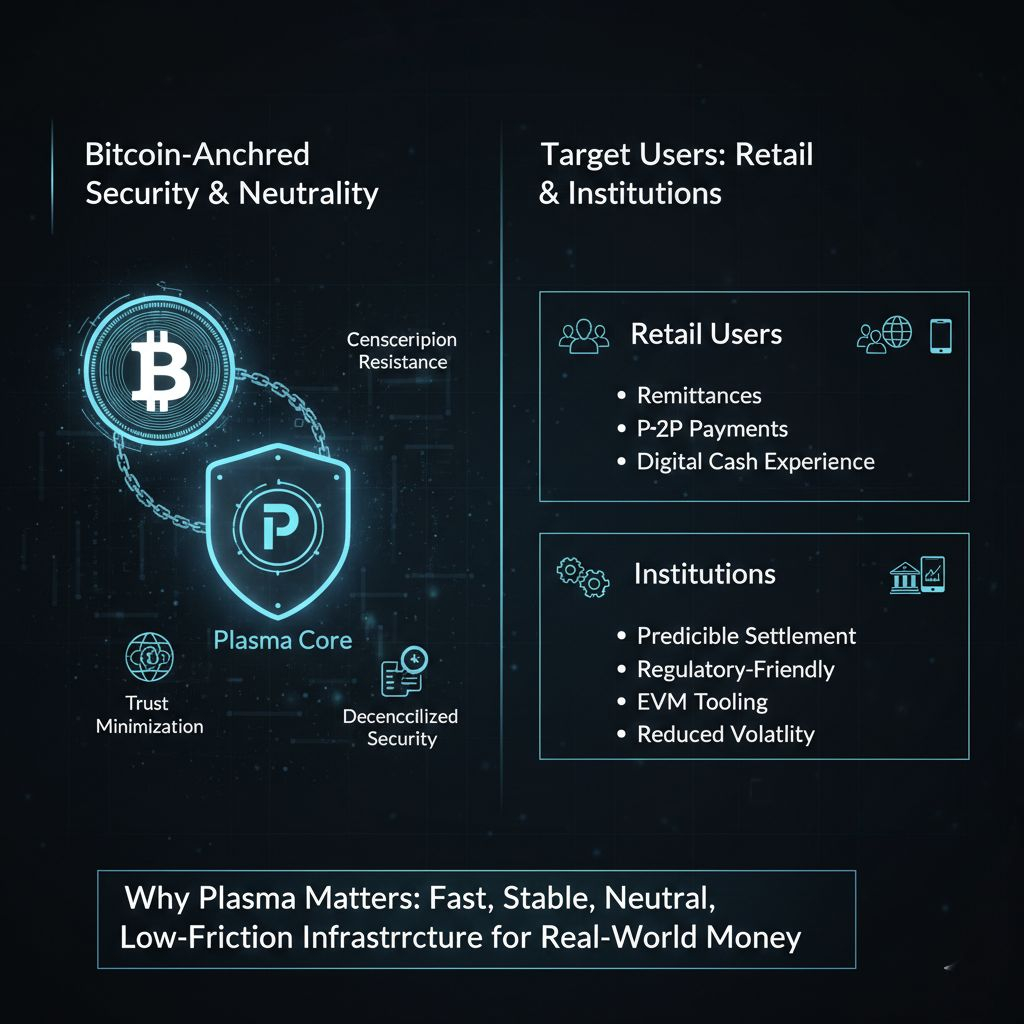
Bitcoin-Anchored Security and Neutrality
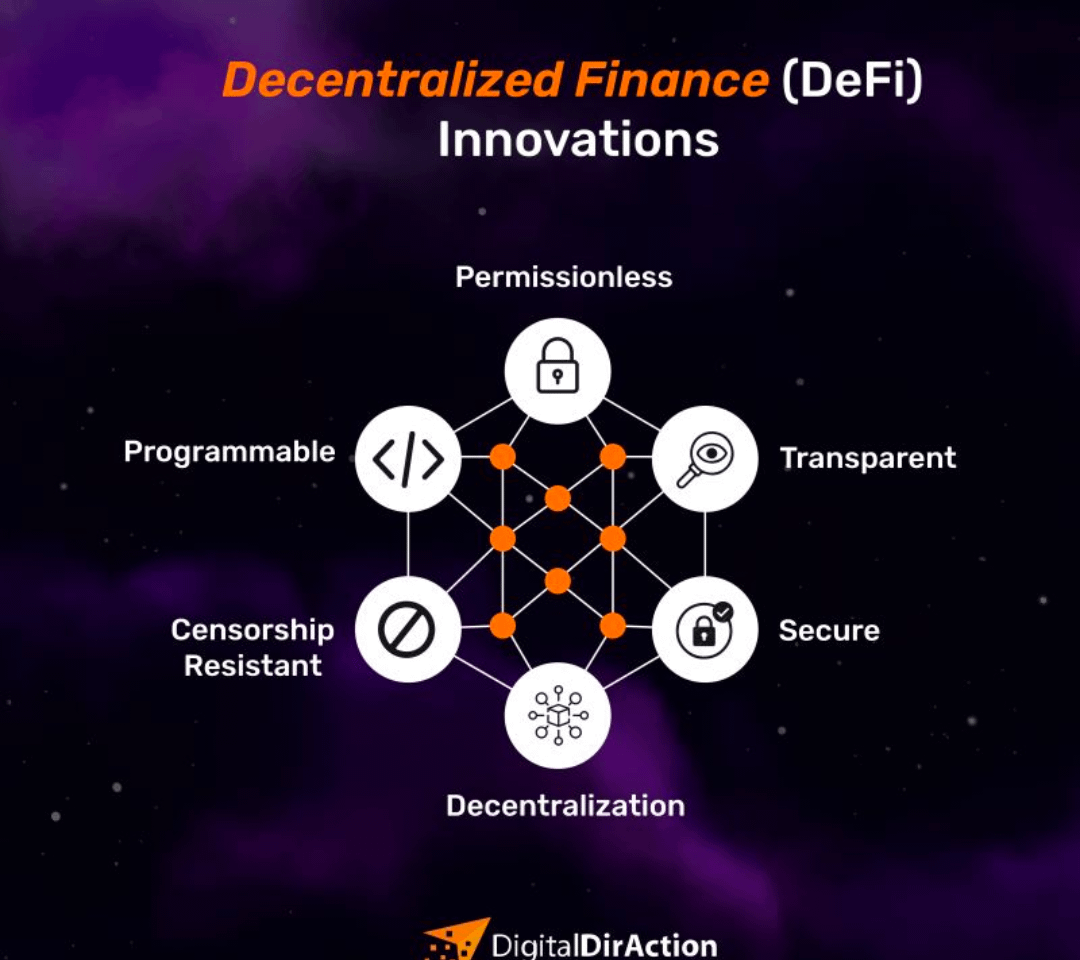
Security and neutrality are essential for any settlement layer. Plasma incorporates Bitcoin-anchored security to enhance censorship resistance and trust minimization.
Anchoring to Bitcoin strengthens Plasma’s claim to neutrality by tying its security assumptions to the most established and decentralized blockchain network. This design choice aims to reduce reliance on governance capture, validator collusion, or centralized control risks that become more significant as financial value increases.
For payment rails and institutional settlement, perceived neutrality is not optional. It is foundational.
Target Users: Retail and Institutions
Plasma is designed to serve two core user groups:
Retail Users
In regions with high stablecoin adoption, users rely on digital dollars for daily economic activity. Plasma’s gasless transfers, fast finality, and stablecoin-first design make it suitable for:
Remittances
Peer-to-peer payments
Everyday value transfer
The experience is designed to feel closer to digital cash than traditional crypto transactions.
Institutions
For payment processors, fintechs, and financial platforms, Plasma offers:
Predictable settlement
Regulatory-friendly transparency
Familiar EVM tooling
Reduced volatility exposure
This positions Plasma as infrastructure that institutions can integrate without redesigning their financial models around speculative assets.
Why Plasma’s Focus Matters
Blockchain adoption in payments has often been limited by volatility, slow settlement, and unnecessary complexity. Plasma addresses these constraints directly by designing around the asset class that already works stablecoins.
Rather than asking users to adapt to crypto, Plasma adapts crypto to financial reality. Its architecture reflects how money is actually used: fast, stable, neutral, and low-friction.
This focus does not limit Plasma’s relevance. It sharpens it.
Conclusion
Plasma is not attempting to be a universal Layer-1. It is building specialized infrastructure for stablecoin settlement, where clarity, speed, and neutrality matter more than breadth of features.
With full EVM compatibility, sub-second finality, gasless stablecoin transfers, and Bitcoin-anchored security, Plasma positions itself as a serious contender for the future of on-chain payments and financial settlement.
As stablecoins continue to expand beyond crypto-native users into global commerce and finance, Plasma represents an effort to provide the rails those systems actually require not in theory, but in practice.

