

Stablecoins like USDT have become essential in crypto—used for trading, remittances, savings, and everyday payments. They hold steady value and move value quickly across borders. But most stablecoins run on general-purpose blockchains like Ethereum, Tron, Solana, or others. These chains support many things: DeFi, NFTs, gaming, and more. This "do-it-all" design creates problems for stablecoins, which need simple, fast, cheap, and reliable transfers above everything else.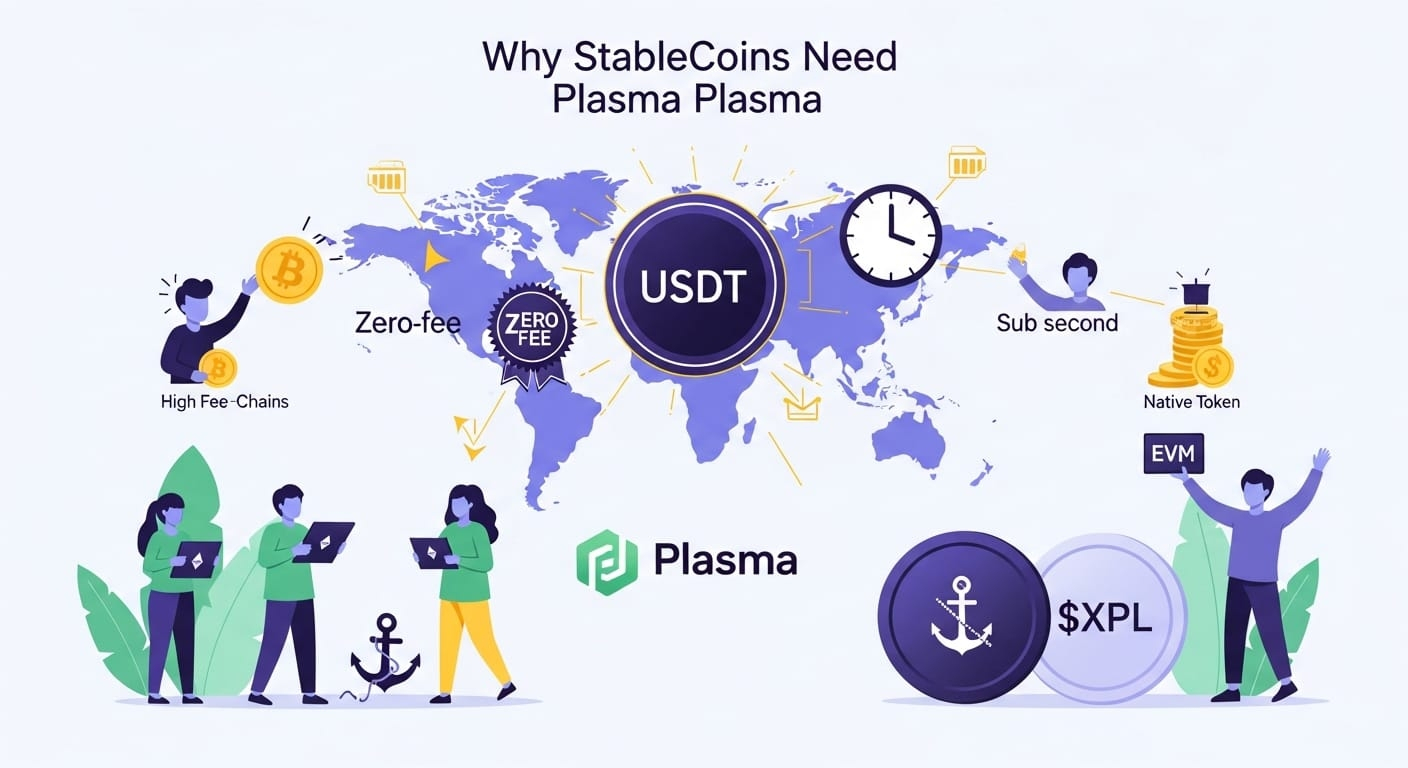
Traditional blockchains face key issues for stablecoin use:
High or unpredictable fees: On Ethereum, gas fees spike during busy times, making small USDT sends expensive. Tron is cheaper but can still cost cents to dollars per transfer, and fees add up for frequent use. Solana is fast and low-cost most times, but network congestion can cause delays or higher costs.
Variable speed and congestion: General chains get crowded with all kinds of activity. A NFT mint or DeFi trade can slow down stablecoin payments. Users wait seconds to minutes—or longer—for confirmations, which feels slow compared to normal money apps.
Extra complexity for users: You often need the chain's native token (ETH, SOL, TRX) to pay fees. New users must buy it just to send USDT, adding steps and risk.
No special focus on stablecoins: Features like privacy, custom gas, or instant finality aren't built-in for stablecoin needs. Stablecoins end up as "just another token," not first-class money.
Stablecoins deserve better because they act like digital cash. They handle high volume (trillions monthly), need near-zero cost for micropayments or remittances, instant confirmations for real-world use, and strong security without volatility. General chains spread resources thin, so they can't optimize fully for this.
Plasma changes this by being a dedicated Layer-1 chain built only for stablecoins. It focuses resources on what stablecoins need most:
Zero-fee USDT transfers: The paymaster system covers gas for simple sends. Users transfer USDT freely—no native token required. This makes small or frequent payments practical, like tipping, family support, or merchant payouts.
High throughput and speed: Over 1,000 TPS with sub-second finality via PlasmaBFT consensus. Transactions confirm almost instantly, even under heavy load—perfect for global-scale payments without delays.
EVM compatibility: Developers use the same tools (MetaMask, Solidity, Hardhat) as Ethereum. Existing apps move easily, but everything runs smoother for stablecoin-focused use.
Bitcoin-anchored security: Extra protection from Bitcoin's network, plus features like custom gas tokens (pay in USDT or others) and confidential payments for privacy.
Neutral and scalable design: Supports multiple stablecoins (starting with USDT), deep liquidity at launch, and a path to decentralization. It avoids the fragmentation and fee issues of multi-purpose chains.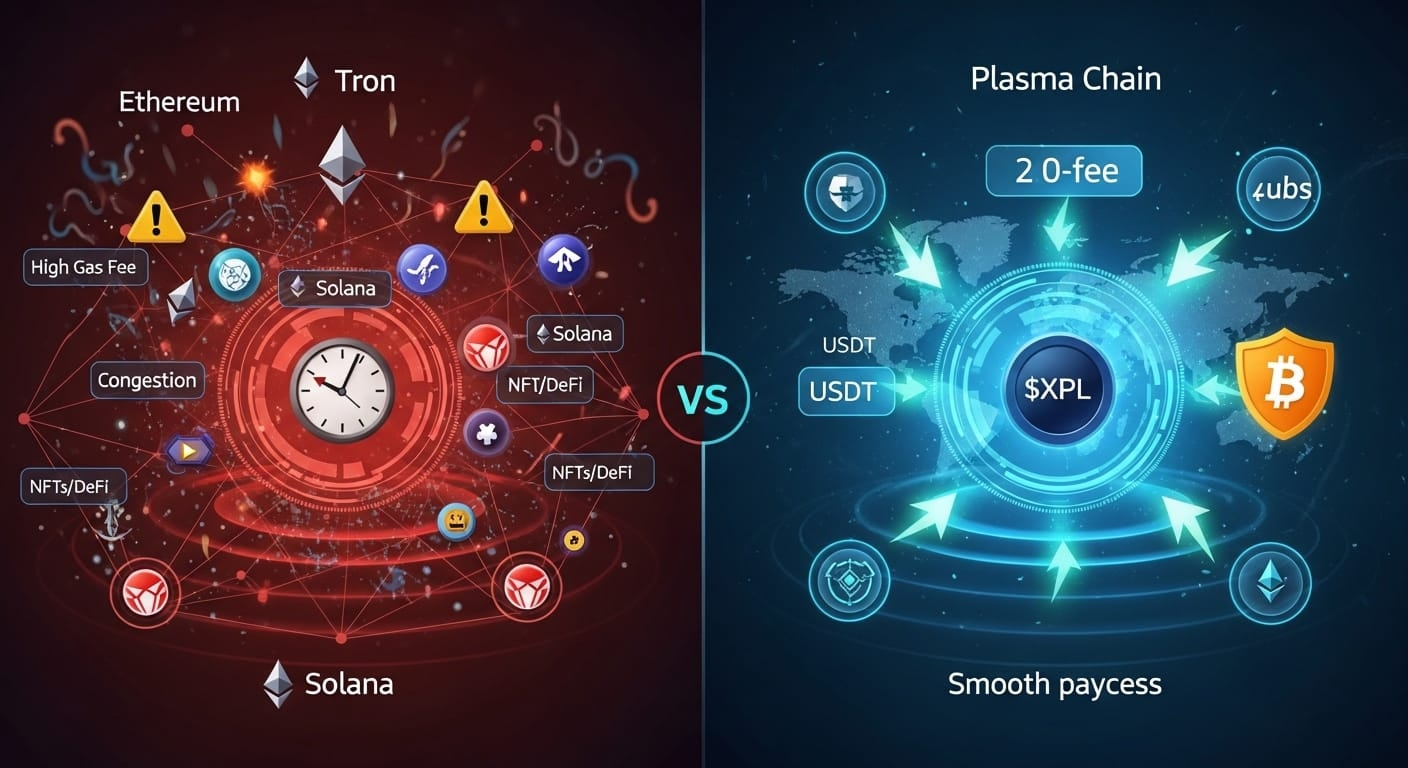
By specializing, Plasma removes the compromises of traditional blockchains. Stablecoins become truly usable as everyday money—fast, free for basics, secure, and accessible to billions. This dedicated approach can drive wider adoption, especially in emerging markets where USDT already helps people escape inflation or high bank fees.
General-purpose chains are great for variety, but stablecoins have grown big enough to need their own optimized home. Plasma provides that, making stablecoin transfers feel like sending a text message instead of dealing with crypto hurdles.
Explore Plasma at plasma.to—connect a wallet and try a free USDT transfer to feel the difference.


