Many people regard Plasma as outdated L2.
In fact, the opposite is true – it has simply been misunderstood as a universal scalability solution.
Plasma was never designed for 'all scenarios'.
It was born for high frequency + low cost + security guarantees.
Core in one sentence:
Off-chain execution efficiency → Mainnet provides final security
This is the entirety of Plasma's philosophy.
The essence of Plasma technology (first clarify the underlying logic)
Plasma ≠ Rollup
Plasma ≠ Full Data On-Chain
Its core design is:
Subchain executing transactions
Merkle Root on-chain
Mainnet is responsible for arbitration and exit
That is:
Efficiency in the sub-chain, security in the mainnet
In other words:
Plasma sacrifices 'full data on-chain for every transaction' for extreme throughput and low cost.
Thus, the industry it is naturally adapted to is only one type:
👉 High-frequency trading industry
One, the most perfectly adapted industry for Plasma (core battlefield)
Common characteristics of these industries:
High-frequency trading
Small settlements
Cost sensitive
Requires security bottom line
Does not require every transaction to be publicly notarized
When these 5 conditions are met simultaneously—
Plasma is almost invincible.
1️⃣ Payment and cross-border settlement (Plasma's first landing scenario)
This is Plasma's killer application.
The core contradiction of the payment industry:
Demand for real-time fast arrival SWIFT 1–3 days low fee intermediary commission high high throughput mainnet congestion fund security requires strong guarantee
Plasma hits perfectly:
Multiple payment sub-chains in parallel → high throughput 💳
Only submit Merkle Root → ultra-low Gas ⛽
Mainnet exit mechanism → fund security 🔐
Result:
Cross-border remittance → minute-level
Transaction fees → mainnet 1/10 or even lower
This is the most realistic entry point for traditional finance.
Typical scenarios:
Cross-border remittance
Cross-border e-commerce settlement
Small payment network
👉 Can be understood as:
Web3 version of Visa / PayPal infrastructure
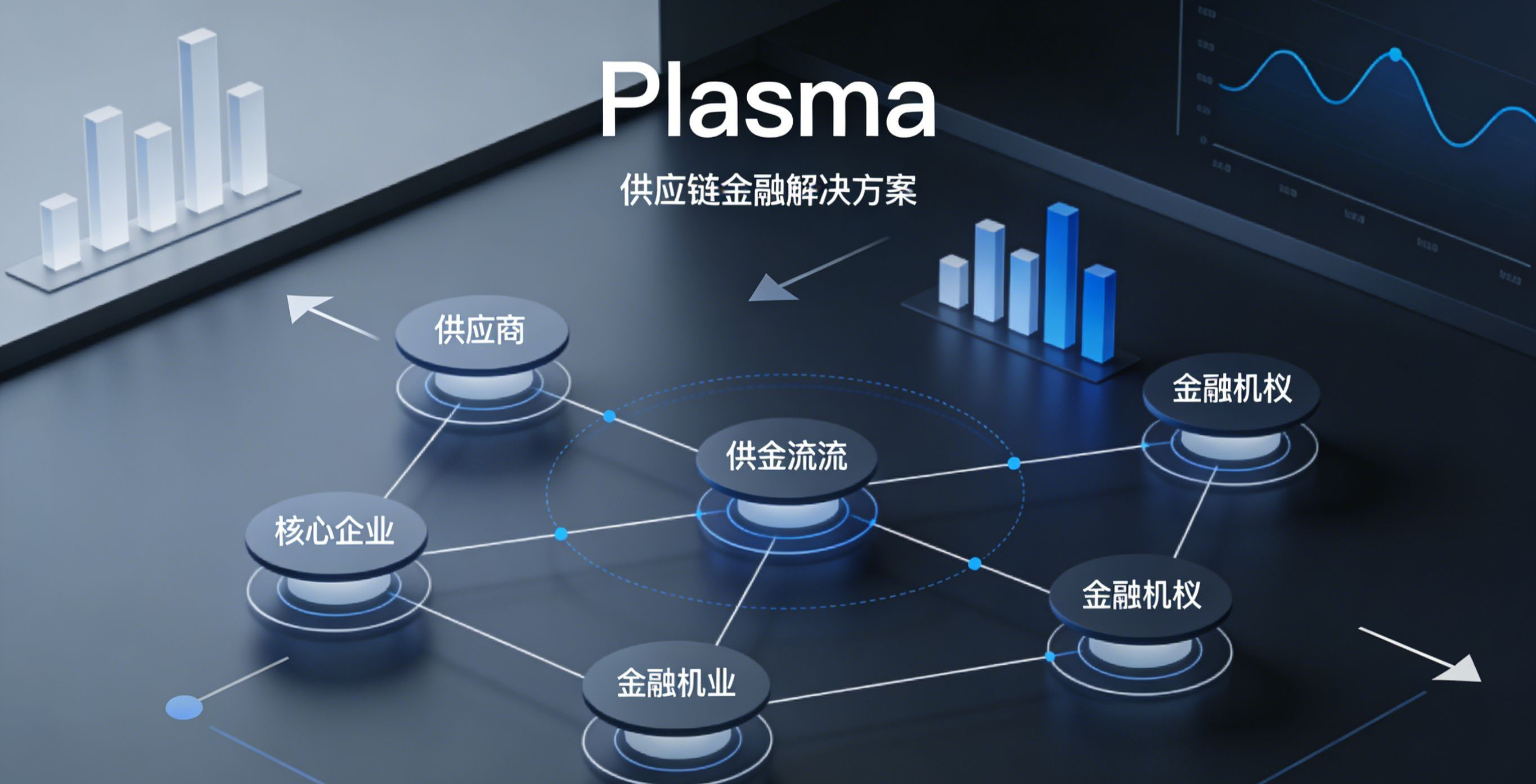
2️⃣ Supply chain finance (severely underestimated scenario)
The problem with the supply chain is not lack of money, but lack of:
Verifiable transaction records
Trustworthy credit history
Low-cost reconciliation
Plasma acts like a 'ledger compressor':
Multiple sub-chains running in different segments
Merkle tree compressed proof
UTXO traceable credit
Result:
Automated reconciliation
Notarization cost is extremely low
Small and medium merchants can finance
What does this mean?
👉 Put small and medium enterprises' credit on-chain
This is a problem that traditional finance has always wanted to solve.
3️⃣ Games and Metaverse (the natural soil for Plasma)
The biggest problem in chain games is not users, but:
Gas fees.
Imagine this:
Every time a character moves = an on-chain transaction ❌
Every time an item is purchased = high Gas ❌
Plasma solves:
Game sub-chain processes all operations 🎮
Only core asset status on-chain 📦
Effect:
No lag interaction
Ultra-low transaction costs
Assets can still exit the mainnet
👉 This is the truly scalable chain game architecture
Two, moderately adapted industries (usable, but not optimal)
4️⃣ Internet of Things IoT
Characteristics of IoT data:
Massive
High frequency
Single value low
Plasma can:
Sub-chains process data flow
Mainnet notarizes key data
But the question is:
IoT requires stronger decentralization → needs improvement in consensus.
So it is usable but needs optimization.
5️⃣ Small derivative transactions
Adaptation reason:
High-frequency matching
Small margin
Requires quick settlement
Plasma can:
Sub-chain matching transactions
Mainnet notarizes balance
But note:
👉 Large derivatives still require Rollup/mainnet
Three, industries unsuitable for Plasma (very important)
Key principles:
Industries that require 'full data on-chain'
≠ Plasma
Unsuitable:
❌ Government / judicial notarization
❌ Large financial transactions
❌ Intellectual property rights confirmation
These industries require:
Every piece of data is public
Full data on-chain
Can be independently verified
This belongs to the field of Rollup.
The true positioning of Plasma (most important summary)
The three major divisions of Layer2 are forming:
Technical core positioning Rollup high-security general-purpose computing Validium data outsourcing Plasma high-frequency trading machine
Plasma is not a loser.
It is vertical scaling.
In summary
The only formula for Plasma adaptation:
High frequency + small amount + cost sensitive + security bottom line
As long as the industry meets these four points,
Plasma has irreplaceability.
With ZK filling the data availability gap,
Plasma is likely to usher in a second cycle.