

In the previous article, I broke down the technical core of Vanar Chain as an AI-native chain. The technology is cool, but I believe everyone, like me, is more concerned with one question: what is the use of these technologies? Who is using them? Today, I will talk about the ecological landscape that Vanar is building and its remarkable collaborations. In my view, this is key to judging the long-term value of VANRY.
Application main channel: starting from advantageous tracks
Vanar did not choose to launch an all-out attack but instead very wisely began to dig deep into the areas he is most familiar with: gaming, the metaverse, and the resulting digital entertainment and brand interaction. This choice is very pragmatic, as these fields naturally require handling complex digital assets and user interactions, with a strong demand for low-cost and high-speed chains.
1. Games and Metaverse: Old trade, new gameplay
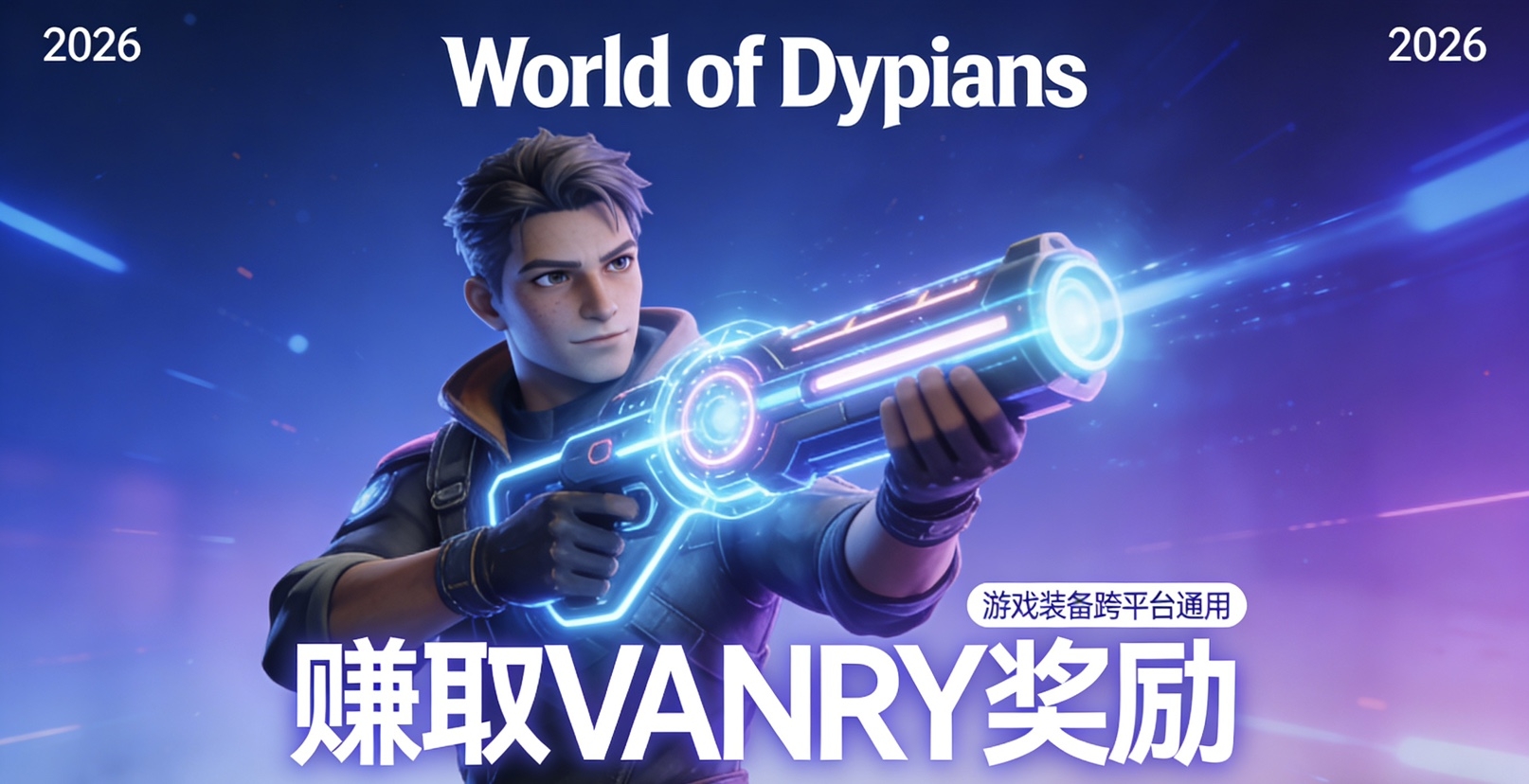
Its predecessor, Virtua Metaverse, is already a ready-made, active testing ground. Here, Vanar can validate how its technology supports a large-scale virtual economy. For example, players can earn VANRY as a reward in games like (World of Dypians).
What attracts me further is its exploration of 'digital asset interoperability'. Community discussions suggest it may be attempting to achieve cross-platform universality for game equipment. If this can be realized, it would break the current isolated states of game assets, significantly activating the liquidity of the entire digital goods industry chain. VANRY's role here is to drive the circulation, trading, and incentivization of these assets as ecological fuel.
2. Enterprise-level and Payment Finance (PayFi): The key to pragmatic implementation
This is one of the most persuasive storylines for Vanar at the moment. It has not remained solely in the crypto-native world but is actively reaching out to the traditional business world.
A frequently mentioned case is the collaboration with global payment giant Worldpay. By utilizing Vanar's immutable 'data seeds' on-chain, both parties can quickly verify transaction information to resolve payment disputes, thus reducing fraud and shortening processing times. This sounds less like the fanciful Web3 fantasies and more like a solution that can effectively reduce business friction and improve efficiency. If this 'blockchain as a service' model works, the imaginative space and the stable trading flow it brings would be quite considerable.
3. AI and Autonomous Agents: Layout for the Future
This is a direct manifestation of its 'AI-native' positioning. Developers can deploy AI assistants called 'Navigator Agents' on Vanar. These AIs can understand users' natural language commands to perform tasks like managing portfolios or completing complex DeFi transactions. The project team has also launched some demonstrative products, such as an application called myNeutron, to showcase its on-chain semantic memory capabilities. Although these applications are still in early stages, they clearly outline a future: your on-chain interaction objects may transform from a cold contract address into an intelligent agent that can understand, reason, and execute automatically.
The logic of collaboration: leveraging giants and deep local cultivation
Besides technology, a project's collaboration network can also reflect its resource levels and development strategies.
Collaboration with Sony: This is a hot topic in the community. Although not much specific collaboration detail is disclosed, Sony, as a top global entertainment and technology giant, has over a hundred million users and a vast ecosystem of games, films, and music content. Establishing a connection with such a company, even if just preliminary exploration, means Vanar's technology has the potential to reach a massive mainstream internet user base, achieving so-called 'seamless' contact with digital assets. Of course, how far this collaboration can go still requires continuous observation.
Localization operations in Southeast Asia: I saw a very detailed document in the community discussions on Binance, mentioning Vanar's refined operations in the Southeast Asian gaming market. This showed me its pragmatic side. It does not talk about global expansion but rather introduces a set of strategies tailored to the characteristics of the Southeast Asian market, which include 'high mobile dependency, low Web3 awareness, and strong community trust'.

Launch a lightweight mobile app compatible with low-end models and conduct deep localization in six languages, even translating 'private key' into the more common term 'security password'.
Access mainstream local payment channels, supporting cash top-ups through convenience stores, solving the final hurdle of fiat entry.
It is said that this approach has significantly improved its local user share and retention rates. This kind of 'grounded' operational capability is invaluable for any public chain looking to gain real users and transaction flow.
VANRY: The value conduit connecting the ecosystem
In this gradually unfolding ecological landscape, the VANRY token is no longer an isolated investment symbol. Its value is deeply tied to the activity levels of these applications.
Gamers earn it.
Enterprise users may use it to pay for on-chain data verification and AI processing service fees.
Future AI agents will consume it to perform tasks.
Developers stake it to secure the network and earn rewards.
It aims to become a universal medium for value circulation within the entire ecosystem. The busier the ecosystem, the stronger the consumption and functional demand for VANRY. This is also why the project team views the first quarter of 2026 as a critical point, as the official launch of AI subscription services is expected to kickstart a real demand engine.
My observations and thoughts
After reviewing these ecological layouts and collaborations, one strong feeling I have is that Vanar is intentionally 'walking on two legs'. One leg is firmly planted in the cutting-edge AI and autonomous agent fields of Web3, establishing a technological benchmark and sense of futurism; the other leg is steadfastly moving towards commercial and entertainment scenarios that can generate immediate value, especially seizing on the areas of gaming and payment finance that are close to money.
Its collaboration strategy also shows a certain level of layering: on one hand, by engaging with top brands like Sony, it enhances its own stature and visibility; on the other hand, it digs deep into growing markets like Southeast Asia to earn users through hard work.
Of course, challenges still exist. Collaboration with giants takes time to bear fruit, competition in the gaming sector is extremely fierce, and the explosion of AI applications also requires waiting for the right moment. But at least, from its current actions, we can see a relatively clear path from technology to application. For holders or followers of VANRY, the future requires continuous tracking of not just price fluctuations, but also the progress of these ecological collaboration projects, the real growth of on-chain transaction volumes, and the frequency of AI tool usage. These are the fundamentals that support its long-term value.
