 PlasmaBFT is a consensus mechanism architected specifically for financial-grade blockchain infrastructure where stablecoins are the primary unit of settlement and where speed, certainty, and reliability are non-negotiable requirements. Unlike general-purpose blockchains that attempt to balance many competing use cases such as NFTs, gaming, experimentation, and high-complexity smart contracts, PlasmaBFT narrows its focus to settlement efficiency and deterministic finality. At its core, PlasmaBFT is derived from Byzantine Fault Tolerant consensus theory, a model that has been studied and refined for decades in distributed systems research and is widely trusted in environments where failures or malicious behavior must be tolerated without compromising correctness. In PlasmaBFT, a decentralized validator set participates in structured consensus rounds where blocks are proposed, validated, and finalized through explicit voting rather than probabilistic chance. This structure allows the network to reach finality in under one second under normal operating conditions, a performance threshold that places PlasmaBFT in direct competition with centralized payment networks while preserving decentralization and cryptographic security. The importance of this design choice becomes clear when considering stablecoins as digital representations of fiat value, where every transaction carries real-world economic meaning. Merchants, payment processors, exchanges, and financial institutions cannot operate efficiently if they must wait for multiple confirmations or accept the risk of chain reorganizations. PlasmaBFT eliminates this uncertainty by ensuring that once a transaction is finalized, it is permanently settled, making it suitable for high-frequency payments, cross-border remittances, treasury operations, and on-chain liquidity movements. The validator network securing PlasmaBFT is economically bonded through XPL staking, meaning validators have direct financial exposure to the correctness of their actions. Any attempt to censor transactions, double-spend, or disrupt consensus would require sacrificing staked capital, creating a strong alignment between network security and validator incentives. This economic finality, combined with cryptographic guarantees, forms the backbone of PlasmaBFT’s reliability and makes it particularly well-suited for stablecoin-native infrastructure where trust minimization and operational certainty must coexist.
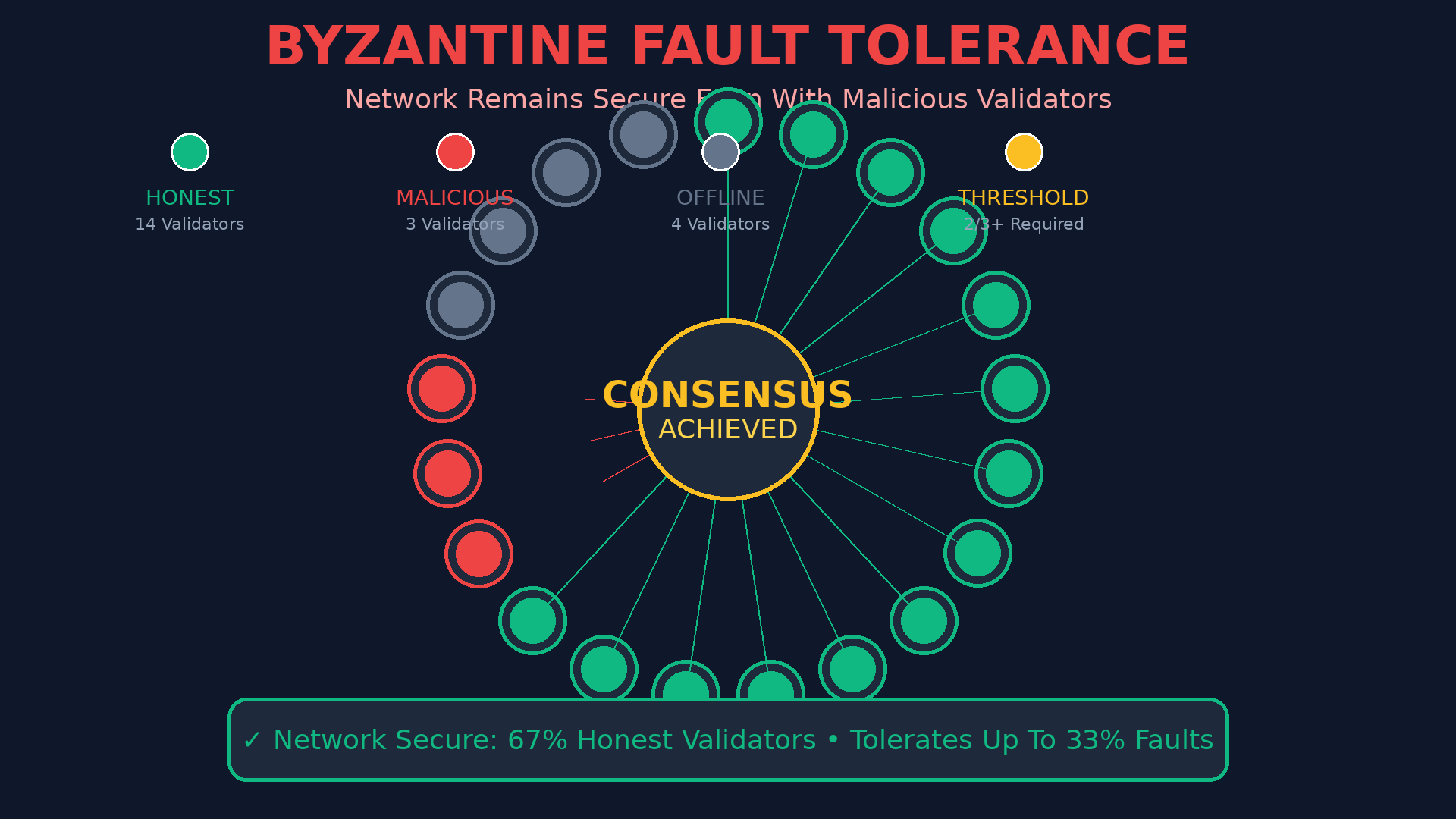
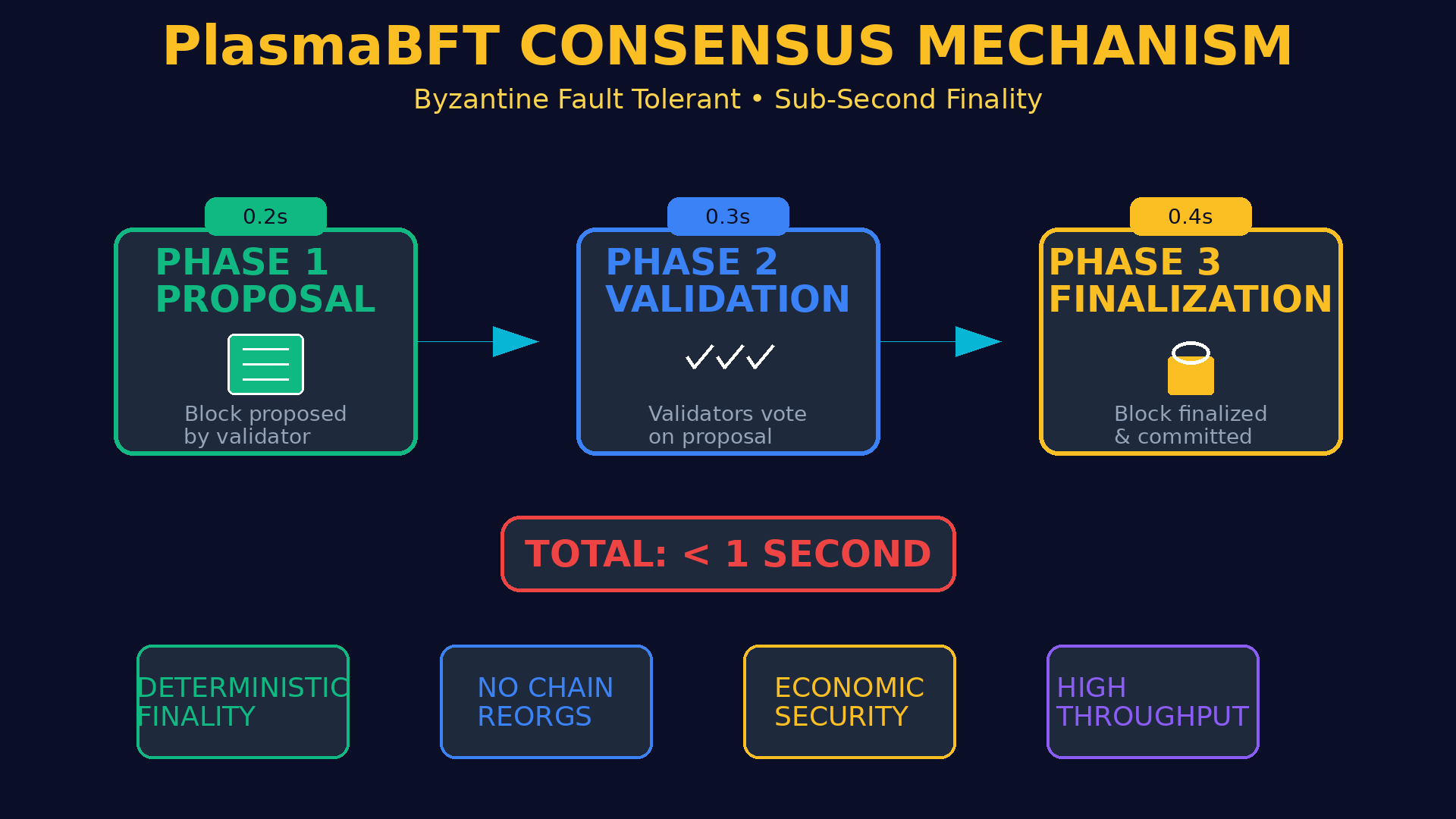
The sub-second finality achieved by PlasmaBFT is not the result of shortcuts or reduced security assumptions, but rather a deliberate optimization of communication, validator coordination, and consensus scope. Traditional proof-of-work systems rely on probabilistic block production and eventual consensus, which introduces latency and uncertainty that are incompatible with real-time settlement. Even many proof-of-stake systems, while more efficient, still depend on multiple block confirmations to achieve acceptable levels of finality. PlasmaBFT takes a different approach by using a fixed or dynamically managed validator set that can communicate efficiently and reach agreement through predefined voting stages. Each consensus round involves a proposal phase, validation phase, and finalization phase, all executed within tightly bounded time windows. Because validators are known participants and are required to meet strict performance and availability criteria, the network can maintain high throughput without sacrificing liveness or safety. This design significantly reduces the time between transaction submission and irreversible settlement, enabling use cases such as point-of-sale payments, on-chain foreign exchange, and automated stablecoin clearing that would be impractical on slower networks. Importantly, PlasmaBFT maintains Byzantine fault tolerance, meaning the network can continue to operate correctly even if a portion of validators act maliciously or go offline, as long as the threshold defined by the protocol is not exceeded. This resilience is critical for a global settlement network that must operate continuously across jurisdictions, time zones, and infrastructure conditions. Stablecoin issuers and integrators benefit from this reliability because it allows them to build services with predictable performance characteristics, reducing the need for complex off-chain reconciliation or risk buffers. PlasmaBFT’s architecture also supports high availability during network stress, such as periods of elevated transaction volume or external market volatility, which are common in crypto-native financial environments. By prioritizing finality speed and consensus determinism, PlasmaBFT creates a settlement layer that behaves more like modern financial infrastructure while retaining the transparency and neutrality of a decentralized system.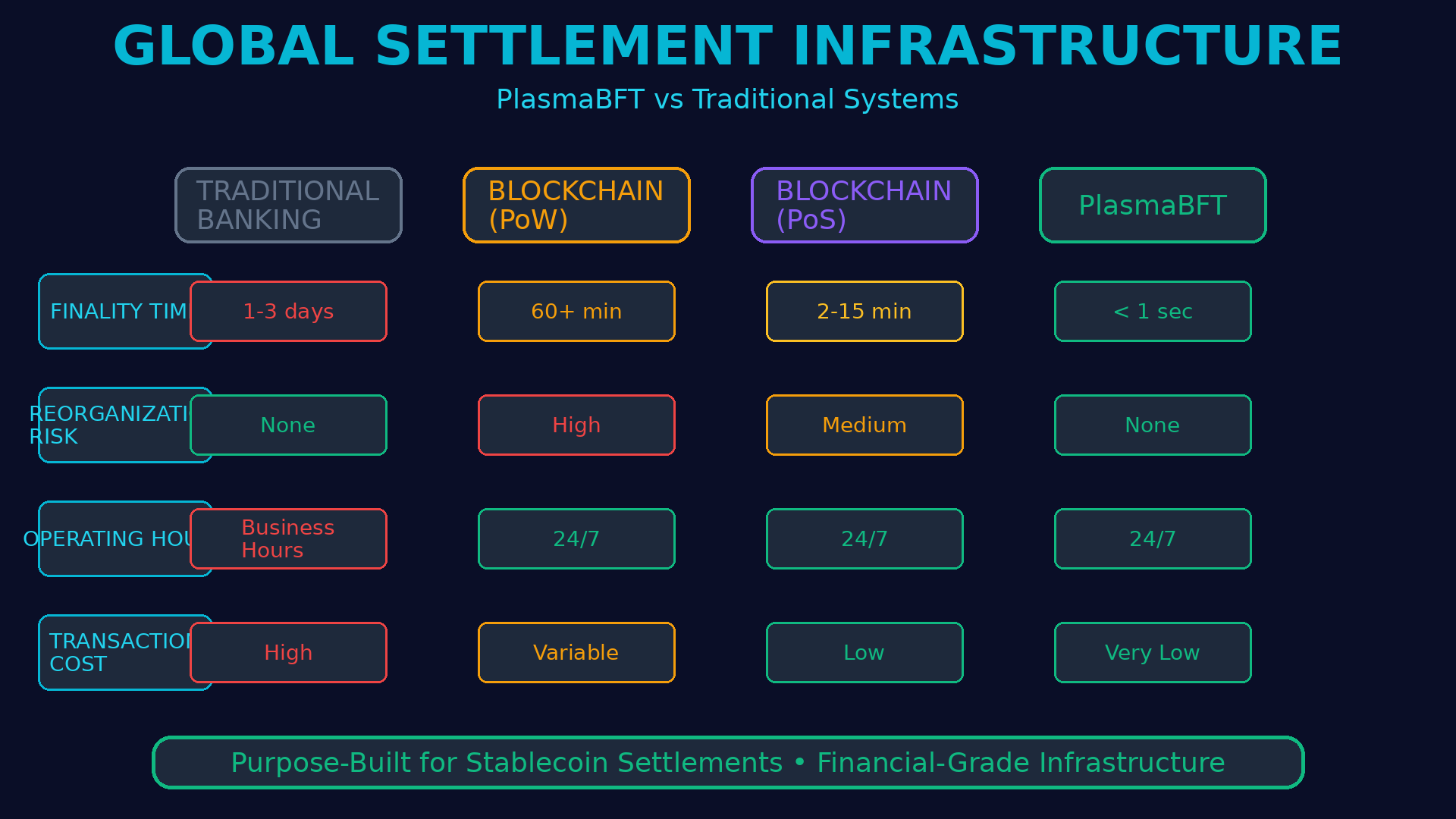
From a broader financial perspective, PlasmaBFT represents a shift toward blockchain architectures that are purpose-built for value transfer rather than general experimentation. Stablecoins have emerged as one of the most widely adopted blockchain applications because they bridge traditional finance and decentralized networks, enabling users to move value globally with minimal friction. However, for stablecoins to function as true digital cash equivalents, the underlying settlement layer must provide guarantees comparable to, or better than, existing payment systems. PlasmaBFT addresses this requirement by offering predictable finality, strong economic security, and operational stability without relying on centralized control. Its consensus model reduces systemic risk by eliminating the possibility of deep reorganizations, which can cause cascading failures in DeFi protocols, exchanges, and payment systems. This reliability is especially important for large-scale stablecoin settlements involving institutional actors, where compliance, accounting, and risk management depend on precise settlement timing. PlasmaBFT also supports scalability by enabling parallel transaction processing and efficient validator coordination, allowing the network to handle sustained high transaction volumes without degradation in performance. As stablecoin adoption continues to expand into areas such as international trade, payroll distribution, and on-chain treasury management, the demand for infrastructure that can support real-time, high-value settlements will only increase. PlasmaBFT positions itself as a foundational layer for this next phase of financial evolution, offering a consensus mechanism that aligns technical design with economic reality. By combining sub-second finality, Byzantine fault tolerance, and staking-based security, PlasmaBFT delivers a settlement environment where trust is enforced by protocol rules rather than assumptions, and where stablecoins can operate as reliable instruments of global commerce.