
Scale analysis, @Plasma 、$XPL 、#Plasma : 2026 trend and ecological scale full analysis
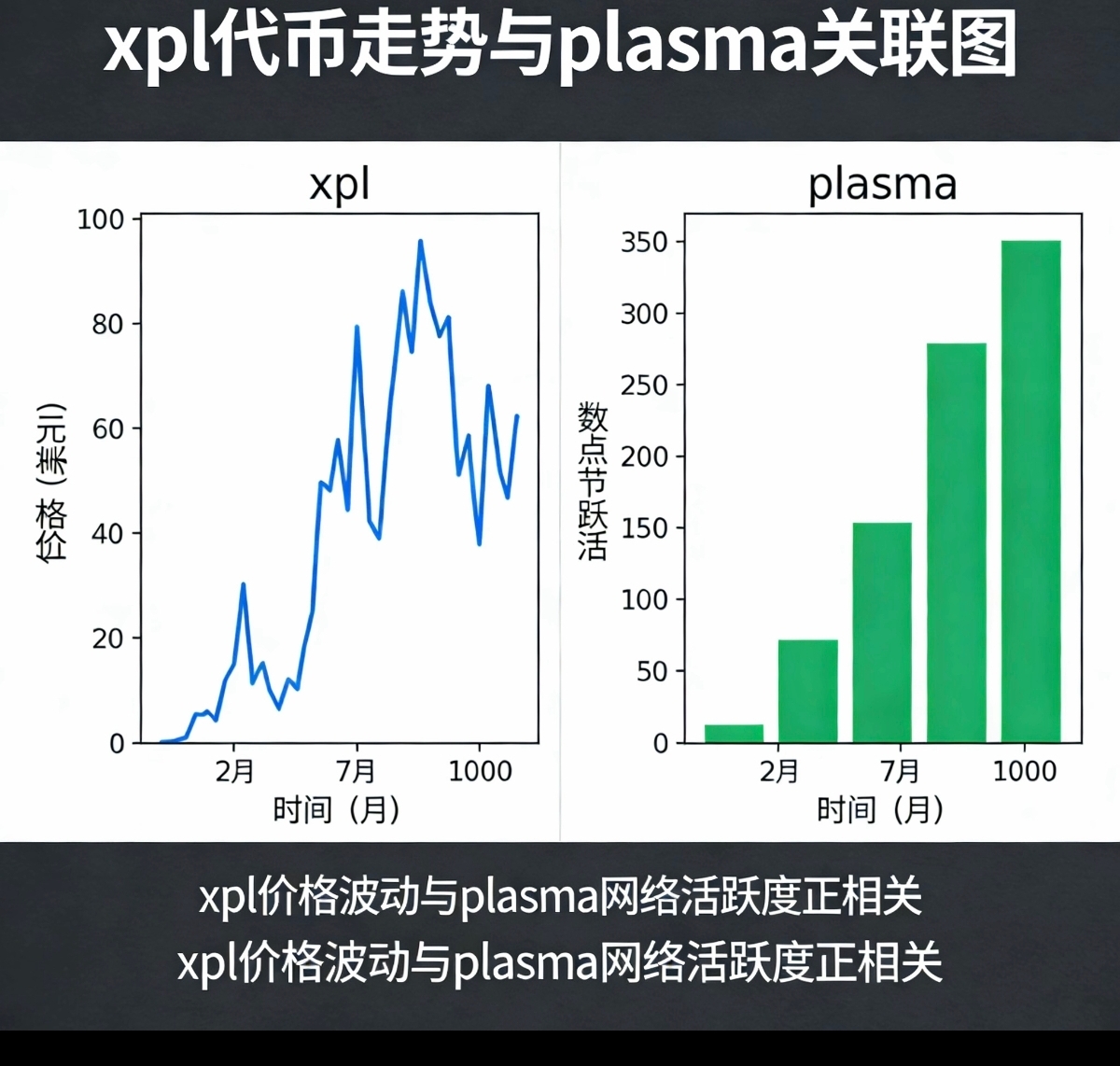
In 2026, the cryptocurrency market will enter the deep water area of institutionalization and practicality. @plasma, as a native Layer1 public chain for stablecoins, relies on zero Gas payments, sub-second confirmations, and EVM full compatibility core advantages to break out from the Layer2 expansion narrative, becoming the core infrastructure for cross-border settlement, micropayments, and on-chain commerce. The native token $XPL is also stepping out of a structured market, with ecological scale and market recognition steadily rising. The #plasma tag has become a popular discussion symbol in the stablecoin track and high-performance public chain.
First, let's look at the current ecological scale: As of February 2026, the @plasma mainnet's native issuance of stablecoins has surpassed $5 billion, with daily on-chain transaction peaks exceeding 12 million, and TPS stabilizing at over 1000, matching the efficiency of traditional payment networks; there are over 800 validation nodes, with global node distribution covering major markets in Europe, America, Asia-Pacific, and Latin America, and the degree of network decentralization continues to improve. In terms of the DeFi ecosystem, the on-chain TVL has reached $2.1 billion, covering core scenarios such as lending, swapping, and yield aggregation, with pBTC cross-chain bridge locked-up volume surpassing $320 million, breaking the liquidity barrier between Bitcoin and the Plasma ecosystem. Wallet integration includes mainstream tools like Bitget Wallet and MetaMask, with the user base exceeding 18 million, of which cross-border merchants and foreign trade practitioners account for over 60%, leading the speed of real commercial scenario implementation among similar public chains. The total supply of $XPL is fixed at 10 billion coins, with 180 million coins already burned through trading, staking, and deflationary destruction, and a circulating supply of 620 million coins, with a deflation rate of 18%. The current market capitalization is approximately $320 million, ranking within the top 150 in the crypto market, firmly positioned in the first tier among public chain tokens in the payment track.
Re-focusing on the trend of XPL in 2026: In the first half of the year, affected by market adjustments and token unlocks, the price shows a **volatile bottoming and step-up** pattern, repeatedly testing the bottom in the range of $0.14 to $0.18 from January to February, digesting early unlock selling pressure; from March to June, accompanied by the global launch of the Plasma One payment card and the opening of compliant settlement channels, coupled with a surge in institutional staking demand, the price gradually breaks through the key level of $0.2, maintaining a monthly increase of 12%-15%. The second half of the year enters a period of market explosion, with XPL soaring to the range of $0.32 to $0.35 from July to September as Tether's deep cooperation lands, and the proportion of on-chain stablecoin transactions increases to 8% of the total global stablecoin transaction volume; in the fourth quarter, driven by the overall market recovery and positive ecological catalysts, the price stabilizes above $0.3, with a core fluctuation range for the year of $0.14 to $0.38, an increase of over 120% compared to the end of 2025, outperforming most Layer 1 and payment track tokens.
The core driving logic of the trend is clear: First, the deflationary mechanism continues to take effect, with transaction fee burning and dual effects of node staking (current staking rate at 42%), leading to continuous contraction of the circulating supply; second, the commercial value is realized, with the Paymaster payment mechanism allowing ordinary users to use stablecoins with zero threshold, while enterprise-level users must stake $XPL to gain node access, ensuring steady demand growth; third, institutional and capital support has been secured, obtaining investments from institutions like Founders Fund and Bitfinex, with a total financing of $75.8 million, providing financial support for technological iteration and ecological expansion; fourth, competitive barriers are solidified, avoiding the saturated market of general public chains and focusing on the vertical track of stablecoin payments, addressing pain points such as high Ethereum gas fees and congestion in Tron, thereby forming a differentiated advantage.
From a risk perspective, in 2026, XPL also faces challenges such as Layer 2 competition, stablecoin regulation, and token unlocks, but the @plasma team effectively hedges external pressures by accelerating the development of privacy payment modules, promoting global compliance filing, and optimizing the release rhythm of locked-up assets. Overall, @plasma has grown from an early-stage technology project to a public chain ecosystem with real commercial value. XPL is no longer merely a speculative token but is bound to core rights certificates related to network security, governance, and ecological incentives. The #plasma topic's popularity has also extended from community discussions to industry research reports and institutional investigations, becoming a track target in the crypto market that cannot be ignored in 2026.
In the future, with RWA assets being brought on-chain and the acceleration of global cross-border payment digitization, the network value of @plasma will be further released. $XPL will also rely on ecological expansion and deflationary models to embark on a more sustainable value trend, occupying a more core position in the stablecoin and payment public chain track.


