
I remember sitting in my cluttered Lahore apartment last weekend, nursing a cup of overly sweet chai while watching construction workers outside lay down rebar for a new high-rise—methodical, unglamorous work that nobody notices until the building stands tall. It got me thinking about foundations, the kind that endure without applause. That mundane scene lingered as I logged into CreatorPad for a quick task, poking around Vanar Chain's setup to see how it handles AI integrations in practice. I fired up a test query on their on-chain data compression feature, watching the protocol crunch inputs smoothly in the backend console, no flashy animations or guided tours, just efficient execution that felt almost too raw for a Web3 project.
That moment jarred me because it exposed how Vanar prioritizes plumbing over polish—the modular L1 layers let me tweak EVM-compatible elements without a hitch, but the lack of narrative scaffolding made the whole exploration feel like wandering a well-built but dimly lit warehouse. It triggered this nagging thought: in crypto, we've all bought into the myth that viral stories and meme-driven hype are the real drivers of value, yet here was evidence that silent infrastructure might be the underrated force holding everything together.
I mean, consider it—most of us chase projects with slick marketing, token airdrops, and celebrity endorsements, believing that's what separates winners from the pack. But diving into Vanar's guts during that task corrected something in me: it showed how a chain built for scalability and AI tooling first, without the storytelling crutches, challenges the idea that adoption demands constant spectacle. It's uncomfortable to admit because it implies we've been distracted by surface noise while the real work happens in the shadows. Vanar isn't alone; think of other infra-heavy layers like those optimizing for zero-knowledge proofs or cross-chain bridges—they grind away, enabling the ecosystem without begging for attention. In a space flooded with short-term pumps, this approach feels defiant, almost contrarian, suggesting that longevity comes from utility, not buzz.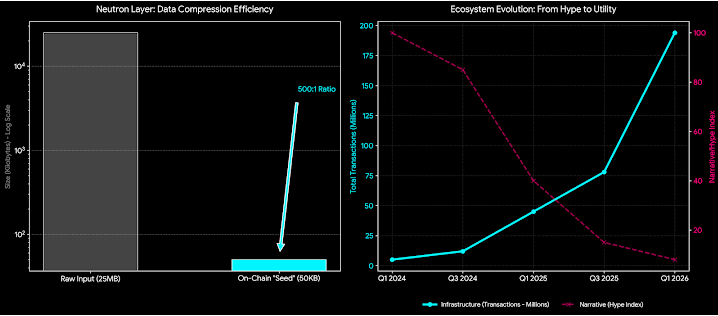
Expanding that beyond the task, by 2026, as regulations tighten and institutions dip in deeper, the chains that focused on robust backends might emerge as the quiet giants. We've seen hyped narratives crash when the tech buckles under load, but infra-first designs endure because they solve real bottlenecks—like data bloat or interoperability—without promising the moon. It's risky to say because it downplays the fun, the community vibes that draw people in, but perhaps that's the point: crypto's maturation demands we value the rebar over the facade. Vanar exemplifies this, with its compression tech handling my queries flawlessly yet leaving me to piece together the "why" on my own, no hand-holding.
Still, it disturbs me—how many solid projects like this will get overshadowed by the next shiny token? What if the market never fully rewards the builders who shun the spotlight?
